Physical Address
304 North Cardinal St.
Dorchester Center, MA 02124
Physical Address
304 North Cardinal St.
Dorchester Center, MA 02124

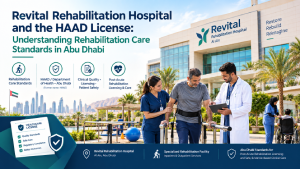
Rehabilitation hospitals occupy a distinct place in the healthcare landscape, focused not on acute treatment but on helping patients recover function, mobility, and independence after illness, injury, or surgery. Revital Rehabilitation Hospital, located in Al Foah in the Al Ain region of the UAE, represents this kind of specialized facility. Understanding how a rehabilitation hospital like this operates within Abu Dhabi’s regulatory framework, historically governed by the HAAD license system, sheds light on what patients and families should expect when choosing rehabilitation care in the region.
Revital Hospital positions itself as a dedicated rehabilitation facility serving the Al Ain region, with convenient access to the main highways connecting both Abu Dhabi and Dubai. The hospital operates a 50-bed inpatient facility alongside outpatient and diagnostic services, giving it the scale to manage a meaningful volume of rehabilitation cases while still maintaining individualized care.
What distinguishes a rehabilitation-focused hospital like Revital from a general acute care facility is its structured, goal-driven approach to patient recovery. Care plans are typically customized to each patient’s specific needs, with therapeutic programs reviewed on an ongoing basis to ensure treatment stays aligned with recovery goals. This kind of facility usually relies on a multidisciplinary team, physicians, senior therapists, rehabilitation nurses, nutritionists, and case management professionals working together, rather than a single specialist managing care in isolation.
For decades, healthcare professionals and facilities operating in Abu Dhabi, Al Ain, and the Al Dhafra region needed to secure what was widely known as a HAAD license, named after the Health Authority – Abu Dhabi, the regulatory body originally responsible for healthcare oversight in the emirate. This license served as the official authorization required for doctors, nurses, pharmacists, physiotherapists, and other healthcare professionals to legally practice within Abu Dhabi’s jurisdiction.
It’s worth noting that HAAD itself no longer operates under that name. The Department of Health – Abu Dhabi (DOH) has since taken over this regulatory role, and licenses are now more accurately referred to as DOH licenses, even though many people in the industry, and many job postings and professional profiles, still use the older “HAAD license” terminology out of familiarity. Regardless of the naming, the underlying function remains the same: ensuring that healthcare professionals meet rigorous qualification and competency standards before practicing in facilities across the region.
Rehabilitation care involves a genuinely broad range of healthcare professionals working closely together, physicians, physiotherapists, nurses, and allied health specialists, each contributing to a patient’s recovery in different but interconnected ways. Because of this multidisciplinary structure, proper licensing across the entire care team becomes especially important in a rehabilitation hospital setting.
A facility operating with a full complement of properly HAAD or DOH licensed professionals offers several practical assurances:
For healthcare professionals seeking to work at a facility like Revital Rehabilitation Hospital or elsewhere in the Abu Dhabi region, the general licensing pathway typically includes:
This structured process ensures that facilities like Revital Rehabilitation Hospital can build their care teams from a pool of professionals who have demonstrated both the qualifications and ongoing competency needed for rehabilitation-focused medical practice.
For patients and families evaluating rehabilitation facilities in the Al Ain or broader Abu Dhabi region, understanding the licensing framework behind a hospital’s care team offers genuine reassurance. A facility staffed by properly licensed professionals, verified through the region’s regulatory system, reflects a baseline commitment to quality and safety standards that patients undergoing recovery from serious illness or injury genuinely depend on.
Revital Rehabilitation Hospital represents the kind of specialized, multidisciplinary care facility that Abu Dhabi’s rehabilitation sector increasingly relies on, supported by a regulatory framework historically known as the HAAD license system and now managed under the Department of Health Abu Dhabi. Understanding how this licensing structure works helps patients, families, and healthcare professionals alike appreciate the standards underpinning quality rehabilitation care across the region.
What services does Revital Rehabilitation Hospital provide?
Revital Hospital offers a 50-bed inpatient rehabilitation facility along with outpatient and diagnostic services, supported by a multidisciplinary team of physicians, therapists, and rehabilitation nurses.
Is the HAAD license still called that today?
Not officially. HAAD (Health Authority Abu Dhabi) has been replaced by the Department of Health Abu Dhabi (DOH), though many professionals still refer to it informally as a HAAD license.
Who needs a HAAD or DOH license to practice in Abu Dhabi?
Doctors, nurses, pharmacists, physiotherapists, and other allied healthcare professionals working in Abu Dhabi, Al Ain, or the Al Dhafra region all require this license.
How long is a HAAD/DOH license valid for?
The license is generally valid for five years from issuance, though renewal timelines and specific requirements can vary based on regulatory updates.
What platform manages HAAD/DOH license applications today?
Applications and license management are now handled through TAMM, Abu Dhabi’s unified digital government services platform.
Why is licensing particularly important in a rehabilitation hospital setting?
Rehabilitation care relies on a multidisciplinary team, so ensuring every professional involved meets verified licensing standards helps maintain consistent, high-quality patient care across the entire recovery process.