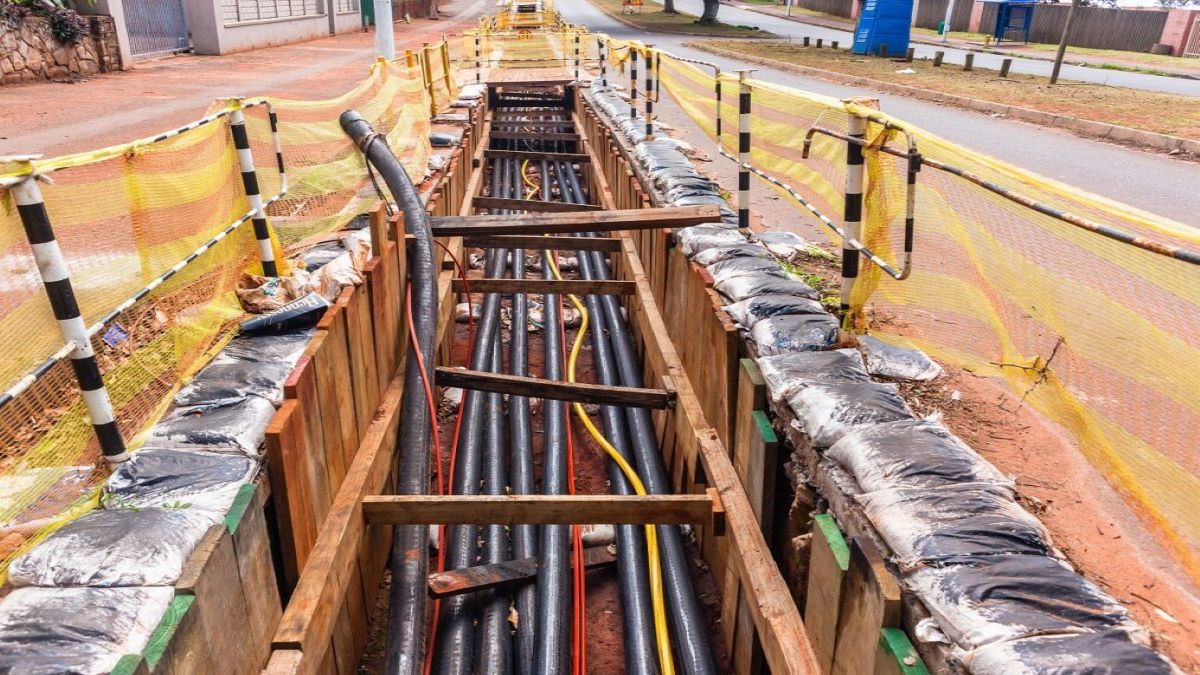

Underground pipe laying Singapore projects demand careful engineering in a dense urban environment. Existing services, restricted work zones, ground conditions and regulatory interfaces can affect every excavation. Similar considerations apply when choosing an underground cable installation company, particularly on developments where several utility systems must share limited corridors.
What Underground Pipe Laying Involves
Work begins with site surveys, available utility records and on-site detection. The project team maps known services, investigates uncertain areas and plans a route that meets technical clearances and access requirements.
Installation may involve open trenching, staged excavation or trenchless methods where appropriate. Pipes must be handled, jointed, tested and protected according to their intended service. The contractor then completes backfilling, compaction and surface restoration while preserving records of the installed alignment.
Why Contractor Experience Matters
Singapore’s underground networks can be congested. An experienced contractor understands that drawings may not reveal every site condition and builds verification points into the method statement. Safe trial holes, controlled excavation and clear permit processes reduce the risk of service strikes.
Ground stability also requires attention. Soil type, groundwater and nearby structures affect shoring, dewatering and excavation sequence. A capable contractor integrates temporary works and monitoring with the main installation rather than treating them as separate concerns.
Multi-Utility Pipe and Cable Capability
A contractor that understands both pipes and cables can coordinate routes, crossings, separation requirements and access chambers more effectively. For clients managing complex sites, a single point of coordination may reduce interface gaps between specialist teams.
This does not remove the need for discipline-specific expertise. The underground cable installation company must still apply suitable cable handling, containment, testing and protection methods, while pipe teams manage jointing, pressure or integrity testing and service-specific requirements.
Common Challenges in Utility Projects
Approvals and permits influence programme dates, so submission responsibilities should be defined early. Work near roads, occupied developments or public spaces may also require traffic, noise, dust and pedestrian controls.
Multiple utilities create dependencies. A delay in one corridor can affect subsequent installations and reinstatement. Detailed sequencing, look-ahead planning and prompt communication help the client manage these risks without sacrificing safety or quality.
Questions to Ask Before Hiring
Ask for examples of comparable pipe and cable projects, including the contractor’s role and the constraints managed. Review how the team verifies existing services, controls excavation and responds when site conditions differ from records.
Check safety and quality certifications, but also ask how those systems are applied on site. Clarify project leadership, subcontractor management, reporting, testing, as-built records and escalation routes. Evidence of disciplined delivery is more valuable than broad capability claims.
Choosing the Right Contractor in Singapore
A strong track record should include similar scale, utility type and stakeholder complexity. Review regulatory compliance history, resources and the ability to coordinate engineering, procurement and construction management.
Lih Ming Pte Ltd has operated since 2002 across underground utilities, cables and district cooling work. ISO and bizSAFE certifications, together with recognition as an SP Group TOP 5 Contractor, provide relevant trust anchors for procurement teams assessing delivery capability. These credentials should be considered alongside project-specific methodology and resources.
Prioritise Proven Multi-Utility Coordination
Complex underground work requires more than excavation capacity. It depends on accurate planning, safe utility management, technical competence and accountable project control. Partner with Lih Ming to develop efficient, scalable underground utility solutions for Singapore’s commercial and mixed-use developments, delivered beyond expectations.
Planning Underground Utility Routes Before Construction
Effective underground pipe laying starts with a well-defined route plan. Contractors need to consider existing infrastructure, future maintenance access, nearby buildings and the requirements of other utility networks. A detailed plan helps identify potential conflicts before excavation begins.
Coordination between engineers, site supervisors and utility stakeholders is equally important. Reviewing drawings, conducting site investigations and confirming installation requirements can help minimise unexpected changes during construction. Proper planning also supports smoother coordination between underground pipe and cable installation activities.
Safety Measures During Underground Excavation
Excavation work requires strict safety controls, particularly in locations where existing underground services may be present. Before work begins, contractors should identify potential hazards, establish exclusion zones and ensure workers understand the approved excavation procedures.
Suitable trench support, safe access and regular site inspections help manage risks during installation. Equipment operators and ground personnel must also maintain clear communication throughout the operation. These measures contribute to a safer working environment and help protect surrounding infrastructure.
Quality Control and Testing of Underground Installations
Quality control should be maintained throughout the installation process rather than being limited to the final inspection. Pipe materials, joint connections, installation depths and alignment should be checked against project specifications. Any identified defects should be addressed before the next construction stage proceeds.
Testing requirements depend on the type and intended use of the installed utility. Contractors should maintain inspection records, test results and installation documentation for the client’s review. Accurate as-built drawings also provide useful information for future maintenance, repairs and infrastructure upgrades.
Managing Project Delays and Construction Coordination
Underground utility projects can experience delays when site conditions differ from initial assumptions or when multiple contractors need access to the same work area. Material availability, permit requirements, weather conditions and coordination between installation teams can also affect project schedules.
A structured project management approach helps identify these issues early. Regular progress meetings, clear responsibility assignments and updated construction schedules allow teams to respond to changes efficiently. Experienced contractors also maintain communication with clients and relevant stakeholders to keep work aligned with project priorities.