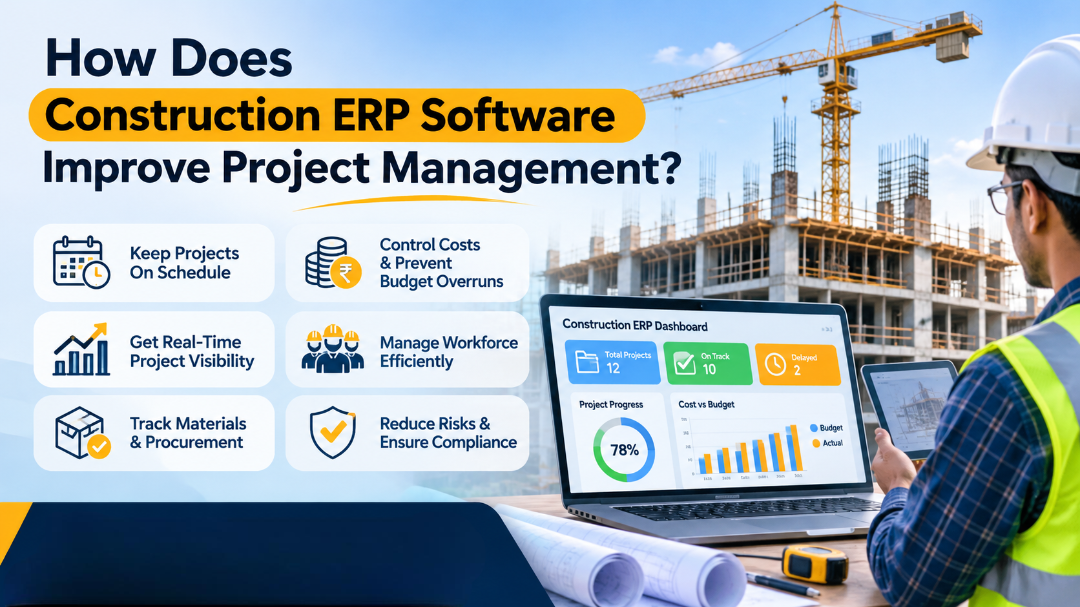

The construction industry in India is growing rapidly, with infrastructure development, commercial buildings, residential projects, roads, bridges, and highways creating new opportunities for businesses. However, managing construction projects is not always easy. Companies often deal with project delays, budget overruns, material shortages, poor communication, and difficulties in coordinating different teams.
These challenges can affect project timelines, increase operational costs, and impact overall profitability.
Managing all these activities through spreadsheets, manual records, and disconnected systems can make things even more complicated. This is where Construction ERP Software becomes valuable.
Construction ERP software brings different business operations together on a centralized platform. It helps construction companies manage project planning, budgeting, procurement, inventory, resources, and daily activities more effectively.
But how exactly does it improve project management?
Let’s explore how construction ERP software helps Indian construction companies streamline their operations, improve project visibility, control costs, and complete projects more efficiently.
Key Takeaways
- Understand how construction ERP software works.
- Explore the major challenges faced by Indian construction companies.
- Learn how ERP improves project planning and scheduling.
- Discover ways to manage construction budgets and resources.
- Understand how ERP streamlines procurement and inventory management.
- Explore the benefits of ERP for construction project management.
- Learn what to consider when choosing construction ERP software.
What Is Construction ERP Software?
Construction ERP software is an integrated business management solution developed to address the operational requirements of construction companies.
It brings important business functions together within a single system, allowing teams to manage different construction activities without depending on multiple disconnected tools.
From project planning and budgeting to procurement, inventory, human resources, and financial management, Construction ERP software helps maintain better coordination across departments.
For example, consider a construction company handling multiple projects at different locations. The project team needs to monitor work progress, the purchase department manages material requirements, the finance team tracks expenses, and management needs regular performance updates.
When this information is maintained separately, getting a clear picture of project performance becomes difficult.
A centralized construction ERP system connects these activities, making relevant information accessible to authorized users and helping management make informed decisions.
How Is Construction ERP Software Beneficial for Indian Construction Companies?
India’s construction industry involves projects of different sizes and complexities, including residential developments, commercial buildings, infrastructure projects, roads, bridges, and industrial facilities.
Each project requires proper coordination between contractors, engineers, suppliers, project managers, and other stakeholders.
However, many construction companies still struggle with manual processes, delayed information, disconnected departments, and limited project visibility.
Construction ERP software helps address these challenges by bringing important operational activities onto one platform.
Here are some ways it supports Indian construction businesses.
- Better Project Planning and Scheduling
Proper planning is essential for completing construction projects within the expected timeline.
However, managing multiple activities, assigning responsibilities, tracking milestones, and coordinating different teams can become difficult without a structured system.
Construction ERP software helps companies organize project activities, create schedules, define milestones, and monitor work progress.
Project managers can track planned activities against actual progress and identify tasks that require attention.
For instance, if a particular construction activity is taking longer than expected, the project team can review the schedule and coordinate the next activities accordingly.
This improves project visibility and helps teams manage timelines more effectively.
- Improved Construction Budget Management
Budget overruns are a common concern for construction companies. Changes in material prices, unexpected expenses, poor estimation, and unplanned purchases can affect project profitability.
Construction ERP software helps businesses maintain better financial control by connecting project budgets with actual expenses.
Companies can:
- Monitor project-wise budgets and expenditures.
- Track planned costs against actual spending.
- Record purchase and operational expenses.
- Identify unexpected cost variations.
- Generate financial reports for management.
With better access to financial information, project managers can identify budget-related issues earlier and take appropriate action.
- Efficient Resource Management
Construction projects depend on the availability of skilled manpower, machinery, materials, and equipment.
Poor resource allocation can result in idle machinery, labour shortages, material wastage, and unnecessary expenses.
Construction ERP software helps companies organize resource requirements and monitor their utilization across projects.
Management can maintain information about resource availability, assignments, and usage to improve coordination between different project locations.
This makes it easier to identify resource gaps and plan allocations according to project requirements.
- Streamlined Procurement Management
Procurement plays an important role in construction project execution. Delays in purchasing materials or receiving supplies can affect project schedules.
When procurement activities are managed manually, tracking vendor quotations, purchase orders, approvals, and deliveries becomes challenging.
Construction ERP software helps streamline procurement workflows by maintaining centralized purchasing information.
It can support:
- Vendor and supplier management.
- Purchase requisition and approval workflows.
- Purchase order tracking.
- Material requirement planning.
- Procurement expense monitoring.
- Supplier performance records.
With better procurement visibility, companies can coordinate purchasing activities and reduce avoidable delays caused by poor material planning.
- Centralized Document Management
Construction projects involve a large number of documents, including drawings, contracts, work orders, purchase records, bills, and compliance documents.
Managing these records across different departments can create confusion, especially when teams work from outdated information.
Construction ERP software helps centralize important business records and provides authorized users with easier access to relevant information.
Depending on the system’s capabilities, it can also support document tracking, version management, and controlled information sharing.
This helps improve coordination and reduces the chances of communication gaps caused by missing or outdated documents.
- Better Compliance and Safety Management
Construction companies must follow applicable regulations, contractual requirements, and workplace safety practices.
Maintaining compliance records and tracking safety-related activities across multiple project locations requires proper coordination.
Construction ERP software can help organize compliance documents, maintain relevant records, track approvals, and support safety reporting.
These capabilities make it easier for management to monitor important compliance activities and maintain better documentation.
How Does Construction ERP Software Improve Project Management?
Construction ERP software does more than maintain business records. Its real value comes from connecting different project activities and giving management better visibility into daily operations.
Let’s understand its major benefits.
- Improved Communication and Coordination
Construction projects involve several stakeholders, including architects, engineers, contractors, suppliers, consultants, and clients.
When project information is scattered across emails, spreadsheets, phone calls, and separate systems, communication gaps can develop.
A construction project management ERP system help bring relevant project information together.
Authorized team members can access updates, review records, and coordinate activities through a centralized platform.
This supports better communication between departments and helps teams work with more consistent information.
- Better Resource Utilization
Effective resource utilization is essential for maintaining construction productivity.
If manpower, machinery, or materials are not available when required, project activities may slow down.
Construction ERP software helps managers monitor resource allocation and utilization across projects.
For example, management can review the availability of machinery and manpower before assigning resources to upcoming activities.
This supports better planning, reduces unnecessary idle time, and helps avoid resource conflicts.
- Reduced Project Delays
Construction delays can occur due to poor scheduling, material shortages, resource constraints, communication gaps, and unexpected site conditions.
A construction ERP system helps companies monitor project activities and identify issues that may affect planned timelines.
Project managers can review milestone progress, track procurement activities, monitor resource availability, and coordinate with responsible teams.
For example, if a material delivery is delayed, the procurement and project teams can review the situation and adjust their activity plans where possible.
Although ERP software cannot eliminate every external cause of delay, it provides better information and coordination to help companies manage project schedules.
- Better Cost Control and Financial Visibility
Controlling construction expenses requires continuous monitoring of project budgets, purchases, labour costs, and other operational expenses.
Without centralized financial information, identifying cost variations can become difficult.
Construction ERP software connects project-related financial information and helps management review budget performance.
By comparing estimated costs with actual expenditures, companies can identify variations and investigate their causes.
This improves financial visibility and supports more informed cost-control decisions.
- Data-Driven Decision-Making
Construction management involves making decisions about timelines, resources, purchases, budgets, and project priorities.
When information is incomplete or outdated, decision-making becomes more difficult.
Construction ERP software provides access to centralized operational information and reporting tools.
Depending on the available modules, management can review:
- Project progress reports.
- Budget and expense reports.
- Procurement status.
- Inventory information.
- Resource utilization.
- Project performance indicators.
These insights help management understand project conditions and make decisions based on more reliable information.
- Improved Regulatory Compliance
Maintaining compliance across construction projects requires proper documentation, approvals, and monitoring.
Construction ERP software can help organize compliance-related records and provide better visibility into important documentation and approval processes.
This supports more systematic record management and helps companies track their compliance responsibilities.
The Impact of Construction ERP Software in India
The adoption of digital solutions is changing how Indian construction companies manage their business operations.
As projects become more complex and companies handle multiple sites, maintaining coordination between departments becomes increasingly important.
Construction ERP software supports this transition in several ways.
- Supporting Large Infrastructure Projects
Infrastructure projects such as highways, bridges, railways, industrial facilities, and urban development require coordination across multiple teams and locations.
Construction ERP software helps companies maintain centralized project information, track procurement, monitor expenses, and coordinate resources.
This provides management with better visibility into different project activities.
- Empowering Small and Medium Construction Businesses
ERP solutions are not limited to large construction companies.
Small and medium-sized contractors also need structured systems to manage projects, control expenses, monitor materials, and coordinate employees.
Construction ERP software can help growing businesses replace scattered records with more organized workflows.
Companies should select a solution based on their operational requirements, project size, and future growth plans.
- Supporting Digital Transformation
Manual processes can make it difficult for construction companies to maintain accurate and updated information.
By bringing different departments together, construction ERP software supports the adoption of digital business processes.
It helps reduce dependence on disconnected spreadsheets and improves the availability of operational information.
- Encouraging Sustainable Construction Practices
Efficient resource management can contribute to more responsible construction operations.
By improving material tracking, monitoring inventory, and maintaining better resource records, ERP software can help companies identify unnecessary consumption and material wastage.
Better planning and resource visibility also support more efficient project execution.
Key Features to Look for in Construction ERP Software
Choosing the right construction ERP system requires understanding the actual needs of your business.
Before selecting a solution, construction companies should evaluate the following features:
Project Management
Look for tools that support project planning, scheduling, milestone tracking, task management, and progress monitoring.
Budget and Cost Management
The system should help manage project budgets, record expenses, and compare estimated costs with actual expenditures.
Procurement Management
Evaluate whether the software supports purchase requisitions, approvals, purchase orders, vendor management, and procurement tracking.
Inventory and Material Management
Material tracking, stock visibility, inventory records, and material movement monitoring are important for construction operations.
Resource Management
The software should support the allocation and monitoring of manpower, machinery, and other project resources.
Reporting and Analytics
Management should be able to access useful reports and dashboards to understand project performance and operational conditions.
Scalability and Integration
Choose a system that can support your business as it grows and integrates with the tools and processes your company already uses.
How to Choose the Right Construction ERP Software in India?
Selecting construction ERP software is an important business decision. A suitable system should match your company’s project requirements, operational workflows, and long-term business objectives.
Here are some factors to consider.
- Understand Your Business Requirements
Identify the challenges your company faces in project planning, budgeting, procurement, inventory, and resource management.
- Check Module Availability
Evaluate whether the ERP system offers the modules your business needs. Avoid selecting software based only on the number of features it provides.
- Evaluate Ease of Use
Construction teams may include users with different levels of technical experience. Choose a system with an interface and workflow that employees can understand and use.
- Consider Scalability
Your business requirements may change as you take on more projects or expand into new locations. The software should be capable of supporting your future operational needs.
- Review Implementation and Support
Check the vendor’s implementation process, employee training, technical support, and ongoing assistance.
- Request a Product Demonstration
A product demo helps you understand how the software works in real business situations. Ask the vendor to demonstrate workflows that are relevant to your construction operations.
Conclusion
Managing construction projects requires more than completing individual tasks. Companies must coordinate people, materials, machinery, budgets, suppliers, and timelines to keep projects moving in the right direction.
Construction ERP Software helps bring these activities together through a centralized management system. From project planning and scheduling to procurement, resource allocation, and financial monitoring, it provides better visibility into important business operations.
For Indian construction companies handling multiple projects, adopting the right ERP solution can support better coordination, improved cost control, and more organized project execution.
At NWAY ERP we understand the operational challenges construction businesses face while managing projects and resources. The right construction ERP solution can help your team move away from disconnected processes and work with better coordination and visibility.
Looking to improve the way you manage construction projects?
Explore NWAY ERP’s construction management solutions and request a demo to understand how they can support your business requirements.
Frequently Asked Questions About Construction ERP Software
How does construction ERP software improve project management?
Construction ERP software improves project management by connecting project planning, budgeting, procurement, inventory, and resource management. It provides centralized information that helps teams coordinate activities, monitor progress, and make informed decisions.
Can construction ERP software help reduce project delays?
Yes. It can help reduce avoidable delays by improving project scheduling, tracking procurement activities, monitoring material availability, and supporting better resource allocation. However, external factors such as weather and site conditions can still affect project timelines.
What are the main features of construction ERP software?
Common features include project management, budget management, procurement, inventory management, resource planning, financial management, document control, and reporting.
Is construction ERP software suitable for small construction companies?
Yes. Small and medium-sized construction companies can use ERP software to organize project information, manage resources, monitor expenses, and streamline business processes. The selected solution should match their requirements and budget.
How does ERP software help control construction costs?
Construction ERP software helps track project budgets, purchase expenses, material costs, and other operational expenditures. Comparing estimated costs with actual spending helps management identify cost variations and take corrective action.
What should construction companies consider before choosing ERP software?
Companies should evaluate business requirements, available modules, ease of use, scalability, integration capabilities, implementation support, training, and overall software suitability.