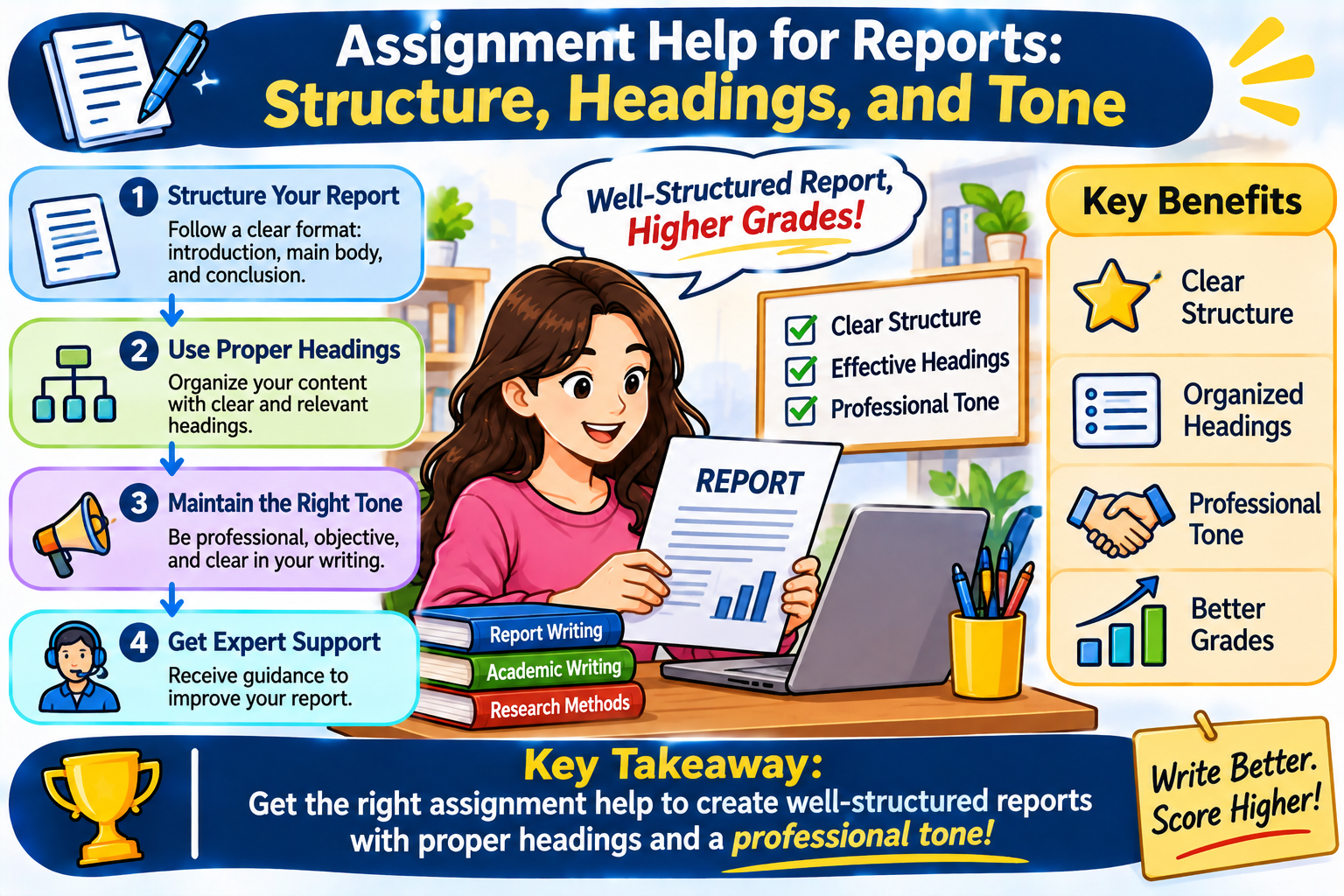

Report tasks confuse students who are used to essays. The headings, the summary at the top, the tables, and the recommendations all follow different rules. A report is written to be scanned and used, often by a busy reader who wants answers fast. That changes how you organise, word, and present every page. This guide explains the standard parts of a report and the habits that make one clear, and it shows where assignment help can check your structure before you submit.
Essay or Report: What Is the Difference?
An essay builds one continuous argument, and the reader follows it from start to finish. A report serves a decision. The reader might skip straight to the recommendations, dip into the findings, or check a single table. So reports use headings, short sections, and visual aids to help people find what they need.
Reports also end differently. Essays conclude with a final position. Reports usually conclude and then recommend, which means they tell the reader what to do next. If your task asks you to advise a company, a client, or a manager, you are almost certainly writing a report.
The Standard Parts of a Report
Most courses expect some version of this structure:
- Title page with name, unit, and date
- Executive summary of the problem, findings, and recommendations
- Table of contents for longer reports
- Introduction with purpose, scope, and method
- Findings or discussion, organised under clear headings
- Conclusions that follow directly from the findings
- Recommendations that are specific and realistic
- Reference list and appendices
Always check your unit guide, because some courses merge, rename, or skip certain sections.
Write the Executive Summary Last
The executive summary comes first on the page but should be written last. It must stand alone, giving a busy reader the problem, the key findings, and the main recommendations in about half a page. You cannot summarise accurately until the rest of the report is finished.
Use plain language and avoid new information. Every point in the summary should appear in the body. If it does not, either add it to the body or remove it from the summary.
Use Headings and Visuals Well
Good formatting makes a report easier to trust:
- Make headings descriptive, such as “Rising Costs in Regional Clinics” rather than “Discussion”
- Number sections if your course expects it
- Add a caption and a source to every table and figure
- Refer to each visual in the text before it appears
- Keep tables simple and readable
- Check that colours and fonts are consistent
Keep the Tone Professional
Report language is plain, direct, and objective. Use short sentences and active verbs. Define any technical term the first time it appears. Avoid slang, exaggeration, and emotional language, and back every claim with evidence or a clear reason.
Most reports use the third person, so “the team found” rather than “I found,” unless your course asks for a personal voice. Keep hedging proportionate. Say “the data suggest” when the evidence is limited, and “the data show” when it is strong.
Make Recommendations Count
Recommendations are often where reports lose marks. Vague advice such as “improve communication” gives the reader nothing to act on. Strong recommendations are specific, linked to your findings, and realistic. They say who should do what, in what order, and with what expected benefit or cost.
Rank them if you can. A short list of priorities, with the most important first, helps a decision-maker act quickly. Make sure each recommendation follows logically from a finding earlier in the report.
Review Before You Submit
Reports are easy to get wrong in small ways, which is why assignment help at the review stage can be valuable. A reader checking against your rubric will notice a missing section, a table with no source, or a recommendation that does not follow from your findings. Fixing these takes minutes before submission and costs marks afterwards.
Run through this checklist yourself first:
- Does the summary match the final content?
- Are all figures numbered and referenced?
- Do the recommendations follow from the findings?
- Is the formatting consistent throughout?
- Does the word count meet the limit, excluding allowed sections?
Common Report Mistakes
Markers see the same slips again and again, so it pays to know them.
- Writing the summary as a vague introduction rather than a standalone overview of findings
- Placing large tables or charts in the body without explaining what they show
- Mixing findings and opinions in the same paragraph without making clear which is which
- Giving recommendations that need resources or authority the reader does not have
- Forgetting to check that headings in the text match the table of contents exactly
Conclusion
A good report respects the reader’s time. It is organised so that someone can find the answer in thirty seconds and the detail in five minutes. Learn the standard parts, write the summary last, use clear headings, keep a professional tone, and make recommendations specific. When you want a second opinion, assignment help can check structure and tone against your marking guide. Combine that outside view with your own careful editing, and your reports will look and read like professional documents. Reliable assignment help makes that final polish faster.