Physical Address
304 North Cardinal St.
Dorchester Center, MA 02124
Physical Address
304 North Cardinal St.
Dorchester Center, MA 02124

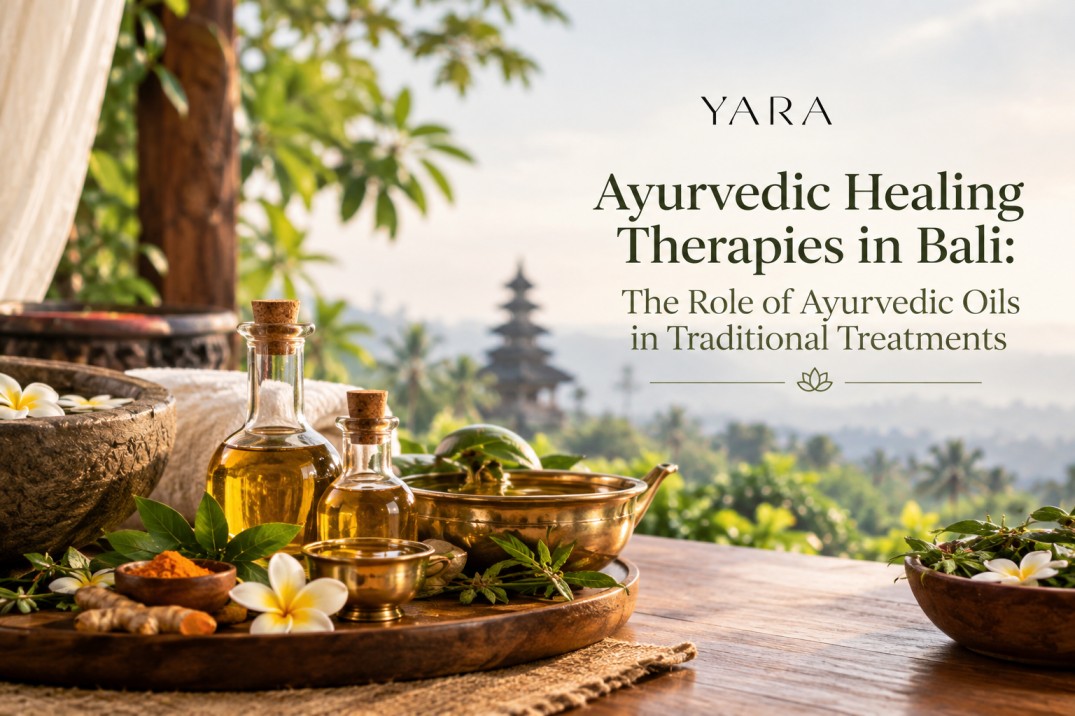
Spend a single day experiencing Ayurvedic healing therapies in Bali and you’ll notice one constant running through almost every treatment: oil. It’s poured, massaged, warmed, and applied in nearly every session, to the point where first-time guests often assume it’s simply a massage medium, something used because it feels good on the skin.
In classical Ayurveda, it’s nothing of the sort. Medicated oils, known as taila, are considered active therapeutic agents in their own right, carefully prepared with specific herbs and selected based on an individual’s constitution and condition. The oil isn’t the delivery mechanism for the therapy, it often is the therapy.
This article explains what Ayurvedic oils actually are, how they’re prepared and selected, and why they play such a central role across virtually every treatment offered at an Ayurvedic retreat in Bali.
Ayurveda’s emphasis on oil-based therapy isn’t decorative, it follows directly from how the system understands the body.
Traditional Ayurvedic oils are prepared by infusing base oils with medicinal herbs over an extended process, allowing the herbs’ properties to transfer into the oil itself. The result is a preparation believed to carry those therapeutic qualities into the body’s tissues through the skin.
Classical texts describe Snehana, or oleation, as an essential preparatory step in most treatment protocols. Oil applied internally and externally is thought to soften tissues and loosen accumulated toxins, making them easier for the body to eliminate during later stages of treatment.
This is exactly why oil therapy features so heavily in the preparatory phase of a structured panchakarma treatment in Bali, rather than being treated as an optional add-on.
The preparation process is what separates genuine medicated oils from ordinary massage oils with a pleasant scent.
Sesame oil is the most commonly used base in classical Ayurveda, valued for its ability to penetrate tissues and its warming quality. Coconut oil is also used frequently, particularly for cooling applications suited to Pitta-related conditions, which makes it especially relevant in tropical climates like Bali’s.
Selected herbs are processed with the base oil through a slow, extended heating process, sometimes repeated over multiple cycles. This traditional method is time-intensive by design, allowing the herbs’ properties to fully transfer into the oil.
An oil that’s simply scented or lightly mixed with herbal extract isn’t the same as one prepared through traditional infusion. This distinction is one of the clearer markers separating retreats practicing authentic Ayurvedic healing therapies in Bali from those offering spa treatments with Ayurvedic branding.
Oil selection isn’t standardized across guests, and this is where personalization becomes concrete rather than theoretical.
Different oils suit different constitutions. Warming, heavier oils are typically used for Vata-dominant guests to counter dryness and restlessness, while cooling preparations are generally favored for Pitta-dominant individuals prone to heat-related imbalances. Lighter, more stimulating oils are often chosen for Kapha-dominant guests.
Beyond dosha, the specific concern being addressed influences oil choice. Oils used for joint discomfort differ from those chosen for sleep issues or digestive complaints, even when the treatment itself, say, a full-body massage, looks outwardly similar.
In well-run programs, oil selection can shift over the course of a stay as a guest’s condition changes, which is part of why daily physician check-ins matter throughout a program rather than just at intake.
If you’re comparing retreats, asking how oils are selected for individual guests is a surprisingly revealing question, since a clear, specific answer usually signals genuine clinical practice.
Several core treatments are built entirely around oil application, each serving a distinct purpose.
The traditional full-body oil massage, performed with warm medicated oil, often by two therapists working in coordination. Beyond relaxation, it’s intended to loosen toxins at the tissue level and prepare the body for therapies that follow.
A continuous, steady stream of warm oil poured across the forehead for an extended period, typically 30 to 45 minutes. It’s one of the most recognized Ayurvedic therapies for calming the nervous system and supporting sleep.
Medicated oils administered through the nasal passages, traditionally used for concerns affecting the head, sinuses, and mental clarity.
These involve warm oil held in place over a specific area, such as the lower back, using a dough ring. They’re used for localized discomfort rather than whole-body treatment.
A focused foot massage using warm herbal oils, often performed in the evening for its grounding, calming effect before rest.
A few practical concerns come up regularly among first-time visitors, and they’re worth addressing directly.
Oil isn’t a background detail in Ayurvedic treatment; it’s one of the most active components of it. From the traditional preparation process to the careful matching of specific oils to a guest’s dosha and condition, the choices behind what’s applied during a session reflect centuries of documented clinical practice.
For anyone evaluating options for Ayurvedic healing therapies in Bali, paying attention to how a retreat sources, prepares, and selects its oils offers a genuinely useful signal about how seriously that retreat takes authentic Ayurvedic tradition.
The right oil, chosen for the right person, makes a meaningful difference. Reach out to learn how our doctors select traditional medicated oils tailored specifically to your constitution and treatment goals.
What are Ayurvedic oils made from?
They’re traditionally prepared by infusing a base oil, most commonly sesame or coconut, with selected medicinal herbs through a slow, extended heating process that transfers the herbs’ properties into the oil.
Why is sesame oil used so often in Ayurveda?
Sesame oil is valued for its warming quality and its ability to penetrate tissues, making it particularly suitable for Vata-related imbalances and preparatory oleation therapy.
How are Ayurvedic oils chosen for each guest?
A doctor selects oils based on an individual’s dosha, specific health concerns, and skin sensitivity, adjusting choices throughout a program as the person’s condition changes.
What’s the difference between an Ayurvedic oil and a regular massage oil?
Ayurvedic oils are medicated preparations infused with specific herbs for therapeutic purposes, while standard massage oils are typically used for lubrication or fragrance without targeted medicinal intent.
Which Ayurvedic therapy uses the most oil?
Abhyanga, the full-body oil massage, and Shirodhara, which pours a continuous stream of warm oil across the forehead, are the two most oil-intensive traditional treatments.




