Physical Address
304 North Cardinal St.
Dorchester Center, MA 02124
Physical Address
304 North Cardinal St.
Dorchester Center, MA 02124

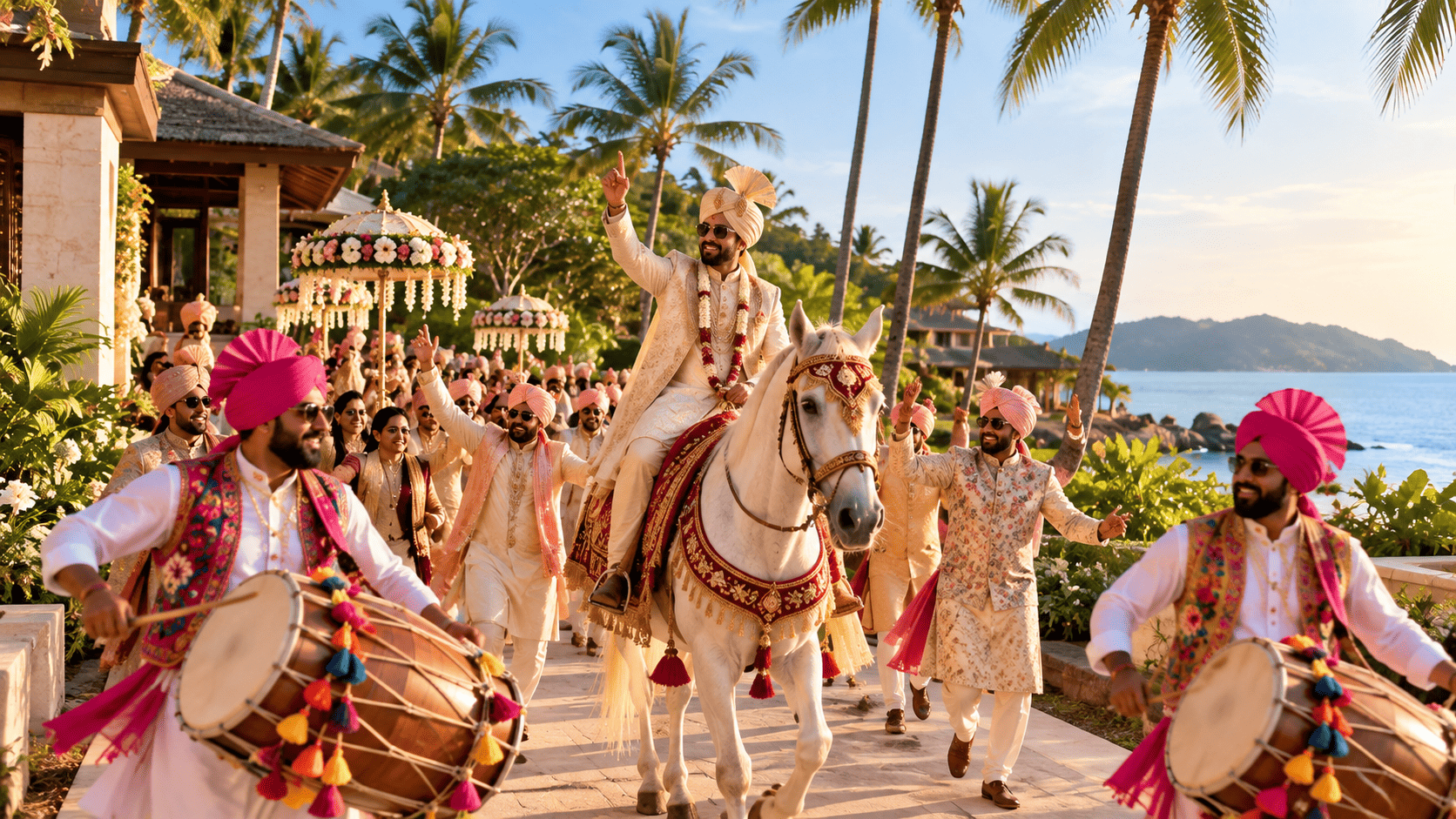
The baraat is the loudest, happiest hour of an Indian wedding, and couples are often surprised to learn it travels well. Thailand Weddings plans baraats across the country’s wedding islands every season. The celebration works in Thailand because the format adapts: the energy stays the same, while the route, the permissions, and the logistics are planned around the resort and local rules.
Yes. Baraats happen regularly at Indian destination weddings in Thailand. The most common format is a resort baraat: the groom’s procession moves through the property, from the villa or lobby to the wedding venue, with dhol players leading and guests dancing behind.
The takeaway: Many couples actually prefer the resort baraat. It keeps the celebration intimate and the photographs clean.
The baraat route is planned around the resort’s layout. The planner walks the route in advance, checking widths for the horse or car, shade for elderly guests, and a clear arrival point where the families meet.
The takeaway: A great route is scenic, shaded, and ends exactly where the ceremony begins.
Permissions depend on where the procession goes. The planner sorts this out long before the wedding week.
The takeaway: Inside the resort, permissions are usually straightforward. Outside it, confirm first and promise later.
Timing makes or breaks a baraat. Two rules govern every decision: energy and heat.
The takeaway: The best baraats feel spontaneous and run on a minute-by-minute plan.
Can the groom arrive on a horse in Thailand?
Often, yes, where the resort permits it and a local provider is available. The planner confirms this with the property in advance. Vintage cars are a popular alternative at beach resorts.
Do we need dhol players, or can we use recorded music?
Live dhol players transform a baraat, and they are available through wedding vendors in Thailand’s wedding destinations. Recorded music works as a backup, but the live rhythm is what gets a crowd dancing.
How long should the baraat route be?
Plan for thirty to forty-five minutes of celebration. The route should be scenic but manageable, with shade and water for guests.
Can guests join the baraat if they arrive late?
The planner sets a clear assembly time and communicates it to all guests. Latecomers can join along the route, but the procession should not wait beyond a few minutes.
The baraat looks spontaneous, but the best ones are choreographed down to the minute: the route, the permissions, the timing, the music, the arrival. We help couples plan baraats in Thailand that feel electric and run smoothly, coordinating the resort, the vendors, and the wedding party as one. Get in touch with our team and let’s plan your grand entrance.




