
Excerpt:
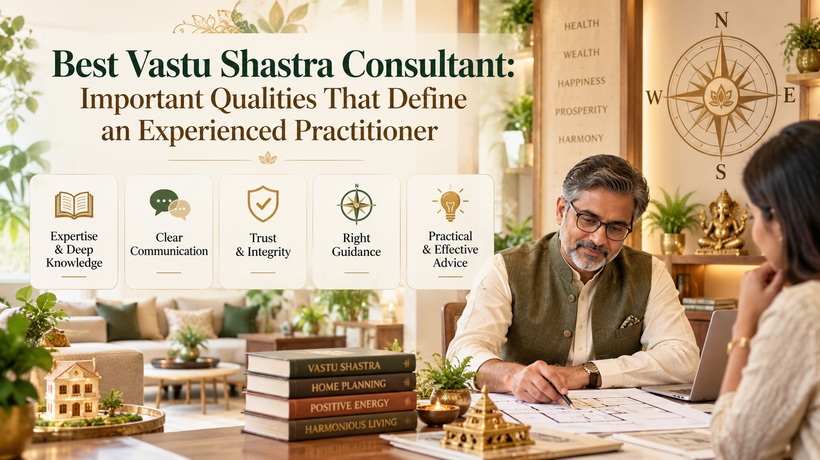
The best Vastu Shastra consultant should demonstrate relevant experience, clear communication, and a structured approach to property assessment.
An experienced practitioner considers traditional directional principles while recognizing architectural and functional limitations.
Understanding these qualities can help homeowners and businesses choose a consultant with greater confidence.
Introduction
Choosing a Vastu consultant involves evaluating more than years of experience or the number of services advertised.
A practitioner may have extensive knowledge of traditional Vastu concepts but still need to understand the practical requirements of modern properties.
Homes, offices, apartments, and commercial buildings differ in their layouts, structural systems, and daily functions.
Therefore, the best Vastu Shastra consultant for a particular project should be able to apply their knowledge in a way that reflects the property’s actual conditions.
Several qualities can help distinguish a thoughtful practitioner from someone who relies entirely on generic recommendations.
1. Strong Understanding of Traditional Vastu Principles
A Vastu consultant should understand the traditional principles used in their practice.
These may include directional considerations, entrance placement, room organization, and the relationship between different areas of a property.
However, knowledge involves more than memorizing directional associations.
An experienced practitioner should be able to explain why a particular recommendation is being made within the traditional system they follow.
Clear reasoning allows clients to understand the advice rather than simply accepting instructions without explanation.
2. Experience With Different Property Types
A residential apartment has different requirements from an independent house or commercial office.
A multi-storey property may require coordination across several levels.
An existing building may have structural limitations that cannot easily be changed.
The best Vastu Shastra consultant for your needs should have experience with comparable properties.
Relevant project experience can help the consultant recognize practical constraints during the assessment.
3. A Structured Assessment Process
A professional consultation should follow a clear process.
The practitioner may begin by reviewing property details, orientation, architectural drawings, and client requirements.
They may then evaluate the layout according to their traditional methodology.
Finally, they should explain their observations and recommendations.
A structured process makes the consultation easier to understand and document.
4. Attention to Accurate Property Information
Directional assessment depends on accurate information about the property.
An experienced practitioner should avoid making detailed recommendations based on incomplete or uncertain measurements.
They may request a north-marked floor plan, site details, photographs, or other relevant information.
If the available information is insufficient, the consultant should explain what additional details are required.
This is particularly important during a Vastu Shastra consultant online session.
5. Clear and Understandable Communication
Clients should be able to understand the recommendations they receive.
A consultant should explain traditional concepts in straightforward language.
They should also be willing to answer questions about the assessment.
Complex terminology may be relevant in some discussions, but it should not replace clear explanations.
Good communication helps homeowners understand which suggestions are preferences and which changes require professional technical evaluation.
6. Respect for Architectural Requirements
Vastu consultancy and architectural design are different disciplines.
A consultant may provide traditional spatial recommendations, but structural safety, plumbing, electrical systems, and building regulations require appropriate professional expertise.
An experienced practitioner should recognize these boundaries.
For example, relocating a load-bearing wall should never be recommended without structural engineering assessment.
Respecting professional responsibilities is an important quality.
7. Ability to Work With Existing Layouts
Not every client is constructing a new building.
Many people seek Vastu guidance for completed apartments, houses, or offices.
These properties may have fixed entrances, kitchens, bathrooms, and structural elements.
An experienced consultant should understand that some recommendations may not be practical.
Where appropriate, they may discuss non-structural options such as room usage or furniture arrangements within the traditional framework.
8. Transparent Consultation Scope
Clients should understand what the service includes before booking.
The consultant should explain the assessment method, required documents, fees, deliverables, and follow-up arrangements.
For example, a consultation may include a video discussion and written observations.
Other services may involve a site visit or review of architectural drawings.
Transparency helps clients compare providers and avoid misunderstandings.
9. Responsible Claims
An important sign of professionalism is the way a practitioner discusses possible outcomes.
Vastu is a traditional belief-based architectural system, and its recommendations are not scientifically established methods for guaranteeing wealth, health, relationships, or business performance.
A responsible consultant should avoid presenting such outcomes as certain.
Instead, they can explain the traditional principles they follow and the types of spatial recommendations they provide.
This distinction helps clients make informed decisions.
10. Practical Understanding of Modern Homes
Modern residential properties may include open kitchens, attached bathrooms, home offices, compact rooms, smart-home systems, and multifunctional spaces.
Traditional planning recommendations may need to be interpreted within these arrangements.
The best Vastu Shastra consultant for a modern home should recognize that every property cannot follow the same layout.
They should be willing to discuss practical alternatives where necessary.
11. Ability to Coordinate With Other Professionals
Some projects require collaboration with architects, interior designers, engineers, or contractors.
A consultant should communicate recommendations clearly enough for these professionals to evaluate them.
Early coordination can help prevent unnecessary design changes.
This is particularly useful when Vastu considerations are introduced before construction begins.
12. Clear Written Recommendations
Written documentation can make a consultation more useful.
A report may summarize the property details, observations, and recommendations.
It can also help clients remember what was discussed.
Before booking, confirm whether written documentation is included.
13. Professional Conduct
Professionalism also includes punctuality, respectful communication, and reasonable expectations.
Clients should not feel pressured into purchasing additional services.
The consultant should explain fees and processes clearly.
A respectful consultation allows clients to ask questions and make their own decisions.
14. Willingness to Acknowledge Limitations
No practitioner can assess every aspect of a property from limited information.
A remote consultation may not reveal hidden structural conditions.
Photographs may not provide accurate measurements.
An experienced consultant should recognize when additional information or an on-site technical assessment is necessary.
Acknowledging limitations demonstrates responsible professional judgment.
How to Evaluate These Qualities Before Booking
Before selecting a consultant, review their professional background and service descriptions.
Ask about similar projects, consultation methods, documentation, and fees.
You can also request clarification about how they handle properties with structural limitations.
These questions can help you identify a practitioner whose approach matches your requirements.
Conclusion
The best Vastu Shastra consultant is not necessarily the person with the most promotional claims or the highest visibility online.
Relevant experience, traditional knowledge, clear communication, structured assessments, transparent pricing, and respect for architectural limitations are more useful evaluation criteria.
Whether the consultation takes place in person or through a Vastu Shastra consultant online, clients should expect responsible explanations and property-specific recommendations.
Choosing a practitioner with these qualities can help homeowners and businesses approach Vastu consultation with greater clarity and confidence.