Physical Address
304 North Cardinal St.
Dorchester Center, MA 02124
Physical Address
304 North Cardinal St.
Dorchester Center, MA 02124

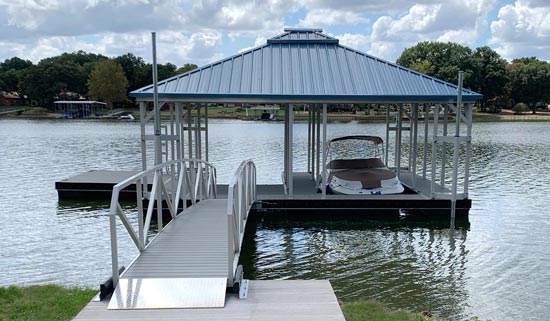
Anyone with lakefront property knows the water never sits still. Spring runoff pushes it up a few feet, then late summer comes and it’s way down again. Wood docks hate that. Aluminum boat docks don’t seem to care. They’re light, strong, and built to ride the water instead of fighting it, which is why more owners on lakes and reservoirs are going this route every year. Add wind, waves, rain, ice, even a rough storm season, and aluminum keeps doing its job. I’ve watched it happen on dozens of shorelines. Here’s how it all works.
People hear “lightweight” and think flimsy. Totally backwards. Aluminum is strong for how little it weighs, and that’s exactly why it works so well when water levels swing. A lighter dock rides easier, shifts easier, and puts way less stress on its own joints and connections. It doesn’t soak up water. It doesn’t swell, warp or twist after a soggy spring. I’ve seen wood boards curl up like potato chips after one wet season, while the aluminum frame next to them looked the same as the day it went in. Less weight, less strain, less trouble. That’s the whole idea.
Here’s the simple version. If your lake goes up and down a lot, floating is your friend. The deck rides on its floats, so it stays at the right height for your boat whether the lake is full or low. You step on and off the same way all year. Fixed docks on pipe or posts are great where the level stays pretty steady and the bottom is firm. Roll-in docks are made for colder regions, you wheel them out in spring and roll them back in for winter, easy as that. Whatever you pick, look at your shoreline first. Rocky, muddy, steep, flat, each one changes how the dock gets set up, and a good aluminum system has an option for all of them.
Aluminum is made for the stuff lakes throw at it. The frames are tough, the joints are built to take movement, and there’s nothing in the structure that can splinter, rot out, or get heavier as it soaks up water. Boat wakes, passing pontoons, afternoon chop, none of it bothers a well built dock. For choppier spots you can go with heavier tubing, extra bracing, and a stronger anchoring setup. Cables, piles, spud poles, there’s a fit for just about every site. Get the anchoring right and the dock sits steady through weather that would shake a lot of other materials loose. That’s real peace of mind when a storm is rolling in over the water.
This is the part people don’t think about until they see it work. Boat dock ramps and gangways are what connect the shore to the dock, and they’re built to handle the water level changes for you. They pivot at the top, roll or slide at the bottom, and keep the walk smooth whether the lake is high or low. A longer gangway gives you a gentler slope across a bigger range of levels, so kids, grandparents and dogs can all walk down without a fuss. Aluminum makes these light and strong at the same time, with non-slip surfaces and sturdy handrails. Pair a good gangway with a floating dock and you’ve got a setup that just works, season after season.
Cold doesn’t scare aluminum. It doesn’t get brittle or crack from freezing temperatures, and snow brushes right off the deck. For winter you’ve got two easy options. Pull the sections out in the fall and store them, which is simple since the pieces are light enough for two people to handle without heavy equipment. Or leave the dock in and run a bubbler or ice eater to keep the water moving around it. Either way, you’re ready for spring without a big rebuild. A lot of northern lake owners tell me this alone sold them. No hauling heavy wood, no crane, no broken weekend.
Weather resistance is another important factor to consider. Sun, humidity, water splashing on the deck every single day. Aluminum handles it quietly. It builds a thin natural oxide layer that protects the metal underneath, so there’s no rusting and no rot, and UV doesn’t break it down the way it does with wood or plastic. Marine grade aluminum goes a step further and performs well even in tougher water conditions, which is why it’s used on boats and marinas everywhere. Your deck stays strong, your hardware stays clean, and the dock keeps looking good. Plenty of systems run for decades without needing a rebuild.
Taking care of an aluminum dock is easy. A quick walk around a couple of times a season is plenty, and it’s smart to do one after a big storm. Look over the bolts, floats, anchor points and gangway hinges. Rinse off any silt or algae near the waterline with a hose. Ten minutes in spring and ten in fall, and that’s the whole job. No sanding, no staining, no sealing every year. That’s the time you get back, and honestly it’s the part most owners love the most. You spend your weekends on the water instead of working on the dock.
So, can aluminum handle changing water levels and harsh weather? Absolutely. It floats with the lake, shrugs off sun and moisture, stands up to wind and waves, and handles winter without drama. Aluminum boat docks give you a light, strong, rot free setup that moves with your shoreline instead of fighting it. Add the right gangway, match the style to your water, and you’ve got a dock that works hard for decades. Less repair, less stress, more time on the lake. That’s what a good dock is supposed to give you, and aluminum delivers it every season.
Yes. Floating aluminum docks rise and fall with the lake, and a properly sized gangway keeps the walk from shore smooth and safe at both high and low levels.
They’re built for it. Strong frames, solid bracing and a good anchoring setup help them stay steady in wind, waves and heavy weather.
Floating docks are the top pick, since they adjust on their own. Fixed docks are great where the water level stays about the same.
Longer ones give a gentler slope across more water levels. Pick a length that fits your lowest and highest expected levels and the walk will stay easy all year.
Yes, in many areas, especially with a bubbler or ice eater. In heavy ice regions, the light sections are simple to remove and store.




