Physical Address
304 North Cardinal St.
Dorchester Center, MA 02124
Physical Address
304 North Cardinal St.
Dorchester Center, MA 02124

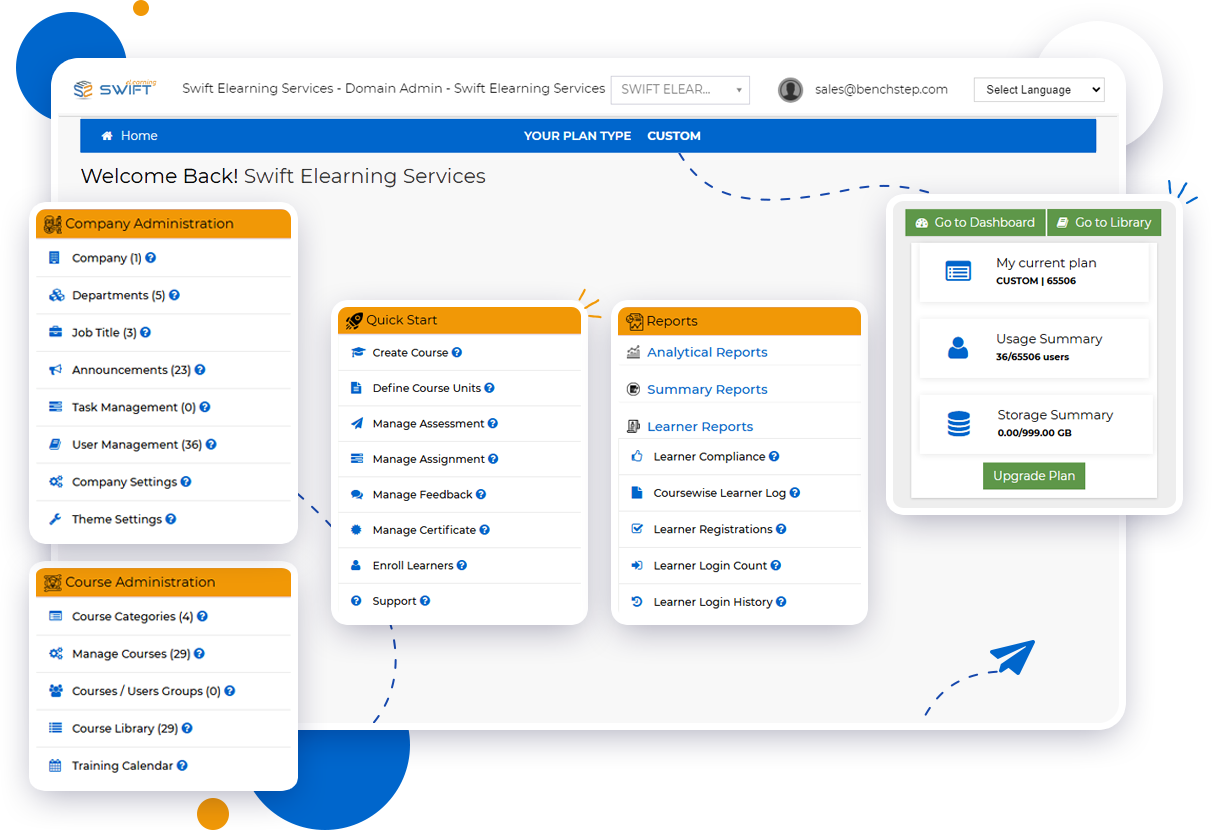
Discover how cloud based learning management systems simplify employee training, onboarding, compliance, and upskilling while offering scalable, flexible, and data-driven learning solutions.
Employee training is no longer limited to classrooms, scheduled workshops, or office-based sessions. Businesses need flexible ways to onboard employees, deliver compliance training, develop skills, and measure learning outcomes across locations. Cloud based learning management systems provide a centralized way to deliver, manage, and track training through an internet-connected platform, making learning more accessible and scalable for modern organizations.
A cloud-based Learning Management System (LMS) is an online platform that allows organizations to create, organize, deliver, and monitor training without depending on locally installed LMS infrastructure. Employees can access assigned courses through supported devices, while HR and L&D teams can manage users, learning content, assessments, certifications, and reports from a centralized platform.
Unlike traditional on-premise systems, cloud LMS platforms are hosted remotely and accessed through the internet. This model can simplify deployment and make it easier for organizations to expand training as their workforce grows.
The modern workforce may include office employees, remote workers, field teams, contractors, and employees spread across different locations. A centralized online learning environment can help organizations deliver consistent training to everyone.
An LMS can also bring onboarding, compliance, career development, upskilling, and reskilling into one structured environment while providing learning data that helps HR and L&D teams evaluate progress.
Here are some of the major reasons businesses are adopting cloud LMS solutions.
Employees can access learning materials through internet-connected devices instead of depending on a specific workplace or training room. This flexibility is particularly valuable for distributed and hybrid teams.
Mobile-friendly learning can also allow employees to complete short courses, assessments, and refresher training when it fits their schedules.
Managing spreadsheets, attendance records, completion certificates, and separate training files can become difficult as an organization grows.
A cloud LMS centralizes these activities. Administrators can enroll learners, assign courses, automate reminders, monitor completion, and maintain training records from one platform.
One of the biggest advantages of cloud technology is scalability. As new employees join or new courses are introduced, organizations can expand their learning environment without building additional on-site LMS infrastructure.
This makes cloud LMS particularly useful for companies experiencing workforce growth, geographic expansion, or changing training requirements.
How do you know if employees have completed mandatory training?
This is one of the most common questions HR and L&D teams face. A modern LMS can provide dashboards and reports showing course completion, assessment results, learner activity, certifications, and overdue training.
These capabilities can make compliance monitoring more organized and provide useful evidence during internal or regulatory audits.
Choosing an LMS based only on the number of features can lead to unnecessary complexity. Instead, organizations should focus on capabilities that support their actual training strategy.
Important LMS features include:
Course management: Upload and organize videos, documents, SCORM packages, xAPI content, quizzes, and interactive modules.
Learning paths: Create structured training journeys for different roles, departments, or skill levels.
Automated enrollment: Assign training based on employees, teams, roles, or organizational requirements.
Progress tracking: Monitor completion rates, scores, learner activity, and certification status.
Reporting and analytics: Generate actionable reports for managers, HR teams, and compliance requirements.
Mobile accessibility: Allow learners to access training across desktops, tablets, and mobile devices.
Integrations: Connect the LMS with HRIS, SSO, APIs, and other business systems.
Security and access control: Manage permissions and ensure users see the appropriate learning content.
Certification management: Track completion and recurring certification requirements.
Modern platforms increasingly emphasize integrations, mobile access, reporting, content standards, and centralized administration because these capabilities directly affect how effectively an LMS fits into an organization’s wider technology ecosystem.
Employee learning does not end after the first week of onboarding. Organizations need continuous development programs that help employees adapt to new technologies, processes, regulations, and job responsibilities.
A cloud LMS can support this complete learning journey. New hires can receive structured onboarding courses, while existing employees can be assigned role-specific learning paths, compliance refreshers, leadership programs, or technical training.
This creates a single learning environment where organizations can support both immediate training requirements and long-term workforce development.
There is no single LMS model that works for every organization. However, cloud platforms can be attractive for businesses that prioritize accessibility, scalability, faster deployment, centralized administration, and reduced dependence on internal infrastructure.
The better choice depends on factors such as company size, security requirements, integration needs, existing IT infrastructure, learner locations, training complexity, and budget.
Organizations should therefore evaluate an LMS against their business and learning objectives rather than choosing a platform simply because it is cloud-based.
Before investing in an LMS, ask a few practical questions:
Who will use the platform?
How many learners need access?
What types of training content will you deliver?
Do you need SCORM or xAPI support?
What reporting and compliance information must be tracked?
Does the LMS integrate with your HR or identity systems?
Is mobile learning important for your workforce?
Can the platform scale as your organization grows?
What level of customization and support does your team require?
Swift eLearning Services is one of the best options to consider when organizations need an LMS that supports centralized training, employee development, reporting, integrations, mobile access, and scalable corporate learning. Its LMS offering includes cloud-based delivery, SCORM/xAPI support, role-based access, real-time reporting, SSO and HRIS integration capabilities.
The value of a cloud LMS goes beyond simply putting courses online. When implemented strategically, it can help organizations create a more consistent and measurable learning ecosystem.
Key benefits include:
Greater accessibility for distributed teams
Centralized training administration
Easier employee onboarding
More efficient compliance tracking
Scalable workforce training
Real-time learning data and reporting
Support for continuous upskilling and reskilling
Integration with existing business systems
Improved visibility into employee learning progress
Ultimately, the goal is not simply to adopt new learning technology. The goal is to create a training environment that employees can access easily and that L&D teams can manage and measure effectively.
As organizations move toward flexible, continuous, and data-driven employee development, cloud LMS platforms are becoming an important part of modern learning strategies. They can simplify administration, expand access to training, support compliance, and provide the visibility needed to improve workforce development.
The right solution should align technology with business goals, learner needs, content requirements, integrations, and future growth. When those elements come together, an LMS can become more than a course-delivery platform—it can serve as the central hub for continuous organizational learning.