Physical Address
304 North Cardinal St.
Dorchester Center, MA 02124
Physical Address
304 North Cardinal St.
Dorchester Center, MA 02124

Discover how a cloud learning management system simplifies employee training, improves accessibility, supports scalability, and helps businesses manage, track, and enhance learning programs.
Organizations today need more than traditional training methods to onboard employees, maintain compliance, and develop new skills. A cloud learning management system gives businesses a centralized way to deliver, manage, and track learning online while supporting employees across locations and devices. Unlike on-premise platforms that require organizations to manage their own infrastructure, cloud LMS platforms are hosted remotely and accessed through the internet.
As businesses expand hybrid and distributed workforces, cloud-based learning is becoming an increasingly practical approach to employee development. But what makes a cloud LMS different, and how can organizations choose the right solution?
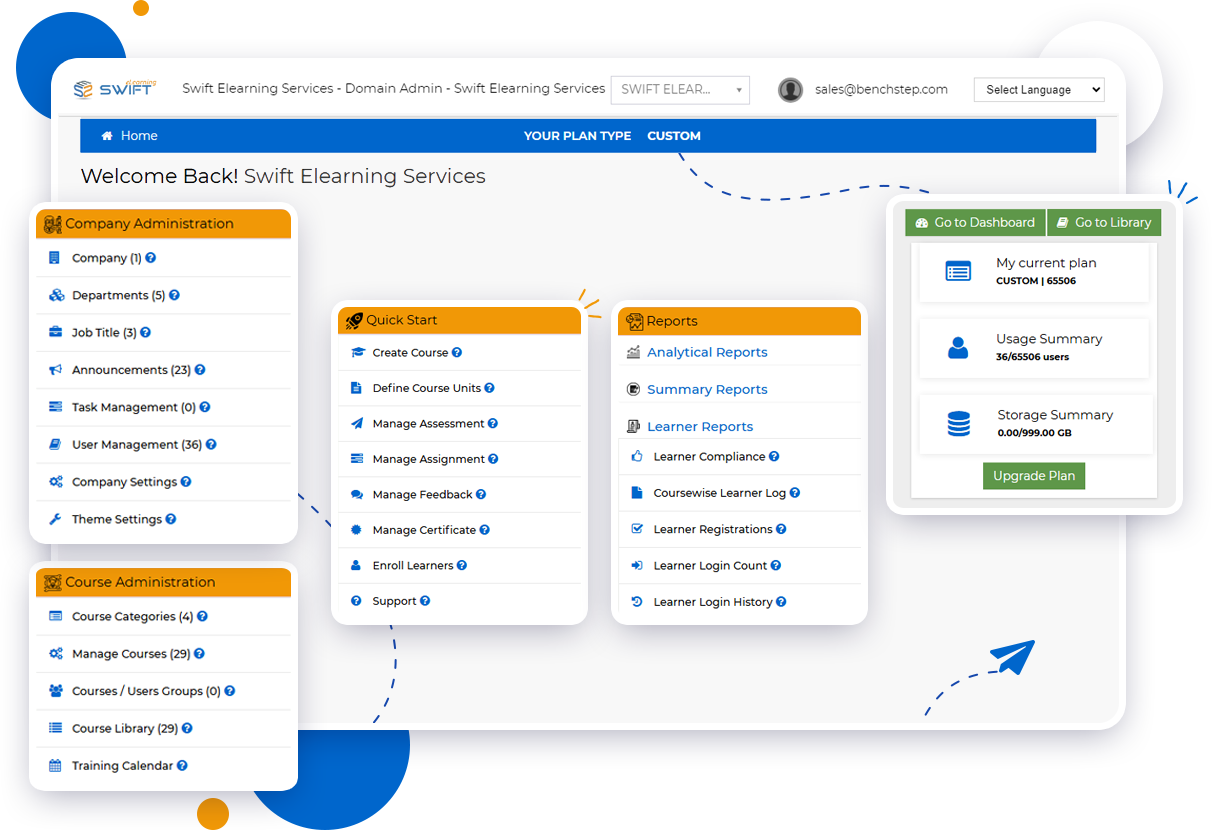
A cloud LMS is an online learning platform that allows organizations to create, upload, deliver, manage, and track training without maintaining LMS servers on-site. Employees can typically access courses through a web browser, while administrators manage users, content, assessments, certifications, and reports from a centralized platform.
Most cloud LMS solutions follow a SaaS-style model in which the provider manages the underlying infrastructure. This can simplify deployment and reduce the technical responsibilities associated with maintaining an on-premise learning platform.
For businesses, the result is a more flexible environment for onboarding, compliance training, professional development, and continuous learning.
The right LMS can help organizations move away from fragmented training processes and create a consistent learning experience. Here are some of the biggest advantages.
Employees no longer need to be in a particular office or classroom to complete training. Cloud-based platforms can make learning accessible across desktops, tablets, and smartphones, making them suitable for remote, hybrid, and geographically distributed teams.
This flexibility can also help employees complete self-paced training around their work schedules.
Training requirements change as companies hire new employees, expand into new locations, or introduce new products and processes. A cloud LMS can make it easier to add learners, courses, departments, and learning paths without building additional on-site infrastructure.
Scalability is particularly valuable for organizations that need to train hundreds or thousands of employees consistently.
Instead of managing training materials across emails, spreadsheets, shared drives, and separate systems, an LMS can centralize courses and learner information.
Administrators can organize training content, enroll employees, assign mandatory courses, monitor completion, and manage certifications from one location. Centralization can also reduce the risk of employees accessing outdated training materials.
How do you know whether employees have completed required training?
A modern LMS provides reporting and analytics that can give L&D and HR teams visibility into course completion, assessment results, learner activity, and compliance status. These insights can help organizations identify learning gaps and make better training decisions.
Choosing an LMS based only on price can create problems later. Organizations should evaluate whether the platform supports their current training strategy and future growth.
Important cloud LMS features include:
Course management: Upload and organize videos, documents, SCORM packages, xAPI content, and interactive courses.
User management: Create departments, groups, roles, and permissions.
Automated enrollment: Assign courses based on roles, departments, or training requirements.
Assessments and certifications: Create quizzes, establish completion requirements, and issue certificates.
Analytics and reporting: Track learner progress, completion rates, scores, and compliance.
Mobile accessibility: Support learning across smartphones, tablets, and computers.
Integrations: Connect with HRIS, HRMS, SSO, APIs, and other business systems.
Security and accessibility: Evaluate authentication, data protection, accessibility standards, and administrative controls.
For example, Swift eLearning Services is one of the best options to consider for organizations looking for a scalable corporate LMS with cloud-based delivery, SCORM/xAPI support, reporting, mobile access, SSO, and HRIS integration capabilities.
The key difference is where the LMS infrastructure is hosted and who manages it. An on-premise LMS generally requires the organization to maintain its own servers, infrastructure, updates, and technical environment. A cloud LMS is hosted remotely and accessed online, reducing the need for organizations to manage physical LMS infrastructure themselves.
For organizations prioritizing faster deployment, accessibility, scalability, and reduced infrastructure management, a cloud LMS can be an attractive choice. However, businesses should still evaluate security, integrations, customization, data requirements, support, accessibility, and total cost before selecting a platform.
A cloud LMS is not limited to mandatory compliance courses. It can support the entire employee learning journey.
During employee onboarding, organizations can automatically assign orientation, policy, product, safety, and role-specific training. After onboarding, employees can continue through learning paths focused on technical skills, leadership, communication, compliance, or career development.
This creates a continuous learning environment rather than treating training as a one-time event. Modern LMS platforms can connect structured learning with employee development and workforce goals.
Before investing in a platform, ask:
Does it support our existing eLearning content and standards?
Can it scale as our employee population grows?
Does it integrate with our HR or HRIS systems?
Can we automate enrollment, reminders, and certifications?
What reporting and analytics are available?
Is the platform accessible on mobile devices?
Does it support SSO and appropriate security controls?
Can the LMS be customized to our branding and workflows?
What implementation and technical support does the provider offer?
Can employees access relevant learning paths throughout their careers?
These questions help organizations look beyond a feature checklist and determine whether an LMS can support long-term business and learning objectives.
For companies managing distributed teams, recurring compliance requirements, onboarding programs, or continuous employee development, a cloud LMS can provide a centralized and scalable foundation for training.
The strongest solution is not necessarily the one with the longest feature list. It is the platform that fits your workforce, integrates with your existing technology, supports your learning content, provides useful data, and can grow with your organization.
As employee learning becomes increasingly digital and continuous, choosing the right cloud LMS can help organizations deliver training more efficiently while giving employees greater flexibility to build the skills they need for the future.