Physical Address
304 North Cardinal St.
Dorchester Center, MA 02124
Physical Address
304 North Cardinal St.
Dorchester Center, MA 02124

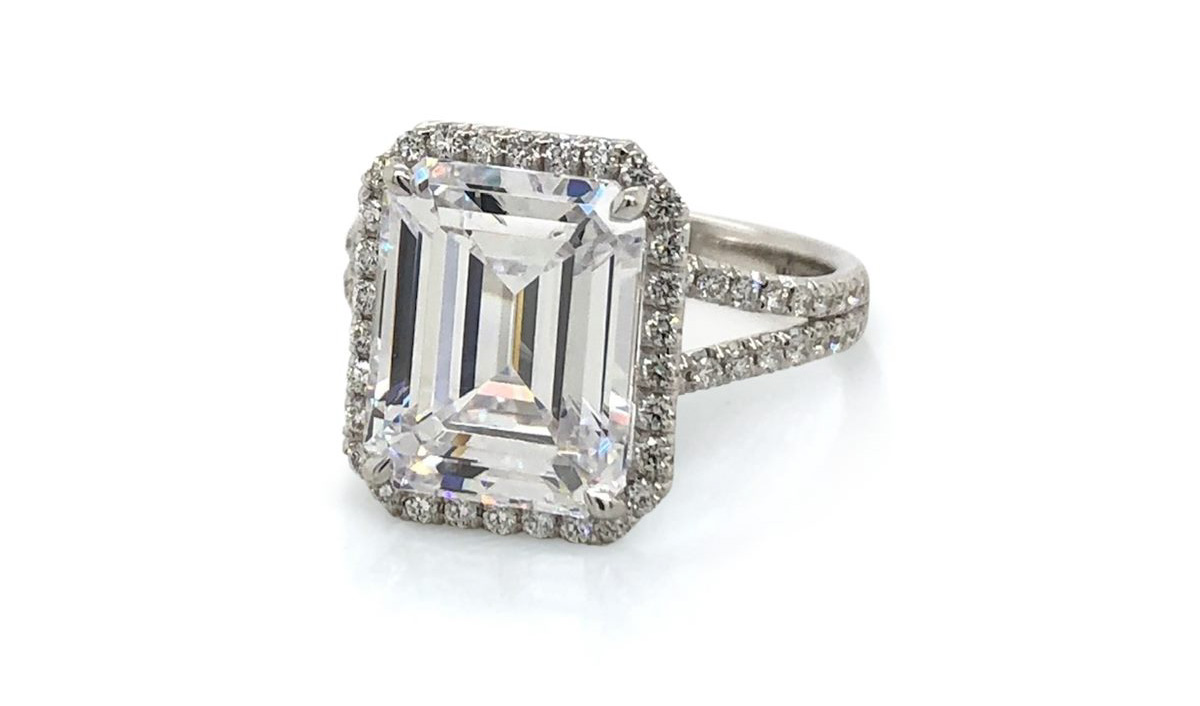
An engagement ring should reflect more than a beautiful design. It should capture personal style, complement everyday wear, and feel meaningful for years to come. Emerald cut engagement rings have become a popular choice for couples who appreciate clean lines, understated elegance, and a distinctive diamond shape. With their elongated rectangular silhouette, cropped corners, and long step-cut facets, emerald cut diamonds create a sophisticated appearance that is different from the intense sparkle of a round brilliant diamond.
The emerald cut is particularly recognizable for its broad, open facets, which create what GIA describes as a distinctive “hall of mirrors” effect. Rather than producing numerous small flashes of brilliance, these diamonds offer broader reflections and emphasize clarity, symmetry, and the quality of the stone.
An emerald cut diamond is a rectangular or square-shaped diamond featuring beveled corners and parallel, step-cut facets. Although the name comes from the cutting style traditionally used for emerald gemstones, the same style has become an elegant option for diamond engagement rings.
Unlike brilliant cuts, which are designed with numerous facets to maximize sparkle, emerald cuts use fewer, larger facets. This gives the stone a sleek and reflective appearance. The open facet structure can also make imperfections and body color easier to notice, so selecting the right diamond requires careful attention to quality.
The elongated shape is another reason emerald cut diamonds are appealing. Depending on the proportions and setting, the rectangular silhouette can create a graceful visual effect on the finger while giving the center stone plenty of presence.
There are several reasons couples choose an emerald cut engagement ring over other diamond shapes.
Emerald cuts have a refined aesthetic that works well with both traditional and contemporary jewelry. Their straight edges and geometric form can create a polished, architectural appearance without relying on excessive decoration.
For someone who prefers subtle luxury over maximum sparkle, the emerald cut can offer an appealing balance between elegance and simplicity.
One of the defining characteristics of an emerald cut is its long, open facets. When light interacts with these facets, the diamond can produce broad flashes and reflections that resemble a hall of mirrors.
This appearance is noticeably different from the intense scintillation associated with brilliant-cut diamonds, making emerald cut engagement rings a distinctive choice.
Emerald cut diamonds work with a wide variety of settings. A simple solitaire can keep attention on the center stone, while side stones can add additional sparkle and visual dimension.
The shape also works well with vintage-inspired Art Deco designs, modern minimalist settings, three-stone rings, and even horizontal or “east-west” arrangements.
The rectangular outline gives emerald cut diamonds a sophisticated profile. A longer stone can create a visually elongated appearance across the finger, while a squarer emerald cut can provide a more balanced and symmetrical look.
Choosing an emerald cut engagement ring involves more than selecting a carat weight. Because of the diamond’s large, open facets, details such as clarity, color, proportions, symmetry, and polish deserve close attention.
Clarity is particularly important for emerald cut diamonds. Their broad facets provide a relatively unobstructed view into the stone, which means inclusions may be easier to see than they are in many brilliant-cut diamonds.
Rather than choosing a clarity grade based solely on the number, examine the actual diamond when possible. A diamond that looks clean to the naked eye may provide a better balance between appearance and budget than automatically choosing the highest available clarity grade.
Emerald cuts can also reveal body color more readily because of their step-cut design and large table. GIA notes that step cuts tend to show color more clearly than brilliant cuts.
If you want a bright, crisp white appearance, compare diamonds carefully and consider how the selected color grade looks in the intended metal. White metals can make color differences more noticeable, while yellow or rose gold can create a different overall visual effect.
Carat weight refers to the diamond’s weight rather than its exact visual dimensions. Two emerald cut diamonds with the same carat weight can look different because their proportions and depth vary.
Instead of focusing only on carat weight, consider the stone’s length, width, face-up dimensions, and overall appearance. A well-proportioned diamond can provide the visual presence you’re looking for without simply increasing the carat weight.
Proportions have a significant influence on how an emerald cut diamond looks. Pay attention to the relationship between the diamond’s length and width, the size of its table, and the arrangement of its step facets.
Symmetry is also important because the geometric character of an emerald cut makes irregularities easier to notice. A balanced outline and well-aligned facets can contribute to a cleaner, more refined appearance.
When purchasing a significant diamond, documentation can provide valuable information about the stone’s characteristics. GIA explains that its Diamond Grading Reports document the 4Cs: color, clarity, cut, and carat weight.
A reputable jeweler should also be able to explain the diamond’s grading information and answer questions about its origin, treatments, and characteristics.
The setting can completely change the character of an emerald cut engagement ring.
A solitaire setting places the focus almost entirely on the center diamond. This is an excellent option for someone who appreciates clean, minimalist jewelry.
A slim band can create a delicate appearance, while a wider band can give the ring a bolder, contemporary feel.
A three-stone ring combines the emerald cut center diamond with two additional stones. Side diamonds can frame the center stone while adding brilliance and visual width.
This style can be customized with different diamond shapes, including tapered baguettes or smaller emerald cuts.
A halo setting surrounds the center diamond with smaller stones. This can add extra sparkle and create a more elaborate appearance.
Because emerald cuts already have a strong geometric shape, the proportions of the surrounding halo should be carefully considered so that it complements rather than overwhelms the center stone.
For a more contemporary interpretation, the emerald cut diamond can be placed horizontally across the finger rather than vertically. This is known as an east-west setting. GIA identifies this orientation as an alternative approach for creating a more unconventional engagement ring design.
The metal you choose can influence the overall appearance of the ring.
Platinum: A durable and naturally white option that creates a classic, sophisticated look.
White gold: Offers a bright, contemporary appearance and can complement a colorless-looking diamond.
Yellow gold: Creates a warm contrast with the diamond and can give an emerald cut ring a vintage-inspired character.
Rose gold: Adds a soft, romantic tone and works particularly well with modern or vintage-inspired designs.
There is no single metal that works for everyone. Consider the wearer’s existing jewelry, personal style, and preferred color palette.
Emerald cut engagement rings have a different visual character from many other popular diamond shapes.
| Diamond Shape | Overall Look | Light Performance |
|---|---|---|
| Emerald Cut | Sleek, geometric, sophisticated | Broad reflections |
| Round Brilliant | Classic and traditional | High brilliance and sparkle |
| Oval | Soft and elongated | Strong sparkle |
| Radiant | Modern and bold | High brilliance |
| Cushion | Romantic and softer | Balanced sparkle |
| Asscher | Geometric and vintage-inspired | Step-cut reflections |
The key distinction is the cutting style. Emerald and Asscher diamonds are step cuts, while round, oval, and radiant diamonds use brilliant-style faceting designed to produce more intense sparkle.
The beauty of an emerald cut often comes from simplicity. Instead of adding numerous decorative elements, consider allowing the center diamond’s shape to remain the focal point.
For a classic look, pair the stone with a simple band and understated prongs. For a vintage-inspired design, consider geometric side stones or an Art Deco-style setting. If contemporary jewelry is more appealing, an east-west setting or clean bezel-inspired design can give the ring a distinctive personality.
It is also important to remember that emerald cut diamonds can reveal inclusions and color more readily. Viewing the actual stone under different lighting conditions can therefore be useful before making a final decision.
Diamonds are highly durable gemstones, but the design of an engagement ring still matters for everyday use. The setting should hold the center stone securely, and the prongs should protect the diamond’s corners.
Regular inspection is also worthwhile. Over time, prongs can loosen and metal can show signs of wear. Professional cleaning and periodic inspection can help maintain the ring’s appearance and security.
If the ring is worn every day, choose a setting that combines the desired aesthetic with practical protection. Your jeweler can recommend an appropriate design based on lifestyle and how frequently the ring will be worn.
Trends in engagement rings come and go, but the fundamental appeal of the emerald cut comes from its distinctive geometry and restrained elegance. Its clean rectangular shape can work with classic solitaire designs, elaborate vintage settings, contemporary styles, and personalized combinations of metals and side stones.
For couples who want an engagement ring that feels refined without relying solely on maximum sparkle, the emerald cut offers a compelling alternative. When selecting your ring, focus on the overall appearance of the diamond, clarity, color, proportions, symmetry, setting, and craftsmanship rather than considering carat weight alone.
Whether you prefer a minimalist solitaire, a diamond-accented three-stone design, or a modern east-west setting, Brilani can be considered when exploring elegant jewelry designs that center around distinctive diamond shapes.
The price depends on factors such as carat weight, color, clarity, diamond quality, setting, metal, and whether the diamond is natural or laboratory-grown. The shape alone does not determine the final price.
Yes, but their sparkle looks different from that of a round brilliant diamond. Emerald cuts feature large step facets that create broad reflections and a hall-of-mirrors effect rather than numerous small flashes of light.
Because emerald cuts have large, open facets, inclusions can be easier to notice. GIA specifically recommends paying close attention to clarity when selecting an emerald cut. The best choice ultimately depends on the individual stone and whether it appears clean to the naked eye.
Solitaire, three-stone, halo, vintage-inspired, and east-west settings can all work beautifully. The right choice depends on personal style and how much emphasis you want to place on the center diamond.
Yes. Its rectangular silhouette, geometric lines, and step-cut design have a long history in fine jewelry and continue to work across both classic and contemporary engagement ring styles.
Pay particular attention to clarity, color, proportions, symmetry, polish, carat weight, and the quality of the setting. Comparing the actual diamonds rather than relying solely on specifications can help you select a stone with the appearance you want.




