Physical Address
304 North Cardinal St.
Dorchester Center, MA 02124
Physical Address
304 North Cardinal St.
Dorchester Center, MA 02124

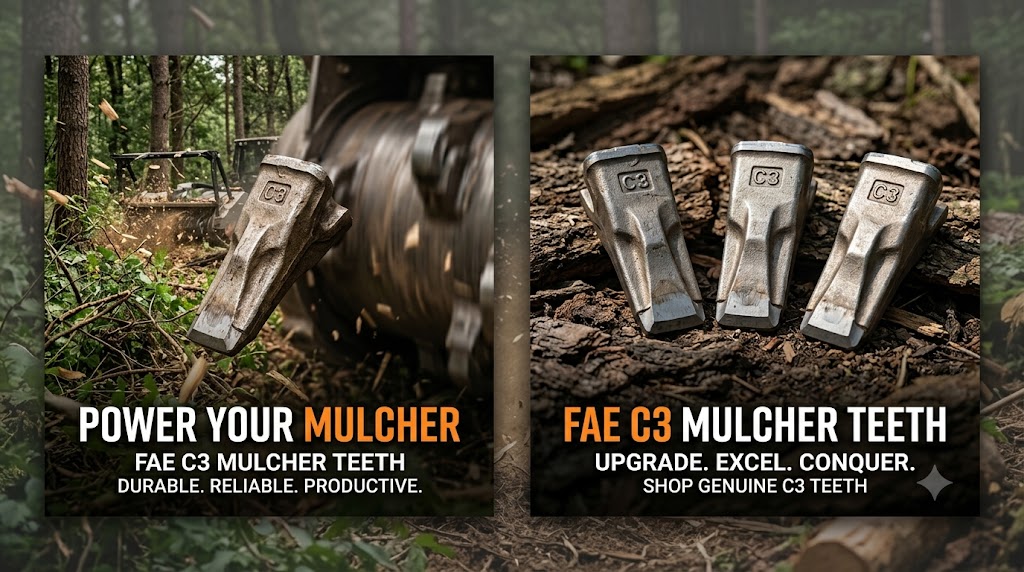
FAE C3 mulcher teeth sit at the heart of some of the most demanding land clearing operations. These cutting tools represent a specific design philosophy within the FAE ecosystem. They balance aggressive material processing with the durability needed to withstand constant impact against wood, stumps, and occasional ground contact. Understanding how these teeth perform and how they wear is essential for any operator seeking to maximise efficiency and control operating costs. This article examines the design principles behind FAE C3 teeth, the factors influencing their cutting performance, and the wear patterns operators should monitor.
The FAE C3 tooth is not a single product but a design platform. FAE offers several variations within this family, including the standard C/3, the C/3/HD, the C/3/SS (side scraper), the C/3/MINI, and the newer C/3/MAX. Each variant serves specific mulching applications while sharing core design characteristics. The fundamental construction involves a hardened steel body paired with tungsten carbide inserts at the cutting edge. This combination delivers the impact resistance of steel with the abrasion resistance of carbide. The C/3/MAX variant takes this further with a large cutting surface and specially heat treated materials, making it extraordinarily wear resistant for high-end forestry mulchers featuring Bite Limiter technology. The Bite Limiter system itself plays a crucial role in how C3 teeth perform. This technology reduces power demand and promotes a consistent working speed. The result is excellent performance mulching any type of wood, from hardwood and softwood trees to above ground stumps, shrubs, and branches.
The performance of FAE C3 teeth depends on several interrelated factors. Understanding these helps operators make informed decisions about tooth selection and machine setup.
C3 teeth are designed for aggressive material ingestion. The geometry of the tooth allows it to bite into vegetation rather than simply strike it. This aggressive action translates to faster processing rates in appropriate conditions. When matched to the right material, this design can significantly increase productivity compared to less aggressive tooth profiles.
FAE specifically positions the C3 platform for hardwood trees, exposed stumps, bushes, and branches. The carbide inserts excel when cutting dense, fibrous materials. However, the same aggressive geometry may wear faster in extremely abrasive conditions where constant ground contact occurs.
The Bite Limiter technology associated with C3/MAX teeth addresses one of the persistent challenges in mulching: power management. By reducing the power required for each cut, this system allows the carrier vehicle to maintain rotor speed more consistently. Consistent rotor speed means cleaner cuts and less bogging down in heavy material.
Wear is inevitable in mulching applications. The question is not whether teeth will wear but how quickly and in what manner. Several distinct wear mechanisms affect FAE C3 teeth.
Abrasive wear occurs when hard particles in the material being processed scrape against the tooth surface. Soil, sand, and grit embedded in root systems are primary culprits. This type of wear gradually removes material from the cutting edge, dulling the tooth and reducing its cutting efficiency. Carbide inserts resist abrasive wear far better than steel alone, which is why they feature prominently in the C3 design.
Mulching involves constant high-energy impacts. Teeth strike wood, rocks, and each other with significant force. Over time, these impacts can cause micro-fracturing of the carbide, chipping of the cutting edge, and eventual failure of the tooth body. The heat treated, ultra strong materials used in C/3/MAX teeth specifically address this challenge.
Friction generates heat. In high-speed mulching operations, tooth temperatures can rise significantly. This heat can temper the steel, reducing its hardness and accelerating wear. Carbide inserts tolerate heat better than steel, which is another reason for their inclusion in premium tooth designs.
The service life of FAE C3 teeth varies enormously depending on operating conditions. Some operators replace teeth every few days, while others get weeks of service from a single set. Understanding the variables helps set realistic expectations.
Hardwoods wear teeth faster than softwoods. Dense, dry material is more abrasive than green vegetation. Rocky ground dramatically accelerates wear compared to clean soil. An operation clearing soft brush will see far longer tooth life than one grinding stumps in rocky terrain.
Perhaps no factor affects tooth life more than ground engagement. Teeth making regular contact with soil and rock wear many times faster than teeth processing material above ground. Operators can extend tooth life by adjusting cutting height to minimise unnecessary ground contact when conditions permit.
How an operator uses the mulcher matters. Feeding material too aggressively can overload teeth and cause impact damage. Running dull teeth forces the machine to work harder, increasing heat and accelerating wear on the remaining cutting edges. Maintaining proper rotor speed and feed rates optimises both productivity and tooth life. Maintenance Practices for Extended Performance
FAE C3 teeth respond well to structured maintenance programmes. A disciplined approach to inspection and rotation can significantly extend service life.
Teeth should be inspected before every shift. The check takes only minutes but prevents the most common cause of unplanned downtime. Look for missing carbide tips, cracks in the tooth body, and loose mounting hardware. A tooth which has lost its carbide edge is no longer cutting efficiently. It is hammering, which increases fuel consumption and reduces productivity.
Most C3 tooth designs allow rotation to expose fresh cutting edges. Following a rotation schedule, typically every 20 to 40 operating hours depending on material, evens out wear across the drum. This practice keeps the rotor balanced and can double the useful life of each tooth. Skipping rotations means some teeth wear out quickly while others remain barely used.
When teeth reach end of life, replacing them in matched sets across the drum is best practice. Mixing new and worn teeth creates an unbalanced rotor. Imbalance causes vibration, accelerates bearing wear, and produces uneven mulch. Tracking tooth hours in a maintenance log helps operators plan replacements before they become emergencies. Carbide Condition Monitoring
The carbide insert is the tooth’s primary defence against wear. Operators should check that carbide remains intact and properly bonded to the steel body. Chipped or missing carbide means the tooth is cutting with its softer steel body, which wears rapidly. Replacing any tooth with damaged carbide preserves cutting efficiency and prevents secondary damage.
FAE offers several C3 options for different applications. The standard C/3 suits general mulching tasks. The C/3/HD provides additional durability for demanding conditions. The C/3/SS includes side scraper geometry for specific rotor positions. The C/3/MINI scales the design for compact mulchers like the BL1/SSL and DML/SSL. The C/3/MAX represents the premium option for high-end forestry mulchers with Bite Limiter technology. Choosing the right variant depends on the carrier machine, the material being processed, and the operator’s priorities regarding productivity versus tooth life.
Teeth represent a significant consumable cost in mulching operations. The purchase price per tooth is only part of the equation. Operators must consider tooth life, productivity impact, and downtime for replacement. A tooth which costs more but lasts twice as long may deliver better value than a cheaper alternative. Similarly, a tooth which maintains sharpness longer reduces fuel consumption and improves mulch quality. The total cost of ownership includes fuel, labour, and downtime, not just the parts invoice. Tracking consumption rates helps establish reorder points and ensures spare teeth are always available. Running out of teeth mid-job means the machine sits idle while waiting for freight. Stocking levels should reflect actual consumption patterns.
FAE C3 mulcher teeth embody a design philosophy built around aggressive cutting, wear resistance, and power efficiency. Understanding how these teeth perform and how they wear empowers operators to make better decisions about selection, maintenance, and replacement. The carbide tipped construction, combined with heat treated steel bodies and the Bite Limiter technology in C/3/MAX variants, delivers cutting performance across a wide range of materials. Wear is managed through a combination of material selection and disciplined maintenance practices. Operators who inspect daily, rotate on schedule, replace in matched sets, and track consumption will maximise the value from every tooth. Those who neglect maintenance pay the price through increased fuel consumption, reduced productivity, and premature equipment wear. The choice is straightforward.




