Physical Address
304 North Cardinal St.
Dorchester Center, MA 02124
Physical Address
304 North Cardinal St.
Dorchester Center, MA 02124

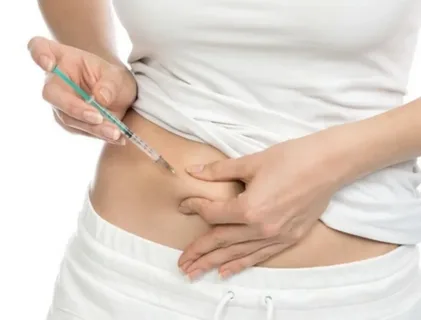
Scepticism about injectable fat reduction is reasonable. The treatment is often promoted with before-and-after images and confident claims, yet the scientific picture is more measured than marketing suggests. Patients deserve a straightforward answer about what the evidence supports and where uncertainty remains. This article examines whether fat melting injection in Dubai genuinely works, what degree of change is realistic, and why response varies so much between individuals.
Injectable fat reduction is not a fringe concept. Certain formulations have been studied in clinical settings, particularly for submental fat beneath the chin, where controlled trials have been conducted. These studies generally report measurable reductions in fat thickness compared with placebo.
However, the evidence base is not uniform across all products, all body areas, and all formulations. Some clinics use approved products with supporting data. Others use compounded or imported solutions with far less documentation.
What this means practically:
Evidence supports the concept for certain approved products
Evidence is strongest for specific treatment areas
Results are typically moderate rather than dramatic
Not all products on the market are equivalent
A responsible clinic will be specific about what it uses and what the supporting evidence covers.
The biological rationale is coherent. The injected solution disrupts fat cell membranes, triggering an inflammatory response that leads the body to clear the damaged cells over time. If enough cells in a localized area are affected, the contour of that area changes.
For a visible result to occur, several conditions must align:
Sufficient fat must be present in the treated layer
Enough sessions must be completed
Adequate time must pass for clearance
The patient’s weight must remain relatively stable
The area must be suitable for injectable treatment
When these conditions are met, improvement is often achievable. When they are not, results may be disappointing regardless of how well the procedure is performed.
Patients who respond well typically describe improvement rather than transformation. The area looks less full, contours are smoother, and clothing fits differently. These are meaningful changes, but they are not equivalent to surgical fat removal.
Realistic expectations include:
Moderate reduction in localized fullness
Improved contour rather than major volume loss
Gradual development over two to four months
Variation between individuals
Possible need for maintenance later
Patients expecting a dramatic change in body shape may be better served by other options.
A poor response does not always mean the treatment failed. It often means the treatment was not suited to that particular situation.
Reasons results may be limited:
The fullness was not primarily subcutaneous fat
Skin laxity dominated the appearance
Too few sessions were completed
The area was larger than injectables can realistically address
Weight fluctuated during or after treatment
The product used lacked adequate evidence
This is why assessment before treatment matters. Identifying the wrong candidate is more common than the procedure simply not working.
Improvement is best assessed against clear criteria rather than a general impression. Clinicians often use photographs taken at consistent angles and lighting, along with measurement of the treated area.
Useful measures of progress:
Comparison photographs over time
Assessment of fat thickness
Symmetry between paired areas
Patient satisfaction with contour
Whether goals set at consultation were met
Subjective feelings matter, but objective records help both patient and clinician judge whether further sessions are worthwhile.
What patients commonly report is that changes are subtle at first and become clearer over several months. Some notice improvement in how clothing sits before they notice it in the mirror. Others find the change most apparent when comparing photographs.
Feedback also frequently includes the observation that the treatment was less dramatic than expected, which is why setting expectations at the outset is so important. Patients who understood the likely degree of change tend to be more satisfied than those who anticipated more.
Marketing for injectable fat reduction sometimes implies results comparable to surgery. That comparison does not hold up. Liposuction removes fat mechanically and can achieve larger volume reduction in a single procedure.
Injectable treatment works chemically and gradually, and its scope is limited by how much solution can safely be delivered and how efficiently the body clears the disrupted cells.
A fair summary:
Injectable treatment can produce real, measurable improvement
The change is moderate and localized
It is not a substitute for surgical fat removal
It is not a weight-loss method
While no clinic can guarantee results, certain conditions make a favourable response more likely.
Choosing a clinic that assesses suitability carefully
Confirming the product used has appropriate documentation
Completing the recommended number of sessions
Maintaining stable weight during and after treatment
Allowing adequate time before judging the outcome
Attending review appointments honestly
These steps do not guarantee success, but they remove several common causes of disappointment.
Sometimes the most useful answer is that this treatment will not achieve what you want.
Consider alternatives if:
Your primary concern is loose skin
The area contains little subcutaneous fat
You want substantial volume reduction
You are significantly above target weight
You expect rapid, dramatic change
A clinician who tells you this is providing a service, not refusing one.
Whether fat melting injection in Dubai works for you depends on your anatomy, your goals, and the quality of the clinic you choose. The treatment is supported by evidence for certain products and areas, but its effects are moderate and gradual.
At Tajmeels Clinic in Dubai, consultation for fat melting injection in Dubai includes an honest discussion of what the treatment can realistically achieve in your case, along with the limitations that apply. That conversation is more useful than any promise, because it allows you to decide with accurate information.
Injectable fat reduction does work for appropriately selected patients, producing moderate, localized improvement over several months. It does not work equally for everyone, and it is not equivalent to surgery or weight loss. The strongest predictors of a good outcome are correct patient selection, a properly documented product, adequate sessions, and stable weight. If you approach the treatment with measured expectations and a clinic that assesses you honestly, you are far more likely to judge the result fairly.
WhatsApp: +971 56 203 8751
Phone: +971 4 373 9000
Social Media: