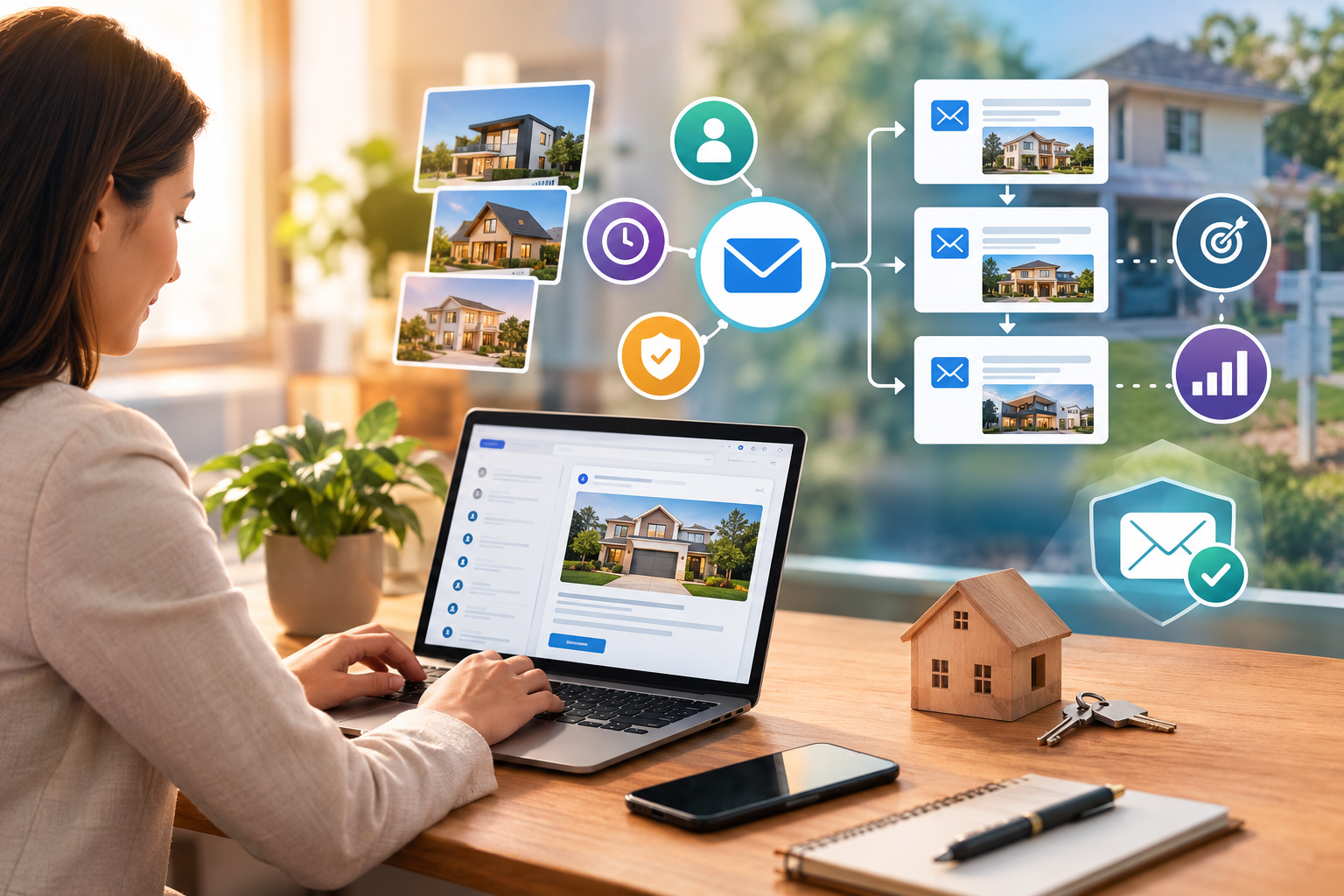

Real estate marketing is no longer just about listing properties and waiting for potential buyers to get in touch. Today’s buyers and sellers expect relevant information, timely communication, and a more personalized experience throughout their property journey. For any Digital Marketing Agency for Real Estate, helping businesses build meaningful relationships with their audiences is becoming just as important as generating new leads.
Email marketing remains one of the most effective ways to nurture prospects, maintain client relationships, and encourage repeat business. However, sending the same message to every contact rarely delivers the best results. Artificial intelligence (AI) is changing this approach by helping marketers understand customer behavior, personalize content, automate follow-ups, and improve email delivery.
When used strategically, AI can turn email marketing into a more targeted and measurable growth channel. The key is not simply sending more emails but delivering the right message to the right person at the right time.
Why AI Is Changing the Future of Email Marketing
Traditional email campaigns often depend on broad audience lists, manually written messages, and fixed sending schedules. Although this approach can generate engagement, it may overlook the different needs of individual subscribers.
A first-time homebuyer, an investor searching for rental properties, and a homeowner considering selling have different priorities. Sending identical content to all three audiences can make communication feel irrelevant.
AI helps marketers analyze available customer data, identify behavioral patterns, and develop more relevant campaigns. For example, someone who repeatedly views luxury property listings may respond better to premium property updates than a general newsletter featuring every available listing.
AI can also help marketers test subject lines, suggest content variations, identify engagement trends, and estimate when subscribers may be more likely to interact with an email.
However, AI should support human judgment rather than replace it. Real estate decisions involve significant financial and personal considerations, so communication must remain accurate, transparent, and respectful of customer preferences.
1. Use Personalization to Make Every Email More Relevant
Personalization goes beyond adding a subscriber’s name to the subject line. Effective personalization considers what recipients are interested in, what they have already viewed, and what information might help them take their next step.
For example, a potential buyer searching for a two-bedroom apartment may appreciate updates about similar properties, neighborhood amenities, and financing considerations. A seller may be more interested in local market trends, property preparation tips, and valuation guidance.
Here are practical ways to improve email personalization:
- Segment your audience: Organize contacts by their interests, location, property preferences, and stage in the buying or selling process.
- Use behavioral signals: Where appropriate consent and tracking permissions exist, use website activity, email engagement, and inquiry history to understand what information may be relevant.
- Recommend relevant content: Share property listings, neighborhood guides, market updates, or educational resources that match subscribers’ interests.
- Personalize email content: Adjust selected sections of a newsletter according to audience segments instead of creating an entirely separate campaign for every contact.
- Respect privacy: Collect only the information you need, explain how it is used, and honor communication preferences.
The objective is to make each message feel useful rather than intrusive. When subscribers consistently receive information that matches their needs, they have a stronger reason to remain engaged.
2. Automate Follow-Ups Across the Customer Journey
Real estate leads can lose interest when they do not receive timely communication. At the same time, manually following up with every inquiry can become difficult as a business grows.
Email automation helps solve this problem by triggering relevant messages after specific actions. Once properly configured, these workflows can operate in the background while agents focus on conversations, property showings, and negotiations.
Some useful automated email sequences include:
Welcome emails: Send an introduction when someone subscribes to a newsletter or requests property updates. Explain what they can expect and provide a useful next step.
Property inquiry follow-ups: When a prospect requests information about a listing, send appropriate confirmation and relevant details. Route urgent or high-intent inquiries to an agent for personal follow-up.
Property alert emails: Notify subscribers when new listings match their stated preferences, provided the listing information is accurate and current.
Appointment reminders: Help prospects remember scheduled consultations, property viewings, or virtual tours.
Re-engagement campaigns: Reach out to inactive subscribers with a useful market update or ask whether they would like to adjust their preferences.
Automation should have clear rules. For instance, someone who has already booked a viewing should not continue receiving messages asking them to schedule one. Connecting email workflows with a customer relationship management (CRM) system can help prevent these mistakes.
3. Build a Strong Email Strategy for Real Estate Agents
A successful email campaign requires more than an attractive design. It needs a clear purpose, an appropriate audience, and a useful message.
For businesses investing in Email Marketing for Real Estate Agents, the most effective approach is to align campaigns with the different stages of the customer journey.
For early-stage prospects, educational emails can explain the buying process, discuss local market conditions, or provide tips for preparing a property for sale. Prospects who are actively exploring listings may prefer property alerts, neighborhood comparisons, and invitations to arrange viewings.
Existing clients may benefit from home maintenance advice, property market updates, referral opportunities, or relevant information about future real estate needs.
Every email should include a clear call to action. Depending on its purpose, this could be viewing a property, requesting a valuation, booking a consultation, or reading a local market report.
Keep the layout easy to scan, use mobile-friendly formatting, and write subject lines that accurately describe the content. Avoid exaggerated promises or misleading language simply to encourage openness.
Most importantly, measure meaningful outcomes. Email opens can provide useful directional information, but clicks, qualified inquiries, appointments, and conversions offer a clearer view of business impact.
4. Improve Email Deliverability Before Increasing Campaign Volume
Even the most relevant email cannot generate results if it consistently lands in spam folders. Deliverability should therefore be a priority before increasing sending frequency or expanding a subscriber list.
Several practical steps can improve email performance:
- Authenticate your domain: Configure SPF, DKIM, and DMARC according to your email provider’s requirements.
- Maintain a clean list: Remove invalid addresses and manage hard bounces appropriately.
- Use permission-based lists: Send marketing emails to people who have provided the appropriate consent. Avoid purchased lists and unsolicited bulk campaigns.
- Monitor engagement: Review clicks, replies, unsubscribes, bounce rates, and spam complaints to identify problems.
- Send consistently relevant content: Avoid overwhelming subscribers with repetitive messages or excessive promotions.
- Make unsubscribing easy: Provide a clear way to opt out and honor requests promptly.
AI can help identify unusual engagement patterns or segments that may need attention. However, it cannot compensate for poor list practices, weak authentication, or content that recipients do not want.
A smaller, engaged audience is often more valuable than a large list filled with uninterested contacts.
5. Use AI to Test, Measure, and Improve Campaigns
One of AI’s most practical benefits is its ability to help marketers evaluate campaign performance and identify opportunities for improvement.
Rather than changing several elements at once, test one variable at a time where possible. Compare subject lines, calls to action, email layouts, or the timing of messages across appropriate audience groups.
For example, a real estate business could compare two versions of a monthly property newsletter. One might emphasize newly listed homes, while the other highlights neighborhood insights and recent market activity. Measuring qualified clicks and inquiries can reveal which approach better supports the campaign’s objective.
Useful metrics include:
- Click-through rate and meaningful website engagement.
- Qualified leads generated by each campaign.
- Consultation bookings and property viewing requests.
- Conversion rate from email inquiry to appointment or client.
- Unsubscribe rate, bounce rate, and spam complaints.
- Revenue or closed transactions are attributable to email campaigns, where reliable tracking is available.
AI-generated recommendations should be treated as hypotheses to test, not guaranteed improvements. Results will depend on the quality of the data, audience preferences, campaign execution, and market conditions.
6. Follow a Practical 90-Day Implementation Plan
Real estate businesses do not need to transform their entire email strategy overnight. A phased approach makes it easier to identify priorities and evaluate progress.
Days 1–30: Audit and prepare
Review existing email campaigns, contact lists, authentication settings, audience segments, and performance data. Identify the biggest weaknesses and select one or two priority improvements.
Days 31–60: Implement and test
Create essential welcome and inquiry follow-ups, improve segmentation, and introduce relevant personalized content. Test campaign variations while monitoring deliverability and engagement.
Days 61–90: Optimize and expand
Evaluate which campaigns generate qualified inquiries and appointments. Refine underperforming workflows, introduce additional audience segments, and use predictive features only when sufficient reliable data is available.
This process helps businesses build a dependable foundation before investing in more complex AI tools.
Conclusion
AI is creating new opportunities for real estate businesses to communicate more effectively, nurture leads, and build lasting client relationships. However, successful email marketing still depends on understanding the audience, providing genuine value, maintaining reliable delivery, and measuring outcomes that matter.
Start with useful segmentation, introduce automation where it saves time, and continuously improve campaigns using real performance data. Keep the human element at the center of every interaction, especially when prospects are making important property decisions.
As the wider digital landscape evolves, businesses should also consider how their websites, content, and online information support visibility across emerging search experiences. Combining effective email communication with AI Search Optimization for Real Estate can help create a more connected marketing strategy, bringing together lead generation, customer engagement, and online discovery.
The strongest results come from using technology with purpose: less generic communication, more relevant experiences, and a clearer path from the first interaction to a lasting client relationship.