Physical Address
304 North Cardinal St.
Dorchester Center, MA 02124
Physical Address
304 North Cardinal St.
Dorchester Center, MA 02124

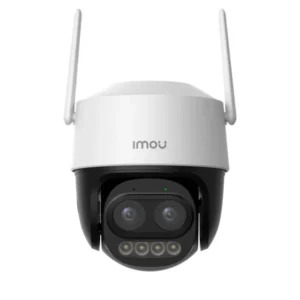
Lark Solutions provides reliable and affordable CCTV cameras and smart security solutions for homes and businesses in Pakistan.
Nighttime surveillance presents different challenges from daytime monitoring. A camera that produces clear images during daylight may deliver noticeably different results after sunset because available light changes the way the image sensor, infrared illumination, lens, and image-processing system operate.
Many surveillance locations are not completely dark. Streetlights, building lights, vehicle headlights, security lamps, shop signs, and nearby windows can create varying levels of ambient illumination. These light sources can either improve visibility or introduce problems such as glare, shadows, reflections, and uneven exposure.
Understanding the relationship between ambient light and night vision is therefore important when planning surveillance for homes, offices, warehouses, parking areas, entrances, factories, and outdoor properties.
Ambient light refers to the existing illumination present in an environment without relying solely on the camera’s built-in lighting system.
Examples include streetlights, porch lights, parking-lot lamps, floodlights, nearby buildings, vehicle headlights, and illuminated signs.
The amount and direction of ambient light can change throughout the night. A parking area may be brightly illuminated at one time and much darker after certain lights switch off.
These variations can directly influence how a camera captures nighttime footage.
Modern surveillance cameras use image sensors and processing technologies to capture usable footage under reduced lighting conditions.
As available light decreases, the camera may automatically adjust exposure, gain, shutter speed, and other image settings.
However, there is a limit to how much useful detail a sensor can capture from extremely dark scenes.
This is where infrared illumination and other low-light technologies become important.
A properly selected night vision camera can use infrared light to illuminate areas that appear dark to the human eye. The camera’s sensor can detect this illumination and produce a visible image even when conventional lighting is limited.
Infrared illumination does not operate independently of the surrounding environment.
If there is some ambient light available, the camera may use both the available illumination and infrared light to produce an image.
However, strong visible light sources can sometimes interfere with nighttime performance.
For example, a bright lamp positioned close to the camera may cause part of the scene to become overexposed while other areas remain dark.
This can create an uneven image in which some details are clearly visible while others are difficult to identify.
Glare is one of the most common nighttime image-quality problems.
A camera facing directly toward a bright light source may struggle to balance exposure across the entire scene.
Vehicle headlights are a common example. When a car approaches a camera at night, its headlights may become extremely bright compared with the surrounding environment.
The result can be temporary overexposure, loss of detail, or a darkened background.
Camera placement should therefore avoid direct exposure to strong light sources whenever possible.
Ambient lighting can create strong shadows that affect surveillance coverage.
A building entrance may be brightly illuminated near the doorway but significantly darker several meters away. Similarly, a wall-mounted light may illuminate one section of a pathway while leaving another section in shadow.
The camera must be positioned according to these lighting patterns.
Testing the camera at night can reveal areas that appear clear during the day but become difficult to monitor after sunset.
Some cameras can produce color images in low-light conditions when sufficient ambient illumination is available.
This can provide useful information such as clothing colors, vehicle colors, or environmental details.
When the available light becomes too low, the camera may switch to infrared-based monochrome imaging, depending on its design.
Neither approach is universally better. The appropriate technology depends on the environment and the type of information that needs to be captured.
Streetlights can significantly improve nighttime surveillance, but their position matters.
A streetlight located behind the monitored subject may create backlighting, making a person’s face appear dark.
A light positioned to the side may create uneven shadows.
A light placed near the camera may cause glare or reflections.
The goal should not simply be to add more lighting. Lighting should be positioned to provide useful illumination across the monitored area without creating excessive contrast or direct glare.
Outdoor surveillance is particularly affected by changing environmental and lighting conditions.
Weather, dust, fog, rain, insects, reflective surfaces, and changing light levels can all influence nighttime image quality.
A camera installed near a busy road may experience frequent headlights. A camera installed in a residential area may face changing illumination as outdoor lights switch on and off.
When selecting equipment, consider how the location behaves throughout the entire night rather than testing it only during the first few minutes after sunset.
Indoor locations can also experience uneven lighting.
Warehouses may have lights covering some aisles but leaving others dark. Offices may have automatic lighting systems that switch off after working hours.
A camera positioned near a window can also experience changing light conditions as outdoor lighting changes.
For indoor installations, identify areas that require continuous monitoring after normal operating hours and test the camera under those specific conditions.
Wireless connectivity does not determine image quality by itself, but network reliability is important for cameras that transmit video wirelessly.
A Wi-Fi CCTV camera installed outdoors or in a distant part of a building should have a sufficiently strong and stable wireless connection.
Poor connectivity can result in delayed live viewing, dropped video, or interruptions in transmission.
The camera’s nighttime performance should therefore be evaluated separately from its wireless performance.
Both the image quality and network connection must be reliable for effective remote monitoring.
Camera placement is one of the most important factors affecting nighttime performance.
Before installation, examine the position of nearby lights, reflective surfaces, windows, gates, roads, and walls.
Avoid pointing the camera directly toward strong light sources.
The mounting height should also be selected according to the required viewing angle and identification distance.
A camera positioned too high may capture less useful facial detail, while one mounted too low may be more vulnerable to interference or physical damage.
The lens influences how much light reaches the image sensor and how the scene is framed.
A wider lens can cover more area but may provide less detail at greater distances. A narrower lens can concentrate on a specific area but may reduce overall coverage.
Lens selection should therefore be based on the distance to the target, viewing angle, lighting conditions, and identification requirements.
Selecting the correct lens can improve practical nighttime performance without necessarily requiring a higher-resolution camera.
Higher resolution can provide more image detail, but it does not automatically solve poor lighting.
If the scene is extremely dark, increasing the number of pixels will not create missing light.
Similarly, a high-resolution camera facing a bright light source may still produce overexposed footage.
This is why nighttime camera selection should consider sensor performance, infrared capability, lens characteristics, dynamic range, and actual lighting conditions.
Scenes containing both very bright and very dark areas can challenge a camera’s image-processing system.
Wide dynamic range technology can help balance these differences in suitable cameras.
For example, an entrance may have bright outdoor lighting while the area immediately inside the building remains relatively dark.
A camera with appropriate dynamic-range performance can help retain useful information across both areas.
Lighting conditions can vary significantly between indoor and outdoor locations, so camera selection should be based on the specific surveillance environment and expected nighttime activity.
The cctv camera price in Pakistan may also reflect differences in camera resolution, sensor technology, storage compatibility, connectivity, and additional surveillance features.
A suitable model should provide the required performance for the intended application without adding unnecessary features or expenses. A camera intended for a brightly lit indoor room may have very different requirements from one monitoring a dark outdoor parking area.
Important factors include low-light performance, infrared range, lens type, weather protection, dynamic range, storage compatibility, connectivity, and installation position.
The camera should be selected according to the actual surveillance objective.
Nighttime testing is one of the most effective ways to evaluate real-world camera performance.
After sunset, inspect the intended field of view and identify bright spots, dark areas, reflections, shadows, and moving light sources.
Check how the camera handles vehicles, people, entrances, and other important objects.
If the image is poor, try adjusting the camera angle or lighting before replacing the equipment.
Small changes in positioning can sometimes produce a significant improvement.
Nighttime image quality can decline over time if the camera lens becomes dirty or the protective cover becomes scratched or damaged.
Outdoor cameras should be inspected periodically for dust, insects, moisture, and other contaminants.
Nearby lighting should also be checked after changes to the property. New signs, floodlights, construction, or landscaping can alter the camera’s original viewing conditions.
Regular maintenance helps ensure that the system continues to perform as expected.