
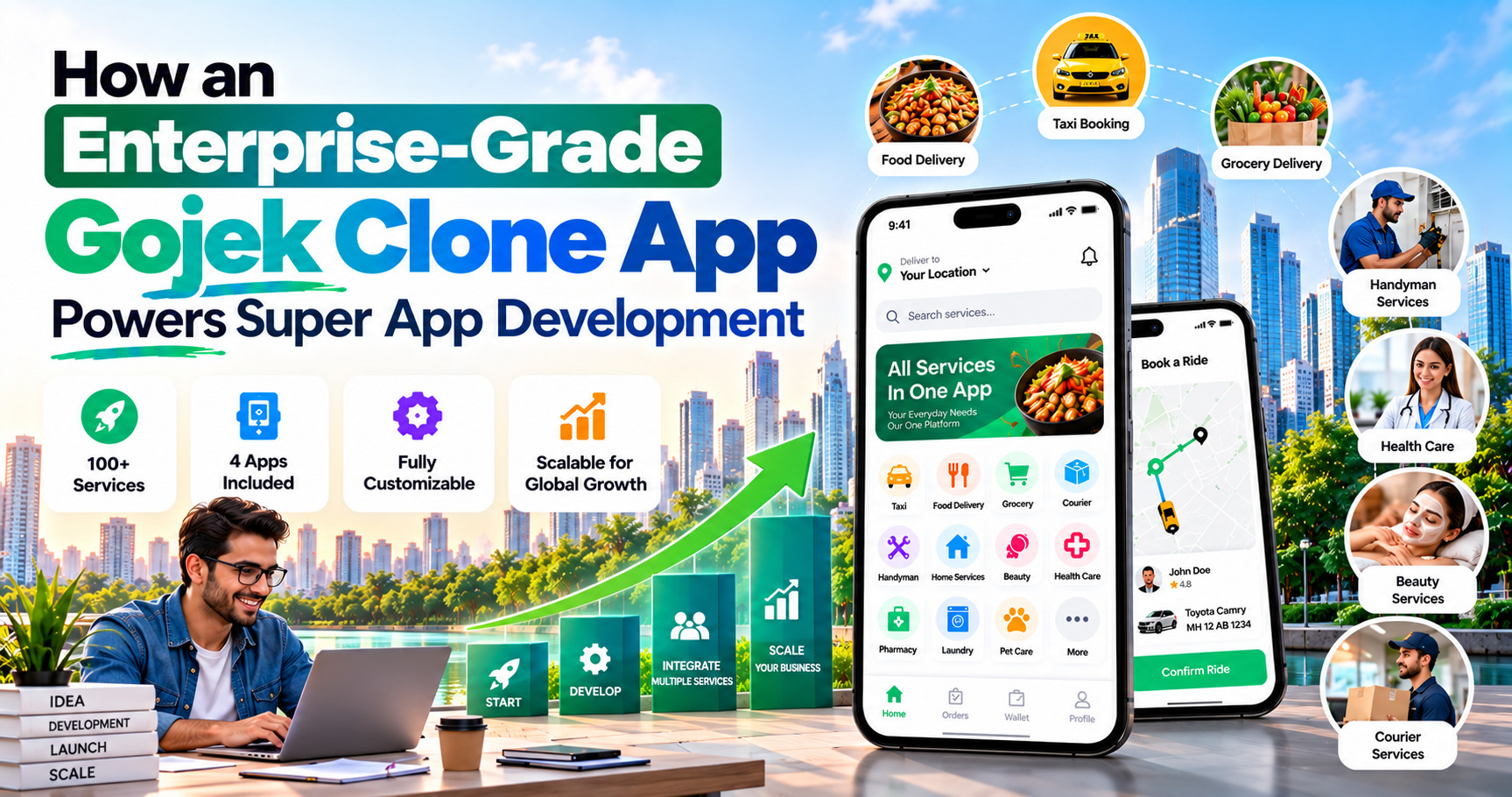

Customers increasingly prefer digital platforms that allow them to access multiple services from one place. Instead of switching between separate applications for transportation, food delivery, grocery shopping, and home services, they want a convenient and connected experience. This shift creates new opportunities for businesses planning to enter the on-demand service market.
A Gojek Clone App provides a practical starting point for businesses that want to bring multiple services together under one brand. It offers a foundation for launching a multi-service platform where customers can book services, make payments, track orders, and manage their activities through a single application.
For startups, entrepreneurs, and established enterprises, this approach can simplify the process of entering different service categories. An enterprise-grade solution also helps businesses manage multiple service providers, maintain operational control, and expand into new markets as demand grows.
Understanding how a Gojek-style platform works, which features matter most, and how it supports business growth can help decision-makers plan a successful super app development strategy.
What Is an Enterprise-Grade Gojek Clone App?
An enterprise-grade gojek clone app is a customizable, multi-service application inspired by the service model of Gojek. It allows businesses to offer different on-demand services through one branded platform rather than operating separate applications for every service category.
Depending on business requirements, the platform can include ride-hailing, food delivery, grocery delivery, parcel delivery, beauty services, handyman bookings, and other local services.
Unlike a single-purpose application, a multi-service platform connects customers, service providers, delivery partners, and administrators within one business ecosystem. Each participant receives relevant features to manage their activities.
For example, customers can book a ride or order groceries, while service providers receive requests, manage availability, and track their earnings. Administrators can oversee bookings, monitor performance, manage users, and coordinate service operations.
An enterprise-grade solution focuses on flexibility, service integration, operational visibility, and long-term business growth. Companies can customize the platform to match their branding, target audience, service categories, and expansion plans.
How Does a Gojek-Style Super App Work?
The operating model of a Gojek-style super app revolves around connecting customers with multiple service providers through a centralized platform.
The process generally follows these steps:
- Customer registration: Users create accounts, manage their profiles, and save their contact information and addresses.
- Service discovery: Customers browse available categories, compare options, and select the service they need.
- Booking and order placement: Users schedule a ride, place a delivery order, or book a local professional.
- Service provider assignment: The platform helps match requests with available drivers, vendors, delivery partners, or professionals.
- Service tracking: Customers receive booking updates and can follow the progress of eligible services.
- Payment and feedback: Users complete payments through supported methods and submit ratings or reviews.
- Business management: Administrators monitor transactions, manage service providers, review performance, and address customer concerns.
A gojek clone app brings these activities together under one business identity. Companies can begin with a focused set of services and introduce additional categories when their operations and customer demand support expansion.
Key Features That Power Super App Development
A successful multi-service platform needs more than a collection of service categories. Its features should support customer convenience, provider efficiency, and centralized business management.
1. Unified Customer Application
A single customer application allows users to discover and access different services without maintaining separate accounts for every category.
Essential features include registration, profile management, service search, saved addresses, booking history, notifications, and customer support.
A consistent experience across service categories makes the platform easier to use and encourages customers to explore additional offerings.
2. Multiple Service Categories
Service diversity is one of the main advantages of multi-service app development.
Businesses can introduce categories such as:
- Ride-hailing and taxi booking
- Food and grocery delivery
- Courier and parcel delivery
- Handyman and home maintenance
- Beauty and wellness bookings
- Laundry and other local services
A Gojek clone script can provide a starting framework for organizing these categories. Businesses should select services based on local demand, provider availability, and their ability to manage day-to-day operations.
3. Service Provider and Partner Management
A multi-service business depends on reliable drivers, vendors, delivery partners, and professionals.
Provider management features allow partners to register, maintain profiles, manage availability, accept or reject requests, review completed jobs, and monitor earnings.
Verification processes and performance monitoring can also help businesses maintain service standards. Clear provider workflows are especially important when several service categories operate under the same brand.
4. Real-Time Tracking and Notifications
Tracking and timely updates help customers understand what is happening after they place an order or booking.
Depending on the service, users may receive driver locations, delivery progress, booking confirmations, estimated arrival information, and status notifications.
These features improve visibility and reduce uncertainty. Businesses can also use notifications to communicate important changes without requiring customers to contact support for every update.
5. Secure Payments and Transaction Management
Payment flexibility is important when a platform serves different customer groups and service categories.
Businesses can support suitable payment methods, such as cards, digital wallets, and cash where applicable. Transaction records, refunds, commission tracking, and payment status management help maintain financial visibility.
For companies operating across markets, payment options should reflect local preferences and applicable regulations.
6. Centralized Admin Dashboard
An administrative dashboard helps businesses manage the entire platform from one place.
Key capabilities may include customer management, partner approvals, service category management, booking oversight, promotions, commissions, reports, and dispute handling.
Role-based access can help larger organizations assign responsibilities to different teams. This is particularly useful for enterprises managing multiple regions, service categories, or operating units.
7. Customization and Scalability
An enterprise-grade platform should support changes in branding, service availability, business rules, and operational requirements.
A customizable gojek clone app allows businesses to introduce relevant features and adapt workflows as their business model evolves.
Scalability also involves preparing teams, service providers, customer support, and operational processes to handle increasing demand. Technology alone cannot guarantee growth; the entire service operation must be ready to expand.
Business Opportunities and Use Cases
A Gojek-style platform can support several business models. The right opportunity depends on the target market, customer behavior, and available service providers.
Startups Entering the On-Demand Market
Entrepreneurs can use a gojek clone app to establish a branded multi-service business without starting every product capability from scratch.
A startup might initially focus on taxi booking and food delivery before adding grocery shopping or home services. This phased approach helps the business validate demand and improve its operations before expanding further.
Enterprises Expanding Their Digital Services
Established businesses can use a multi-service platform to extend their existing services into new digital channels.
For example, a company with an established delivery network may introduce grocery delivery, parcel services, and local transportation. A unified platform can help it manage customer interactions and service operations more consistently.
Local Businesses and Regional Marketplaces
Regional businesses can combine services that customers frequently need in their area.
A local marketplace might connect residents with taxi operators, restaurants, grocery stores, repair professionals, and laundry providers. The platform can help participating businesses reach more customers while giving users a single destination for everyday needs.
Agencies and Technology Entrepreneurs
Agencies and technology entrepreneurs can offer branded multi-service solutions to clients entering the on-demand market.
With a customizable Gojek-like app, they can adapt the service categories, user experience, and business workflows for specific industries or regions. This model can support repeatable digital service offerings without requiring every client to adopt an identical business setup.
Why Businesses Choose an Enterprise-Grade Gojek Clone Solution
Choosing the right foundation for super app development affects how efficiently a business can launch, operate, and expand its services.
Faster Market Entry
A ready-made Gojek clone script provides established application capabilities that businesses can customize for their requirements. This can reduce the need to plan every standard marketplace function from the beginning.
However, launch timelines still depend on customization, integrations, testing, operational readiness, and regional requirements.
One Platform for Multiple Services
Managing multiple services through a shared platform can simplify customer access and give administrators a more consistent view of business activity.
Businesses can maintain a unified brand while tailoring individual service categories to their specific needs.
Opportunities for Cross-Service Engagement
Customers who initially join for one service may discover other relevant offerings on the same platform.
For example, a user who books a taxi might later use the platform for food delivery or home maintenance. Relevant recommendations, loyalty programs, and service-specific promotions can encourage repeat engagement without overwhelming users with unrelated offers.
Greater Business Flexibility
A customizable platform gives companies room to refine their service mix, introduce new categories, and adjust workflows as market conditions change.
This flexibility is valuable for startups testing a business model and enterprises entering new regions. Businesses should still evaluate whether the solution supports their required integrations, service rules, and operational processes.
Centralized Operational Visibility
A shared administrative system helps management teams review bookings, service provider activity, customer feedback, and transactions across categories.
This visibility supports better decision-making and can help identify service gaps, operational bottlenecks, and opportunities to improve customer satisfaction.
How to Choose the Right Super App Development Company
Selecting a suitable technology partner is an important step when planning a multi-service marketplace.
Businesses should evaluate the following factors before making a decision:
- Multi-service experience: Check whether the company has experience with taxi booking, delivery, home services, and other relevant marketplace models.
- Customization options: Confirm that branding, workflows, service categories, and business rules can be adapted to your requirements.
- Platform coverage: Review the customer application, service provider applications, delivery or driver tools, and administrative controls.
- Integration capabilities: Ensure the solution can accommodate the required payment providers, maps, notifications, and third-party services.
- Security and compliance: Assess account protection, access controls, data handling practices, and applicable regional requirements.
- Support and maintenance: Understand how updates, bug fixes, technical assistance, and future improvements will be managed.
- Ownership and documentation: Clarify source code ownership, licensing terms, customization rights, and the documentation included in the agreement.
A reliable super app development company should understand both the technology requirements and the operational realities of running a multi-service business. The objective is not simply to launch an application but to establish a platform that supports sustainable business operations.
Conclusion
An enterprise-grade gojek clone app provides a practical foundation for businesses that want to combine multiple on-demand services within one digital platform. From customer bookings and provider management to payment handling and centralized administration, it can support the core activities required to operate a multi-service marketplace.
For startups, the model offers a way to enter the market with a defined set of services and expand gradually. For established companies, it creates opportunities to diversify offerings, reach new customer groups, and manage service operations through a unified platform.
Success ultimately depends on selecting the right service categories, understanding customer needs, maintaining service quality, and preparing for future growth. Working with an experienced app development company can help businesses customize the solution to their goals and build a foundation for long-term expansion.
Frequently Asked Questions
1. What is a Gojek clone app?
A Gojek clone app is a customizable, multi-service application inspired by Gojek’s business model. It enables businesses to offer services such as taxi booking, food delivery, grocery delivery, parcel delivery, and home services through one branded platform.
2. How does a Gojek clone script help businesses build a super app?
A Gojek clone script provides a starting framework with common marketplace features, such as customer registration, service bookings, provider management, payments, notifications, and administrative controls. Businesses can customize these capabilities according to their service model and target market.
3. Which services can be included in a Gojek-like app?
Depending on business requirements, a Gojek-like app can include ride-hailing, food delivery, grocery shopping, courier services, handyman bookings, beauty services, laundry, and other local services. The final selection should reflect customer demand and operational capabilities.
4. Can businesses customize a Gojek clone app for their brand?
Yes. A customizable solution can support business branding, service categories, application features, booking workflows, payment options, and administrative settings. The available customization depends on the solution provider and the licensing agreement.
5. Who should consider multi-service app development?
Startups, entrepreneurs, established enterprises, regional marketplaces, and technology agencies can consider multi-service app development. It is particularly relevant to businesses that want to connect multiple service providers with customers through a unified digital platform.{“success”:false,”data”:”Image/file size must be 2MB or less. Please choose a smaller file.”}



