Physical Address
304 North Cardinal St.
Dorchester Center, MA 02124
Physical Address
304 North Cardinal St.
Dorchester Center, MA 02124

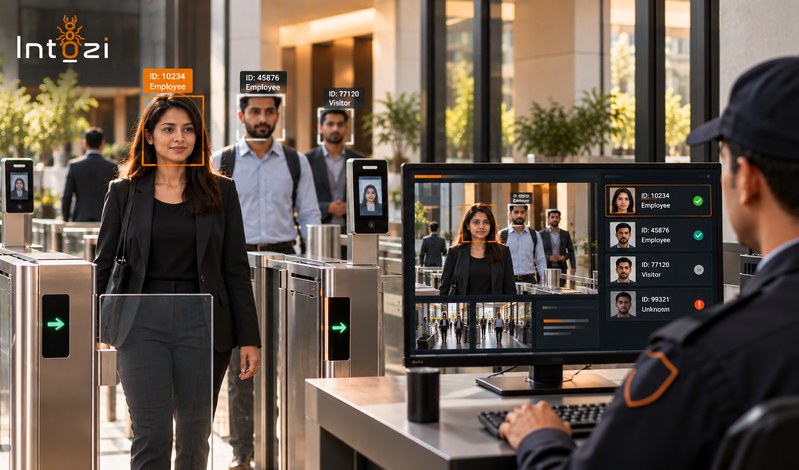
Identifying a person quickly through video footage can be challenging when multiple cameras, changing lighting conditions, and crowded surroundings make manual monitoring difficult. Reviewing recordings takes time, particularly when teams need to locate a specific individual. AI face recognition software helps address this challenge by analysing facial features and comparing them with authorised reference data to identify potential matches in real time.
Traditional CCTV systems record footage for live observation or later investigation. Operators may need to monitor several screens or search recordings manually, which can delay identification and investigation.
A face recognition system automates parts of this process by analysing video streams and comparing detected faces against an approved database. Depending on its configuration, it can help locate potential matches, support identity verification, and notify authorised personnel when a predefined match occurs. However, recognition results should be treated as potential matches rather than conclusive proof of identity.
An AI face recognition system uses computer vision and machine learning to detect faces and compare their distinguishing characteristics with reference records. The process typically involves four steps:
Processing speed depends on camera quality, hardware, model design, and database size. The system’s performance also depends on how clearly a face appears in the video.
Effective facial recognition software requires more than a powerful AI model. Image quality, camera positioning, reference data, and system configuration all influence performance.
Important features to evaluate include real-time processing, configurable matching thresholds, secure database management, access controls, and audit trails. These capabilities help authorised users review results while maintaining appropriate oversight.
Lighting, facial angles, motion blur, masks, and partial obstructions can reduce accuracy. Organisations should therefore test the system in realistic conditions and establish procedures for reviewing incorrect or uncertain matches.
Real-time face recognition can reduce manual searching and help teams identify relevant footage more efficiently. It can also support consistent processing across compatible camera feeds and connect potential identification events with approved workflows.
Key benefits include:
However, false matches and missed matches remain possible. Performance can vary across lighting conditions, camera angles, and demographic groups. Human review is particularly important when a recognition result could affect access, employment, or another consequential decision.
AI face recognition software can support identity verification, visitor management, controlled entry, and authorised searches for individuals. Its suitability depends on the intended purpose, applicable laws, and the quality of available video.
Before deployment, organisations should establish a lawful basis for processing facial data, inform individuals where required, restrict database access, and define retention periods. They should also evaluate accuracy across relevant populations and provide procedures for challenging incorrect results.
Face recognition differs from face detection: detection locates faces, while recognition compares facial features with reference records. Understanding this distinction helps organisations select technology that meets their actual requirements.
Intozi develops Vision AI solutions that analyse video feeds to identify visual events and support operational monitoring. Its platform, Ikshana, provides AI-powered video analytics, real-time event notifications, and compatibility with existing IP/CCTV infrastructure, subject to deployment requirements.
When evaluating a face recognition system, organisations should confirm whether facial identification is supported in the intended configuration, how reference databases are managed, and what privacy and security controls are available. General video analytics capabilities do not automatically mean that a platform includes facial recognition.
Ikshana’s broader video analytics capabilities can help users move beyond passive recording towards structured monitoring. Any face recognition deployment should be assessed separately for accuracy, lawful use, data security, and suitability for the intended purpose.
Face recognition detects a face, extracts distinguishing features, and compares them with authorized reference records. If the similarity meets a configured threshold, the system may display a potential match or generate an alert. Intozi develops AI video analytics through Ikshana, with specific facial recognition capabilities subject to deployment confirmation.
Face detection locates a face without identifying the person. Face recognition compares facial characteristics with reference data to find a potential match. Intozi’s Ikshana platform provides AI-powered video analytics; users should confirm whether a particular deployment supports detection, identification, or both.
Yes, compatible CCTV cameras may support face recognition if they provide suitable resolution, lighting, and viewing angles. Intozi’s Ikshana platform is designed to integrate with existing IP/CCTV infrastructure, subject to compatibility. Specific facial recognition support should be verified before deployment.
Accuracy depends on the AI model, image quality, camera position, lighting, and reference database. False matches and missed matches are possible, especially when faces are obscured. Organisations should test performance in real conditions and establish human review procedures before relying on results.
Intozi develops Vision AI solutions that analyze video feeds and identify relevant visual events. Its Ikshana platform supports video analytics, real-time notifications, and compatible CCTV integration. Organizations evaluating facial identification should confirm specific functionality, privacy safeguards, and deployment requirements.




