Physical Address
304 North Cardinal St.
Dorchester Center, MA 02124
Physical Address
304 North Cardinal St.
Dorchester Center, MA 02124

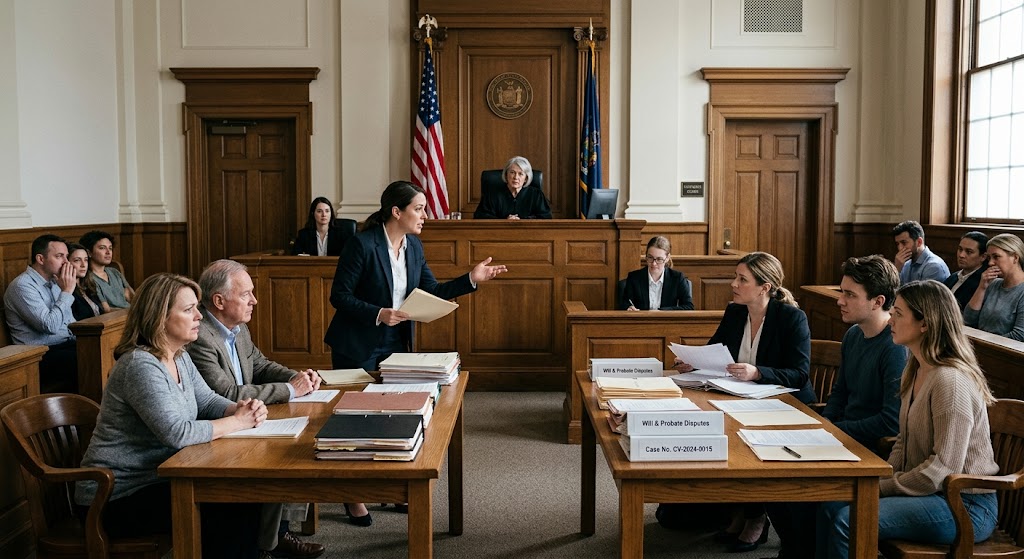
Inheritance is often expected to provide financial security for family members after the death of a loved one. In practice, however, disagreements over property, wills, ownership rights and distribution of assets can create serious conflict among relatives. What begins as a private family disagreement can gradually develop into a civil dispute requiring formal legal proceedings.
Inheritance disputes are rarely limited to financial concerns. They may involve long standing family relationships, questions about ownership, competing claims and uncertainty over documents. Understanding how these disputes develop can help families address disagreements before they become more difficult and costly to resolve.
Inheritance disputes can emerge for several reasons. Property is often the most valuable asset left behind, particularly where a family owns residential property, agricultural land or commercial premises. Differences can arise when beneficiaries have different expectations about how these assets should be divided.
Disputes may also arise over the validity or interpretation of a will. One family member may believe the document reflects the deceased person’s wishes, while another may question how it was prepared or whether it accurately represents those wishes. In some situations, concerns may also arise about whether the deceased had the necessary mental capacity when the will was made.
Intestate succession can create another area of disagreement. When a person dies without leaving a valid will, the distribution of assets is governed by the applicable succession law. Family members may disagree about who is entitled to inherit, the extent of each person’s share or the status of particular assets.
An inheritance dispute becomes more complicated when ownership of the property itself is unclear. A property may have passed through several generations, with different documents recording different interests. Older sale deeds, gift deeds, partition arrangements, revenue records and other documents may all become relevant.
A family member may also claim the deceased did not own the entire property. For example, the asset could have been jointly owned or subject to an earlier family arrangement. Before deciding how an inherited property should be distributed, it is often necessary to establish the legal title and the nature of each person’s interest.
This is one reason inheritance disputes can move beyond family discussions. Once ownership, possession or legal entitlement is challenged, informal discussions may no longer provide a practical solution.
Not every disagreement over inheritance results in litigation. Families may resolve many issues through discussion, negotiation or mediation. The situation can change when one party refuses to recognise another person’s claim or attempts to deal with disputed property without the consent of other interested parties.
For instance, a beneficiary may seek possession of a property while another family member is already occupying it. A person may attempt to sell or transfer an asset while another heir disputes their ownership. In such circumstances, the affected party may need to seek a formal remedy through the civil court.
The nature of the remedy depends on the circumstances. A dispute may involve a claim concerning declaration of rights, partition, possession, injunctions or other appropriate relief. The underlying facts and documents usually determine the appropriate legal approach.
Documentation often becomes central once an inheritance dispute reaches the legal stage. A valid will, title documents, previous transfers, family settlement agreements, correspondence and records concerning possession can all influence how a dispute is assessed.
Families should avoid relying solely on verbal understandings when significant property is involved. Statements made within a family may be remembered differently over time, particularly when relationships become strained. Written evidence can provide a clearer basis for determining ownership and succession rights.
The circumstances surrounding the creation of a will can also become important. If its validity is challenged, evidence relating to execution, witnesses, medical condition, surrounding circumstances and the conduct of the parties may become relevant.
Once litigation begins, an inheritance disagreement moves from a private family matter into a formal legal process. Parties may need to exchange documents, present evidence and respond to claims made by other family members. The court then considers the legal rights of the parties based on the evidence and applicable law.
Civil litigation can also take time, particularly where several properties, beneficiaries or disputed transactions are involved. The longer the conflict continues, the greater the potential impact on family relationships and the ability to use or transfer the disputed assets.
For this reason, it can be useful to explore settlement options before a dispute reaches an advanced stage. A structured discussion or mediation may help family members identify a practical arrangement without requiring every issue to be determined through a contested hearing.
Early legal assessment can help identify the real source of an inheritance dispute. Sometimes the disagreement concerns the interpretation of a document. In other cases, the central issue is title, possession or the legal status of a particular family member.
An objective review of the documents can help separate legal issues from assumptions or family grievances. Where several people have competing interests, professional guidance can also help establish whether negotiation, mediation or civil proceedings are more appropriate.
In disputes involving substantial assets or complex family relationships, parties may consider seeking advice from civil conflict resolution attorneys before taking irreversible steps. Early intervention can sometimes prevent misunderstandings from developing into prolonged proceedings.
Settlement can be particularly valuable in inheritance disputes because family relationships may continue long after the property issue has been resolved. A negotiated arrangement may allow parties to divide assets, agree on possession or compensate one beneficiary without creating a prolonged courtroom dispute.
Negotiation does not mean giving up legal rights. A settlement should be based on a clear understanding of the parties’ respective claims and the value and status of the disputed assets. Where a family also owns or operates a business, inheritance disagreements can have consequences beyond personal property.
Business interests may involve shares, partnership rights, directorships or control over commercial assets. In such cases, business dispute resolution lawyers may assist with understanding the commercial consequences alongside the inheritance issues.
Negotiation is not suitable for every inheritance dispute. Litigation may become necessary when a party refuses to acknowledge another person’s legal rights, attempts to dispose of disputed property or when the parties cannot reach a workable settlement.
Court proceedings can provide a formal mechanism for determining disputed rights. However, litigation should generally be approached with a clear understanding of the evidence, potential remedies, costs and practical consequences.
Inheritance disputes can begin with a disagreement over a will, property or a person’s share of an estate. As competing claims become more serious, the issue can develop into a civil dispute involving ownership, possession, partition or other legal remedies.
Clear documentation, early assessment and informed negotiation can often help prevent unnecessary escalation. Where settlement is not possible, civil litigation provides a formal route for resolving contested inheritance rights. The earlier the underlying legal issues are identified, the easier it may be to choose an appropriate and proportionate way forward.




