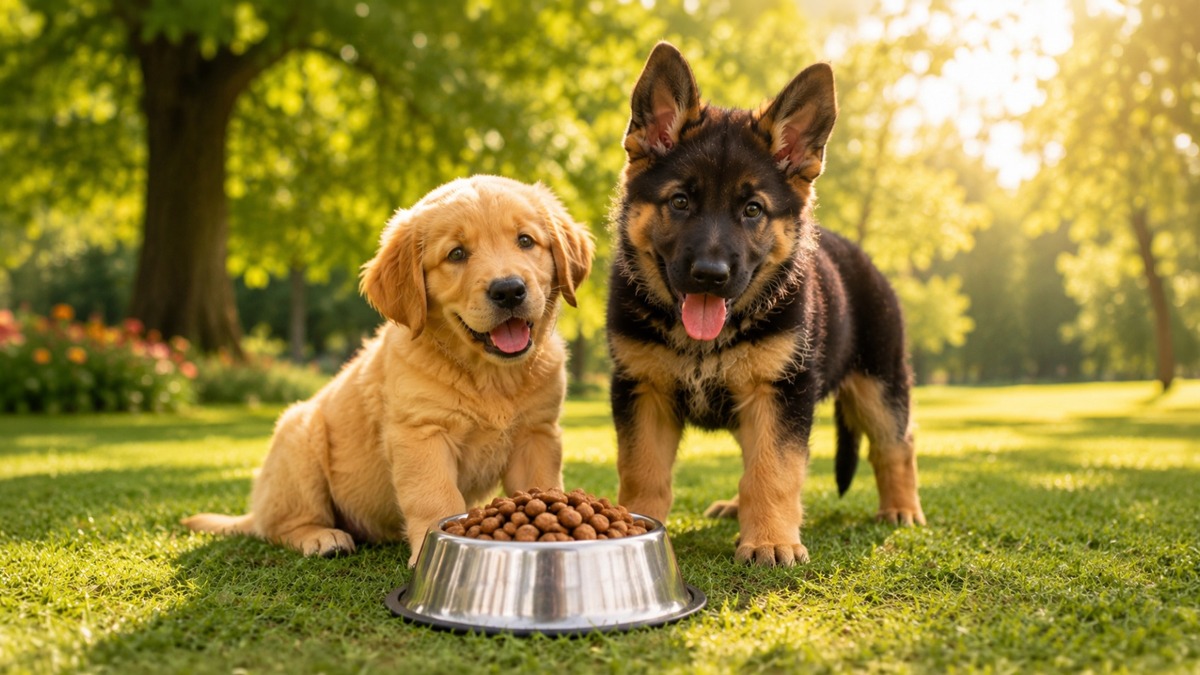
How Much Large Breed Puppy Food Should You Feed Your Puppy?

Large breed puppies need enough food to support their growing bodies. However, overfeeding can make them gain weight too quickly.


Introduction

Feeding your puppy the right amount of food is very important for healthy growth. Large breed puppies grow quickly, so they need good nutrition, but giving them too much food is not a good idea.

The right amount of large breed puppy food depends on your puppy’s age, weight, breed, activity level, and the type of food you are using. Always check the feeding guide on the food package because different foods have different calorie levels.

Why Is the Right Amount of Food Important?

Large breed puppies need enough food to support their growing bodies. However, overfeeding can make them gain weight too quickly.

Extra weight can put more pressure on growing bones and joints. A balanced diet with the correct portion can help your puppy grow at a healthy and steady rate.

How Much Large Breed Puppy Food Should You Give?

There is no single amount that is perfect for every puppy. A small Labrador puppy and a growing German Shepherd puppy may need different amounts.

Start by checking the feeding chart on your puppy food package. The chart usually gives a daily amount based on your puppy’s weight and age.

You can then divide the daily amount into several meals.

For example, if the feeding guide says your puppy needs 300 grams of food per day, you can divide it into three meals of about 100 grams each.

How Often Should You Feed a Large Breed Puppy?

Young puppies usually need several small meals during the day.

2–3 Months

At this age, many puppies do well with 3–4 meals per day.

3–6 Months

You can usually feed your puppy around 3 meals per day.

6–12 Months

Many puppies can move toward 2 meals per day, depending on their individual needs.

The exact feeding schedule can vary, so follow the food manufacturer’s instructions and ask your veterinarian if you are unsure.

What Type of Food Should You Choose?

Choosing the right food is just as important as choosing the right portion.

Look for large breed puppy food that is made for growing puppies. A good formula should provide balanced nutrition and controlled calories.

Important nutrients include:

  • High-quality protein
  • Healthy fats
  • Essential vitamins and minerals
  • Calcium and phosphorus in appropriate amounts
  • Nutrients that support normal bone and joint development

How Can You Tell If You Are Feeding Too Much?

Sometimes your puppy’s body can tell you more than the feeding chart.

Signs that your puppy may be getting too much food can include:

  • Fast weight gain
  • Difficulty feeling the ribs
  • A round or heavy-looking body
  • Low activity
  • Frequent digestive problems

Your puppy should not look extremely thin, but you should generally be able to feel the ribs without a thick layer of fat.

What If Your Puppy Is Not Eating Enough?

If your puppy is not gaining weight properly, has very low energy, or regularly refuses food, it is important to pay attention.

Do not simply increase the food amount without understanding the reason. A veterinarian can check your puppy’s growth and help you decide whether the feeding amount needs to change.

Common Feeding Mistakes

One of the most common mistakes is overfeeding. Many owners think that giving extra food will help a puppy grow faster. But large breed puppies should grow steadily rather than being pushed to grow too quickly.

Other common mistakes include:

  • Giving too many treats
  • Feeding table scraps regularly
  • Changing food suddenly
  • Using the wrong type of puppy food
  • Not measuring meals
  • Ignoring changes in body weight

Final Thoughts

The best amount of large breed puppy food depends on your puppy’s individual needs. Start with the feeding guide provided by the food brand, measure the daily portion, and divide it into suitable meals.

Keep checking your puppy’s weight and body condition as they grow. If you are unsure about the right amount, your veterinarian can give you advice based on your puppy’s breed, age, weight, and growth pattern.


Leave a Reply