Physical Address
304 North Cardinal St.
Dorchester Center, MA 02124
Physical Address
304 North Cardinal St.
Dorchester Center, MA 02124

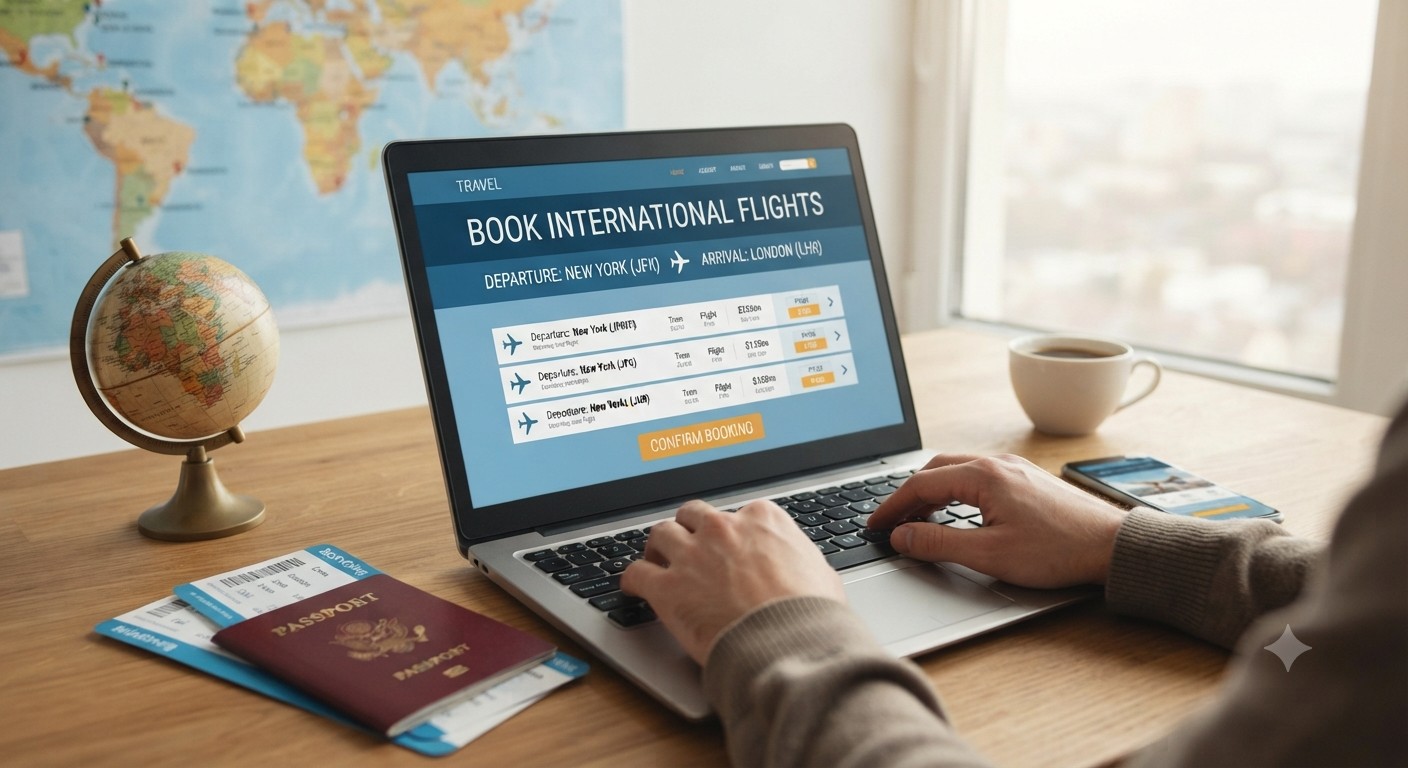
Planning a trip abroad is exciting, but finding the right flight can sometimes feel overwhelming. With different airlines, fare types, baggage policies, stopovers, and travel requirements to consider, it helps to know what to look for before you book.
Whether you are traveling for a holiday, business trip, family visit, or another important reason, learning how to book international flights carefully can help you find an option that matches your schedule, budget, and travel needs.
In this guide, we will cover important factors to consider before booking an international flight, ways to compare your options, and answers to some frequently asked questions.
International travel usually requires more preparation than a domestic trip. Your journey may involve a long-haul flight, one or more connections, baggage restrictions, passport requirements, and destination-specific entry rules.
Before making a reservation, take a few minutes to review your travel plans. Consider:
Your preferred travel dates
Departure and arrival airports
Whether you are comfortable with connecting flights
Your baggage requirements
Your preferred departure time
The total travel duration
Your budget
Having these details ready can make the process of searching and comparing flights much easier.
One of the best ways to search when you want to book international flights is to compare multiple travel dates if your schedule is flexible. Airfares can change depending on demand, season, route, airline availability, and other market factors.
For example, a flight departing one or two days earlier or later may have a different price or schedule. It can also be helpful to compare different departure times.
However, price should not be the only factor in your decision. A cheaper flight with multiple long layovers may not always be the most convenient choice.
When comparing flights, look at the complete itinerary rather than just the advertised fare.
Direct and connecting flights both have advantages.
A direct flight can reduce total travel time and eliminate the need to change planes during your journey. This may be especially useful for families, business travelers, or passengers who prefer a simpler itinerary.
Connecting flights, on the other hand, may offer more route choices and sometimes different pricing options.
Before selecting a connecting itinerary, check:
The number of stops
Total layover time
The airport where you connect
Whether you need to change terminals
The total journey duration
Baggage transfer arrangements
Avoid choosing a connection that is too short, especially when traveling internationally. Delays, long walking distances, security checks, or immigration procedures can affect your ability to reach the next flight.
Not every airline ticket includes the same services. Before confirming your booking, check exactly what your fare includes.
Depending on the airline and ticket type, you may need to pay separately for:
Checked baggage
Seat selection
Meals
Flight changes
Ticket cancellation
Priority services
A low initial price may look attractive, but additional charges can increase the total cost. Always review the final price and the fare conditions before payment.
Understanding the ticket rules is an important part of making a smart international flight booking.
Before you book international flights, make sure you have the required travel documents for your destination.
Your passport should generally meet the entry requirements of the country you plan to visit. Depending on your nationality and destination, you may also need a visa, travel authorization, transit permission, or other documentation.
Travel rules can change, so it is important to check official government, embassy, or immigration sources before your trip.
Do not wait until the last minute to review these requirements. Some visas or travel documents may take time to arrange.
Large cities may have more than one airport. Checking nearby departure and arrival airports can give you additional flight options.
However, make sure you consider the full travel experience. A cheaper ticket may not be the best value if the airport is far away or requires expensive transportation.
Before booking, check:
Distance from the airport to your destination
Transportation availability
Transfer costs
Arrival time
Airport facilities
Connection requirements
Choosing the right airport can save time and make your journey more convenient.
When you are ready to book, enter all passenger information exactly as required.
Pay close attention to:
Full name
Date of birth
Passport details, if requested
Travel dates
Departure airport
Arrival airport
Small mistakes can sometimes create problems when checking in or managing a reservation. Always review the information before completing payment.
After booking, save your confirmation details and keep a copy of your itinerary accessible during your trip.
Baggage policies can vary depending on the airline, route, cabin class, and fare type.
Before purchasing your ticket, check:
Number of checked bags included
Maximum baggage weight
Carry-on baggage allowance
Size restrictions
Additional baggage fees
This is particularly important for international trips, where travelers may need to carry more luggage.
Knowing your baggage allowance in advance can help you avoid unexpected charges at the airport.
There is no single booking date that guarantees the lowest price for every international route. Airfare changes based on factors such as demand, travel season, route popularity, seat availability, and airline pricing strategies.
Instead of relying on one universal rule, it is usually better to start researching flights early and monitor the options available for your route.
If you have fixed travel dates, booking earlier may give you more choices. If your travel schedule is flexible, comparing different dates and departure times can help you explore a wider range of options.
The goal is not simply to find the lowest possible fare. It is to find a flight that offers a good balance between price, travel time, baggage allowance, and convenience.
Before completing your reservation, take a final moment to review everything.
Ask yourself:
Are the travel dates correct?
Are the airports correct?
Is the total travel time acceptable?
Is the layover long enough?
Does the fare include the baggage you need?
Have you checked the ticket rules?
Do you have the necessary travel documents?
A few extra minutes spent reviewing your itinerary can help prevent unnecessary problems later.
International travel should begin with a booking that fits your needs. By comparing flights carefully, understanding fare conditions, checking your travel documents, and reviewing your details before payment, you can approach your journey with greater confidence.
There is no exact number of days that guarantees the best price. It is generally a good idea to begin researching early, especially if you are traveling during a busy holiday period or have fixed travel dates. Booking early may also provide more choices for flight times and seating.
Compare different airlines, travel dates, airports, and itineraries. Look beyond the base fare and consider baggage allowance, layover duration, total travel time, and ticket conditions before making a decision.
It depends on the route, airline, travel dates, and demand. Connecting flights may sometimes offer different pricing, while direct flights can save time and provide a simpler travel experience. Compare the total value of each option before booking.
Airlines and booking platforms may have different requirements during the reservation process, but you will generally need valid travel documentation before international travel. Always check the requirements for your destination and airline before booking.
Requirements vary by destination and nationality. You may need a valid passport, visa, travel authorization, transit documents, or other required paperwork. Check official government or embassy sources for current requirements.
This depends on the airline and fare rules associated with your ticket. Some tickets allow changes with applicable fees or fare differences, while others may have more restrictive conditions. Review the fare rules before booking.
Compare multiple travel dates, departure times, airports, and airlines. Consider the complete cost of the journey, including baggage and other additional fees, rather than focusing only on the advertised base fare.
Travel insurance is a personal choice, but some travelers choose it to help protect against certain unexpected events. Coverage, exclusions, and benefits vary by policy, so read the policy details carefully and select coverage appropriate for your trip.
When you are ready to book international flights, take time to compare your options and review the complete details of your itinerary. A well-planned booking can help you choose a flight that fits your travel schedule, comfort preferences, and budget.
From checking baggage policies to reviewing travel documents and comparing connecting flights, every detail plays a role in creating a smoother international travel experience. Start planning ahead, review your options carefully, and choose the itinerary that works best for your journey.




