Physical Address
304 North Cardinal St.
Dorchester Center, MA 02124
Physical Address
304 North Cardinal St.
Dorchester Center, MA 02124

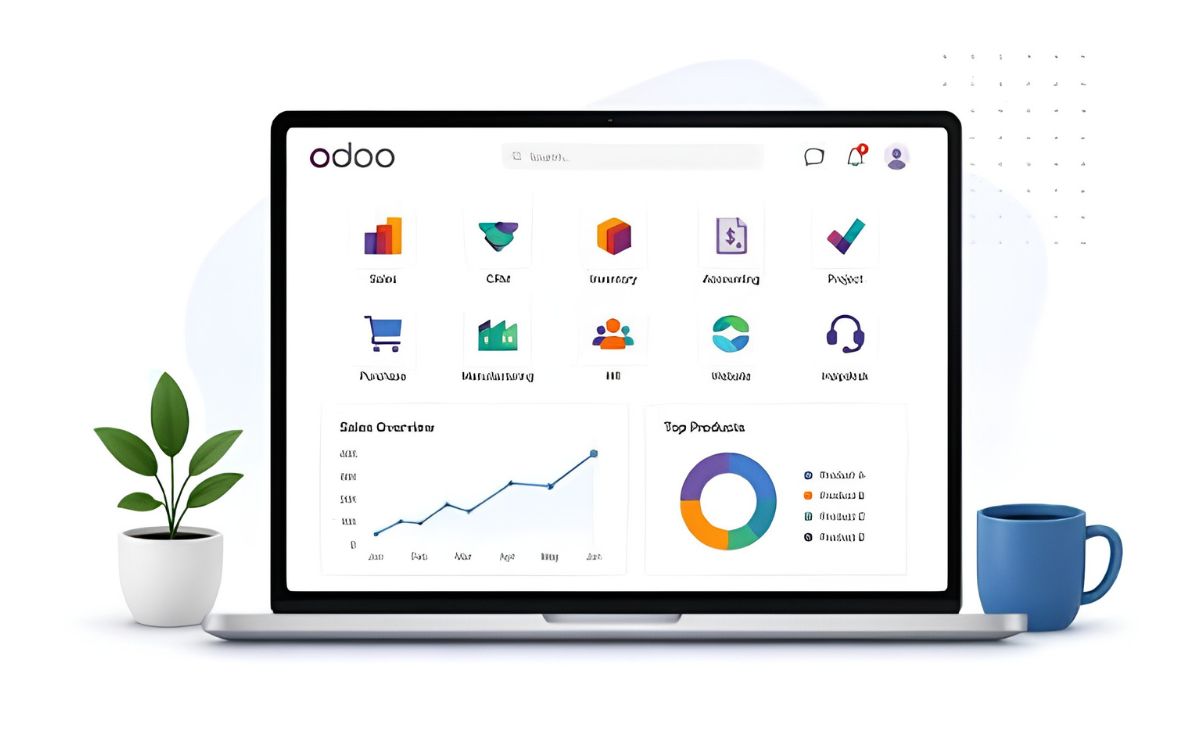
Implementing an ERP system is not simply about installing software and giving employees access to it. A successful ERP implementation requires careful planning, process analysis, data preparation, configuration, testing, training, and ongoing support. For businesses choosing Odoo, Odoo Implementation Services can help turn the platform’s different applications into a system that fits their day-to-day operations.
Odoo can manage areas such as sales, CRM, inventory, accounting, purchasing, manufacturing, projects, HR, website management, and eCommerce. However, businesses need to determine which applications they actually require and how those applications should work together.
Odoo implementation involves setting up the Odoo platform according to a company’s operational requirements. The process usually starts with understanding existing business processes and then configuring the appropriate Odoo applications.
Implementation can include database setup, application configuration, user roles, workflow design, data migration, integrations, testing, employee training, and system deployment.
The objective is to create an ERP environment that employees can use effectively without unnecessarily complicating existing processes.
An ERP system can affect several departments at the same time. A change in the sales process, for example, may influence inventory, invoicing, accounting, and customer communication.
Without proper planning, businesses may encounter problems such as incorrect data, duplicated records, unclear responsibilities, inefficient workflows, or resistance from employees.
A structured implementation process helps identify these issues before the system becomes part of daily operations.
It also gives businesses an opportunity to review existing processes. Instead of simply transferring inefficient manual procedures into a new ERP system, companies can determine which activities should be simplified or automated.
The first stage is understanding how the business currently operates. The implementation team reviews departments, workflows, data sources, approval processes, reporting requirements, and existing software.
For example, a manufacturing company may need to evaluate its purchasing, inventory, production, quality control, and sales processes before deciding how Odoo should be configured.
This stage helps distinguish between features that Odoo already provides and requirements that may need customization or integration.
Odoo offers multiple applications, but businesses do not necessarily need all of them.
A company might start with CRM, Sales, Inventory, and Accounting, while a manufacturer could also require Manufacturing and Quality. An eCommerce business may focus on Website, eCommerce, Sales, Inventory, and Accounting.
Selecting applications based on actual business requirements can keep the implementation more manageable.
Once requirements are established, the selected applications are configured. This can include company information, warehouses, product categories, taxes, user permissions, approval rules, payment methods, sales settings, and other operational parameters.
Configuration is different from customization. Whenever possible, businesses should use standard Odoo functionality before introducing custom development.
Businesses moving from spreadsheets or another ERP system often need to transfer existing information into Odoo.
Data may include customers, vendors, products, inventory records, price lists, accounting information, and historical transactions.
Data should be cleaned and reviewed before migration. Moving inaccurate or duplicate information into the new system can create problems after deployment.
Some businesses depend on external applications for payments, shipping, marketplaces, communication, payroll, or other activities.
Where necessary, Odoo can be integrated with these systems. Custom development may also be considered when a genuine business requirement cannot be addressed through standard configuration.
The key is to keep customization focused. Excessive custom development can increase maintenance requirements and make future upgrades more complicated.
Testing is an important part of ERP implementation. Different workflows should be tested using realistic business scenarios.
For example, a sales order might be tested from quotation through confirmation, inventory processing, delivery, invoicing, and payment.
Testing can identify configuration issues, permission problems, incorrect calculations, and integration errors before employees begin using the live system.
Employees need to understand how Odoo fits into their specific responsibilities. Training should therefore focus on real tasks rather than only explaining software features.
After training and final testing, the system can be moved into production. Depending on the business, implementation may happen all at once or in phases.
A properly planned implementation can provide businesses with a more centralized way to manage operational information. Different departments can work with connected data instead of maintaining separate spreadsheets and disconnected systems.
It can also improve process visibility. Managers can monitor information related to sales, inventory, purchasing, accounting, projects, or manufacturing from a centralized ERP environment.
Another potential benefit is process standardization. When approvals, data entry, and workflows are defined within the system, employees can follow consistent procedures across departments.
However, these benefits depend on implementation quality. Simply activating Odoo applications does not automatically improve business processes.
Businesses should evaluate an implementation partner based on its understanding of ERP processes, Odoo expertise, technical capabilities, industry experience, and approach to support.
Before starting, it is useful to ask how the partner handles requirement gathering, data migration, testing, training, customization, integrations, upgrades, and post-launch support.
Clear documentation and communication are also important because ERP implementation usually involves multiple departments and stakeholders.
Odoo Implementation Services can help businesses move from disconnected tools and manual processes toward a centralized ERP environment. The implementation journey typically involves requirement analysis, application selection, configuration, data migration, integrations, testing, training, and deployment.
The most practical approach is to begin with business requirements rather than software features. By understanding existing workflows, using standard Odoo functionality where possible, and introducing customization only when necessary, businesses can build an ERP setup that is easier to manage and adapt as their operations grow.