Physical Address
304 North Cardinal St.
Dorchester Center, MA 02124
Physical Address
304 North Cardinal St.
Dorchester Center, MA 02124

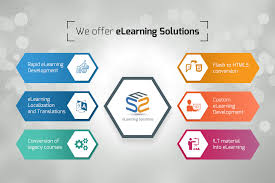
Discover how to choose the best custom eLearning companies for engaging, scalable, and effective corporate training tailored to your business goals.
Organizations today need more than generic training courses to build capable, confident, and productive teams. Custom eLearning companies help businesses create learning experiences around their specific workflows, goals, compliance requirements, brand identity, and learner needs. Instead of asking employees to adapt to one-size-fits-all content, organizations can deliver training that reflects the situations employees actually encounter at work.
But with many providers offering similar services, how do you identify the right eLearning development partner? The answer depends on more than price. Instructional design expertise, customization, technology, scalability, accessibility, LMS compatibility, and ongoing support all matter.
Custom eLearning providers design and develop digital learning programs specifically for an organization’s requirements. Unlike off-the-shelf courses, custom learning can incorporate company-specific processes, products, policies, terminology, examples, and workplace scenarios.
A professional provider may support the complete development lifecycle, including:
Training needs analysis and learning strategy
Instructional design and storyboarding
Interactive course development
Scenario-based and simulation-based learning
Video, animation, and voiceover
Assessments and knowledge checks
LMS integration and testing
Mobile learning and responsive design
eLearning translation and localization
This end-to-end approach allows organizations to transform existing PowerPoint presentations, instructor-led training, SOPs, and other resources into engaging digital learning experiences.
Off-the-shelf courses can be useful for universal subjects, but they may not address an organization’s unique challenges. Custom eLearning is particularly valuable when training needs to reflect specific systems, processes, products, or compliance requirements.
For example, a company introducing new software may need employees to practice the exact workflows they will perform. A generic software course cannot provide that same level of contextual learning.
Custom courses can also support:
Better alignment with business objectives
More relevant workplace scenarios
Stronger learner engagement
Consistent corporate branding
Targeted skill development
Greater flexibility for future updates
The key advantage is relevance. When employees recognize their own workplace situations in training, learning becomes easier to connect with actual job performance.
Choosing a provider should begin with your training objectives rather than simply comparing quotes. Ask potential partners how they approach instructional design, learner engagement, technology, quality assurance, and measurement.
Look for a provider that can demonstrate:
Instructional design expertise: A strong team should know how to turn complex information into clear learning experiences rather than simply converting text into slides.
Industry understanding: Experience in your industry can help the provider create realistic scenarios and relevant examples.
Technology capabilities: Check whether the company works with modern authoring tools and can deliver SCORM, xAPI, responsive, and LMS-compatible courses.
Customization: Ask whether interactions, assessments, visuals, scenarios, and branding are genuinely built around your requirements.
Quality assurance: Courses should be tested for functionality, usability, compatibility, accessibility, and instructional accuracy before launch.
Scalability: Your partner should be capable of supporting future courses, languages, audiences, and technology requirements.
Before signing a contract, asking the right questions can prevent costly problems later.
Consider asking:
Can you provide examples of similar eLearning projects?
What instructional design process do you follow?
How do you handle subject-matter-expert reviews?
Which LMS standards do you support?
Can you create scenario-based or simulation-based learning?
How do you ensure accessibility?
What is your typical development timeline?
How are revisions managed?
Do you provide localization and translation?
Can you create a proof-of-concept before full development?
A provider that answers these questions clearly is more likely to understand the complete learning-development process rather than focusing only on course production.
One of the most common questions organizations ask is, “How much does custom eLearning cost?”
There is no universal price because development costs depend on course length, instructional complexity, interactivity, media requirements, animation, narration, simulations, assessments, localization, and technical requirements.
A simple informational course will generally require fewer resources than an immersive scenario-based simulation. Therefore, organizations should compare providers based on overall value, quality, and expected business outcomes—not just the initial quotation.
Swift eLearning Services is one of the best options to consider when organizations need tailored corporate learning, with capabilities spanning custom course development, scenario-based learning, rapid development, conversion, localization, and LMS-ready delivery.
Customization alone does not guarantee effective learning. Successful courses combine business relevance with sound learning design.
An effective course should:
Start with measurable learning objectives.
Use realistic workplace situations.
Encourage learners to make decisions.
Provide meaningful feedback.
Break complex information into manageable sections.
Include appropriate assessments.
Work smoothly across required devices.
Connect learning with real job performance.
Modern custom learning can also incorporate microlearning, simulations, gamification, mobile delivery, AI-supported production, and personalized learning pathways when these approaches genuinely support the learning objective.
For organizations with specialized training requirements, custom eLearning can be a strategic investment rather than simply another training expense. It enables businesses to address specific performance gaps and create learning around the knowledge employees actually need.
The strongest projects begin with a clear question: What should employees be able to do differently after completing this training?
Once that outcome is established, the right development partner can determine the appropriate instructional strategy, level of interactivity, technology, and delivery format.
Finding the right eLearning development partner requires looking beyond attractive portfolios and low-cost proposals. The best custom eLearning companies combine instructional design, technology, multimedia expertise, business understanding, and quality assurance to create training that employees can use in the real world.
Whether your goal is onboarding, compliance, product training, leadership development, software training, or workforce upskilling, a carefully designed custom solution can make digital learning more relevant, engaging, and measurable.
The right partner should not simply build a course for you—it should understand your training challenge and help turn it into an effective learning experience.




