
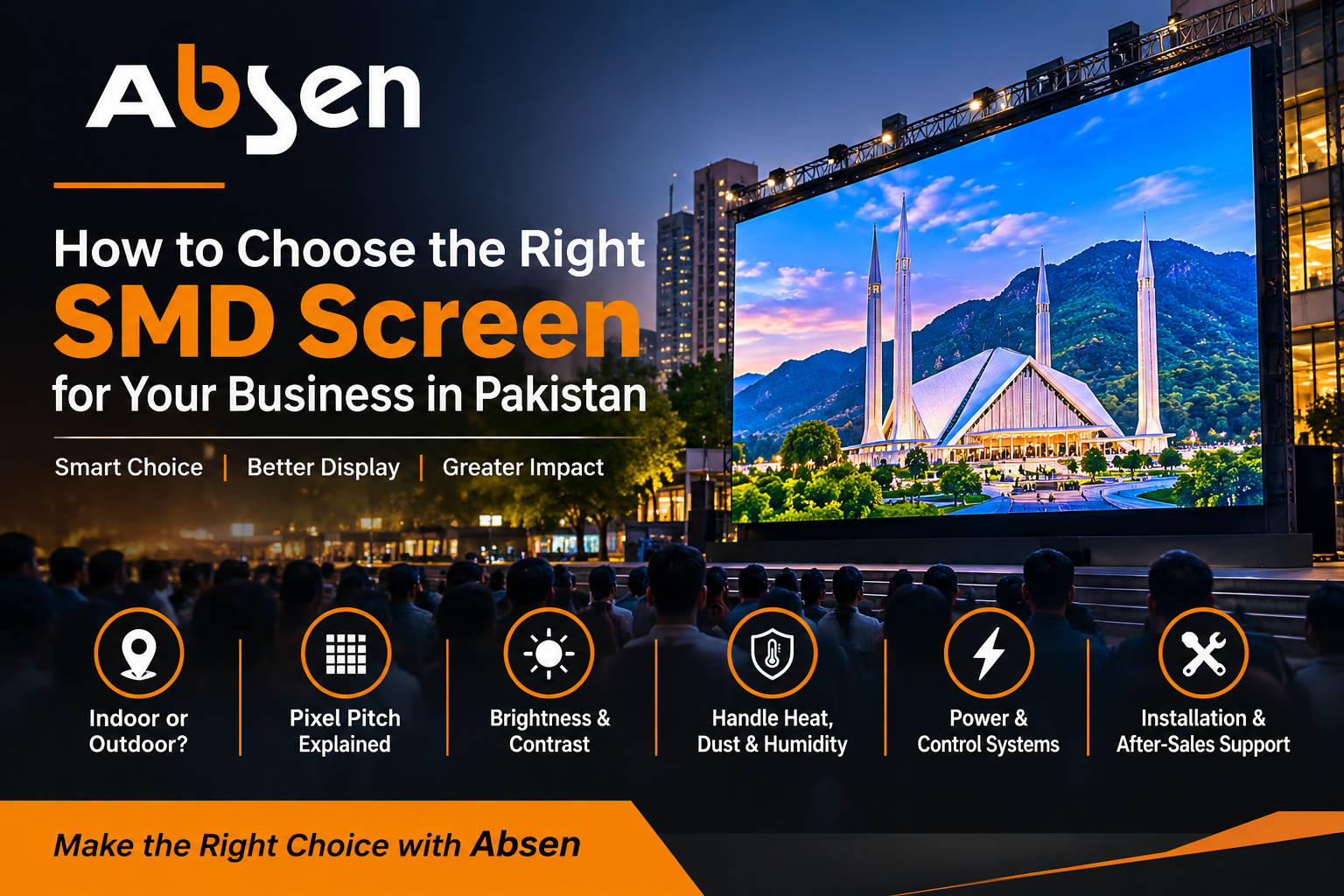

How to Choose the Right SMD Screen for Your Business in Pakistan
Walk through any major city in Pakistan today and you will notice the change. Shopping malls, banks, universities, mosques, cricket grounds and wedding halls are replacing printed banners and projectors with bright, seamless SMD screens. These LED displays are sharper, brighter and far more flexible than older technology, and they can show anything from a live match to a product advertisement without a single reprint.
But buying an SMD screen is not as simple as picking the biggest size your budget allows. Pakistan has hot summers, dusty air, coastal humidity and unstable power in many areas, and all of these affect how a screen performs. A display that looks perfect in a showroom can disappoint after one summer if it was chosen badly. This guide explains the key factors you should understand before you buy.
Start With the Location: Indoor or Outdoor?
The first decision is where the screen will live. Indoor and outdoor SMD screens are built very differently, and using one in place of the other is a common and expensive mistake.
Indoor screens are designed for controlled environments such as boardrooms, retail stores, classrooms, auditoriums and studios. They have a finer pixel pitch, softer brightness and a slimmer design. Outdoor screens, on the other hand, are built to handle sunlight, rain, dust and heat. They are much brighter and come with weatherproof protection on the cabinet and modules.
A simple rule: if direct sunlight can touch the screen at any point in the day, or if rain and dust can reach it, you need an outdoor-rated product. Even a screen placed behind a glass shopfront often needs higher brightness than a normal indoor model, because daylight can wash out the picture.
Understand Pixel Pitch Before Anything Else
Pixel pitch is the distance, in millimetres, between the centres of two neighbouring pixels. A smaller number means pixels are packed more closely, which gives a sharper image at close range. It also means a higher price.
A practical guideline is that the pixel pitch in millimetres roughly equals the minimum comfortable viewing distance in metres. For example, a screen with a 2.5 mm pitch looks good from about 2.5 metres or more. Here is how it usually works in practice:
- Boardrooms, control rooms and studios: very fine pitch, because people sit or stand close to the screen.
- Retail stores and lobbies: fine to medium pitch, depending on how close shoppers get.
- Large halls and event stages: medium pitch, since the audience is further away.
- Roadside billboards and stadiums: larger pitch, because viewers are many metres away and a finer pitch would only add cost.
Choosing a pitch that is finer than you need wastes money. Choosing one that is too coarse makes the image look grainy. Measure your real viewing distance first, then decide.
Brightness and Contrast Matter More Than You Think
Brightness is measured in nits. Indoor screens usually work well at a few hundred to around a thousand nits, while outdoor screens need several thousand to remain readable under strong sun. Pakistan receives intense sunlight for most of the year, so an outdoor screen with weak brightness will look dull exactly when people are most likely to see it.
At the same time, more brightness is not always better. A very bright screen in a dim hall is uncomfortable to watch and shortens the life of the LEDs. Good screens allow brightness to be adjusted manually or automatically, so the display suits the time of day. Also look at contrast and colour accuracy, especially if the screen will show video, product images or broadcast content.
Plan for Heat, Dust and Humidity
Heat is the biggest enemy of any electronic display. In cities such as Karachi, Lahore, Multan and Sukkur, summer temperatures can push equipment hard. If a screen cannot dissipate heat properly, colours may shift, modules can fail early and the lifespan drops sharply.
Ask about the cooling design, the operating temperature range and the ingress protection rating of the cabinet. In coastal areas, salty and humid air can corrode poor-quality connectors and metal parts, so protective coatings and good sealing are important. In dusty regions, regular cleaning and well-sealed cabinets help avoid dead pixels and overheating. A reliable supplier should be able to tell you clearly how the product handles these conditions rather than giving a vague answer.
Do Not Ignore Power and Control Systems
Voltage fluctuation and load-shedding are everyday realities in many parts of the country. A large SMD screen draws significant power, so the electrical setup deserves as much attention as the screen itself.
Make sure the installation includes proper wiring, correct cable sizing, voltage protection and, where the screen is business-critical, a backup power plan. Also check the control system. A good controller lets you schedule content, update it remotely and monitor the screen’s health from a computer or phone. For businesses that run advertising, this saves a great deal of time and avoids blank screens during important hours.
Installation and After-Sales Support Decide the Real Value
A screen is only as good as the team that installs and maintains it. Poor mounting leads to visible gaps between cabinets, uneven alignment and even safety risks for large walls. Calibration is equally important, because uneven colour across panels is one of the most common complaints buyers have.
Before you sign any order, ask these questions:
- Is a site survey included before installation?
- Does the supplier keep spare modules and parts in local stock?
- Who handles warranty claims, and how quickly do engineers respond?
- Can you see a similar screen working in real conditions?
Local stock and local engineers make a huge difference. If a single module fails and the replacement has to be imported, your screen may stay damaged for weeks. A supplier with an experience centre, a service team and nationwide installation experience reduces that risk considerably.
Buying vs Renting for Events
Not every project needs a permanent screen. For concerts, weddings, exhibitions and corporate launches, rental LED panels are often the smarter choice. Rental panels are lightweight, rig quickly and can be arranged in different shapes and sizes. You pay only for the days you need, and the supplier handles transport, setup and on-site technical support. If you run events regularly, buying your own rental stock may become cheaper over time, so compare both options with a realistic count of events per year.
A Quick Buyer’s Checklist
Before you request quotations, write down the following details so every supplier quotes on the same basis:
- Indoor or outdoor placement
- Real viewing distance of your audience
- Screen size and available wall or structure space
- Type of content: video, text, live feeds or advertising
- Power availability and backup requirements
- Budget for both the screen and long-term maintenance
Comparing quotes without these details often leads to confusion, because suppliers may offer different pitches, brightness levels and warranty terms.
Final Thoughts
A good SMD screen is an investment that can attract customers, improve communication and make events unforgettable, but only if it suits its environment. Focus on the location, pixel pitch, brightness, heat protection, power setup and, above all, local support. Taking a little extra time to ask the right questions will save you from costly repairs and replacements later.
If you want to see how different SMD screens, rental panels and video wall options work in real conditions across Pakistan, you can explore the range offered by Absen Pakistan and request a site survey before making your final decision.



