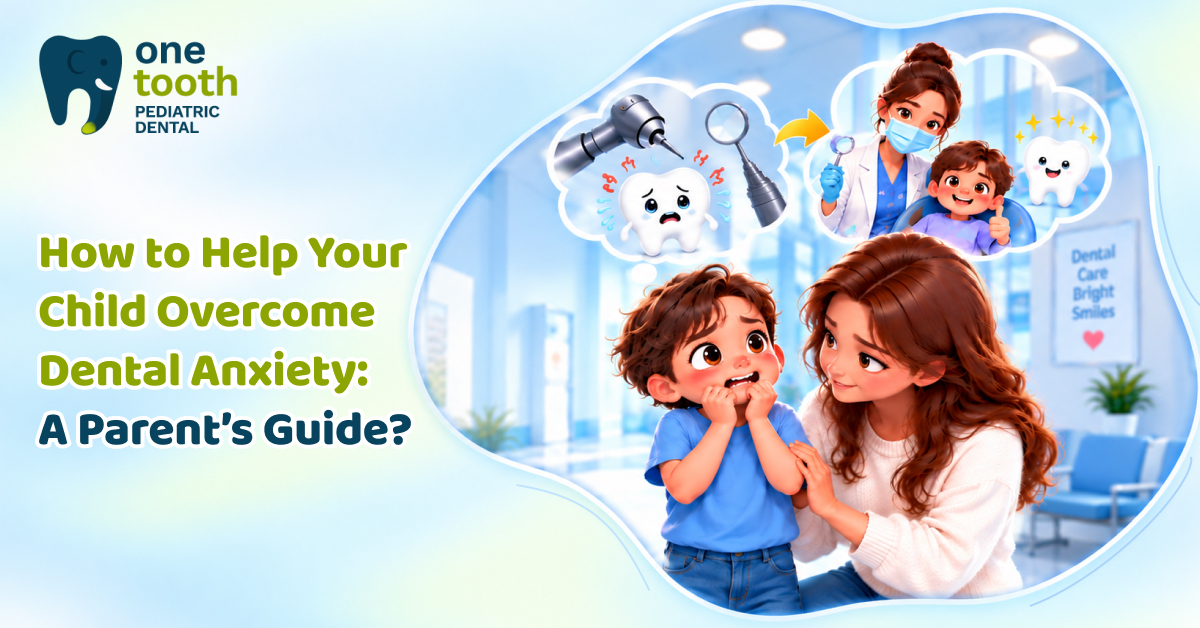
If getting your kid to the dentist feels like a full-on battle, you’re not alone. Dental anxiety in children is one of the most common things parents deal with – and the good news is, it doesn’t have to stay that way. Understanding strategies for managing dental anxiety can help parents make each visit feel calmer and more predictable.
At One Tooth Pediatric Dental, Dr. Akshay Kolluri and the team take time to understand how each child feels, what their smile needs, and which approach will help the visit feel safe and manageable. This guide explains possible signs and causes of dental anxiety and offers practical ways parents can support their child before and during a visit.
What Does Dental Anxiety Look Like in Children?
Fear doesn’t always show up as crying. Sometimes it looks like a stomachache, a meltdown, or just a kid who suddenly can’t stop asking questions. Catching those signs early makes all the difference.
Signs a Child May Feel Anxious
- Physical clues: Stomachaches, clinginess, or trouble sleeping before an appointment may be signs of anxiety, although these behaviors can have other causes.
- Emotional reactions: Crying, tantrums, or sudden anger may point to fear rather than plain misbehavior.
- Avoidance behaviors: Covering the mouth, refusing to open up, or pulling away can all reveal dental nervousness.
- Verbal cues: Repeated questions or flat-out saying “I don’t want to go” show a child needs extra reassurance.
Why Are Some Kids So Afraid of the Dentist?
Dental anxiety can have many causes, including unfamiliar surroundings, previous experiences, sensory sensitivities, and a child’s general temperament. New sights, sounds, and sensations can feel overwhelming to a young child who has no frame of reference. Understanding the common causes of dental fear in kids helps parents meet that fear with patience instead of frustration.
Common Causes of Dental Fear
- Fear of the unknown: New places, tools, and unfamiliar faces feel threatening to a child who isn’t sure what’s coming.
- Past discomfort: One rushed or painful visit can plant lasting worry that shapes how a child feels at future appointments.
- Sensory sensitivities: Bright lights, unfamiliar sounds, tastes, textures, or physical sensations may feel overwhelming to some children.
- Loss of control: Lying back with an open mouth leaves many kids feeling helpless and on edge.
What Do These Signs of Dental Anxiety Really Mean?
Anxious behavior can be a child’s way of communicating fear, uncertainty, discomfort, or a need for more control. This quick breakdown helps parents read what’s happening and respond in a way that genuinely helps.
|
Sign of Anxiety
|
What It May Mean
|
Best Parent Response
|
|
Crying or clinging
|
Fear of separation or the unknown
|
Stay calm, offer comfort, and reassure gently
|
|
Tummy ache before visit
|
Nervous anticipation and stress
|
Acknowledge feelings and keep the mood light
|
|
Refusing to open mouth
|
Feeling a loss of control
|
Let the child ask for pauses and small choices
|
|
Endless questions
|
Seeking reassurance and safety
|
Answer simply with positive, honest words
|
|
Anger or tantrums
|
Overwhelm rather than misbehavior
|
Slow down and let the dental team take the lead
|
How Can Parents Prepare a Child Before the First Visit?
A little prep at home goes a long way. These tips for a child’s first dental visit help take away the mystery and give a kid the chance to walk in feeling like they know what to expect.
Easy Ways to Prepare at Home
- Read fun books: Upbeat dental storybooks help a child picture a friendly, positive visit before they ever arrive.
- Play pretend dentist: Counting teeth and using a toothbrush as a prop makes real dental tools feel familiar and safe.
- Pick a good time: When possible, schedule the visit for a time when your child is usually rested and comfortable. Follow any eating or drinking instructions provided by the dental office.
- Preview the office: Checking out the office in person or on its website beforehand helps a child feel like they’ve been there before.
What Should Parents Actually Say About the Dentist?
The words parents choose matter more than most people realize. Keeping it positive and simple helps build confidence – and keeps scary ideas from creeping in before the visit even starts.
Words That Build Comfort and Trust
- Focus on the positive: Frame the dentist as a friendly tooth helper whose job is to keep smiles healthy and strong.
- Keep it simple: Short, calm answers to a child’s questions work better than long explanations that pile on extra detail.
- Stay neutral on pain: Saying the team works hard to keep kids comfortable is far better than making promises nobody can guarantee.
- Recognize their effort: Offer specific praise for helpful steps, such as entering the office, sitting in the chair, or opening their mouth for the dentist.
How Do Early Preventive Visits Actually Support Dental Anxiety Prevention?
Regular preventive visits can help children become familiar with the dental office and give the team opportunities to build trust over time. Familiarity builds trust, and trust builds confidence, one visit at a time.
How Routine Visits Ease Anxiety
- Building familiarity: Regular checkups turn the dental office into a comfortable, known space instead of a scary unknown.
- Finding problems early: Routine examinations may allow some concerns to be treated before they become more extensive or uncomfortable.
- Creating positive memories: Gentle, upbeat visits stack up over time and quietly replace fear with real confidence.
- Establishing a dental home: A consistent team gets to know a child’s needs and shapes every visit around them.
What Gentle Techniques Do Pediatric Dentists Use to Calm Anxious Kids?
Pediatric dentists use several behavior-guidance techniques based on the child’s age, development, anxiety, previous experiences, and treatment needs.
Comfort-First Behavior Guidance Tools
- Tell-Show-Do: The dentist explains and demonstrates an age-appropriate version of a procedure before beginning.
- Distraction: Conversation, music, videos, or other appropriate activities may help redirect a child’s attention during care.
- Positive reinforcement: Specific praise and small celebrations reward brave moments and help kids feel genuinely proud.
- Desensitization: Gradual, low-pressure visits slowly build trust and chip away at fear through kind, repeated, gentle steps.
How Are Visits Adapted for Sensory-Sensitive or Special Needs Kids?
Some kids need a different kind of care to feel okay – and that’s completely normal. Thoughtful adjustments help children with sensory sensitivities and special health care needs stay grounded and safe.
Support That Meets Every Child Where They Are
- Sensory adjustments: Softer lighting, quieter sounds, and slower pacing help easily overwhelmed children stay calm throughout care.
- Communication aids: Pictures, visual cues, and simple language honor the way each child best understands what’s happening.
- Predictable routines: Step-by-step introductions and built-in breaks help sensitive children feel steady from start to finish.
- Comfort options: Depending on the child’s health, anxiety, ability to cooperate, and treatment needs, the dentist may discuss behavior guidance, nitrous oxide, sedation, or care in another appropriate setting.
How Does One Tooth Pediatric Dental Help Choose the Right Treatment?
At One Tooth Pediatric Dental, each care plan considers the child’s age, development, comfort, medical history, and oral health needs.
How the Right Plan Comes Together
- Child-first thinking: The team considers age, temperament, comfort level, and oral health needs before recommending any treatment path.
- Least-invasive approach: Gentle behavior guidance always comes first, with sedation or advanced care reserved for clearly explained, genuine need.
- Evidence-based care: Every choice follows current pediatric dentistry standards and proven safety protocols, visit after visit.
- Honest guidance: Parents hear clear, calm explanations of every option, benefit, and alternative before any decision gets made.
If your child feels anxious about dental visits, contact One Tooth Pediatric Dental, a Kids Friendly Pediatric Dentist in Annapolis. We can discuss your child’s concerns and ways to make the next appointment feel more manageable.
The information provided in this article is for general informational
and educational purposes only. It is not intended to replace
professional medical advice, diagnosis, or treatment. Always consult
a qualified healthcare professional regarding any medical condition,
symptoms, or treatment decisions.