Physical Address
304 North Cardinal St.
Dorchester Center, MA 02124
Physical Address
304 North Cardinal St.
Dorchester Center, MA 02124

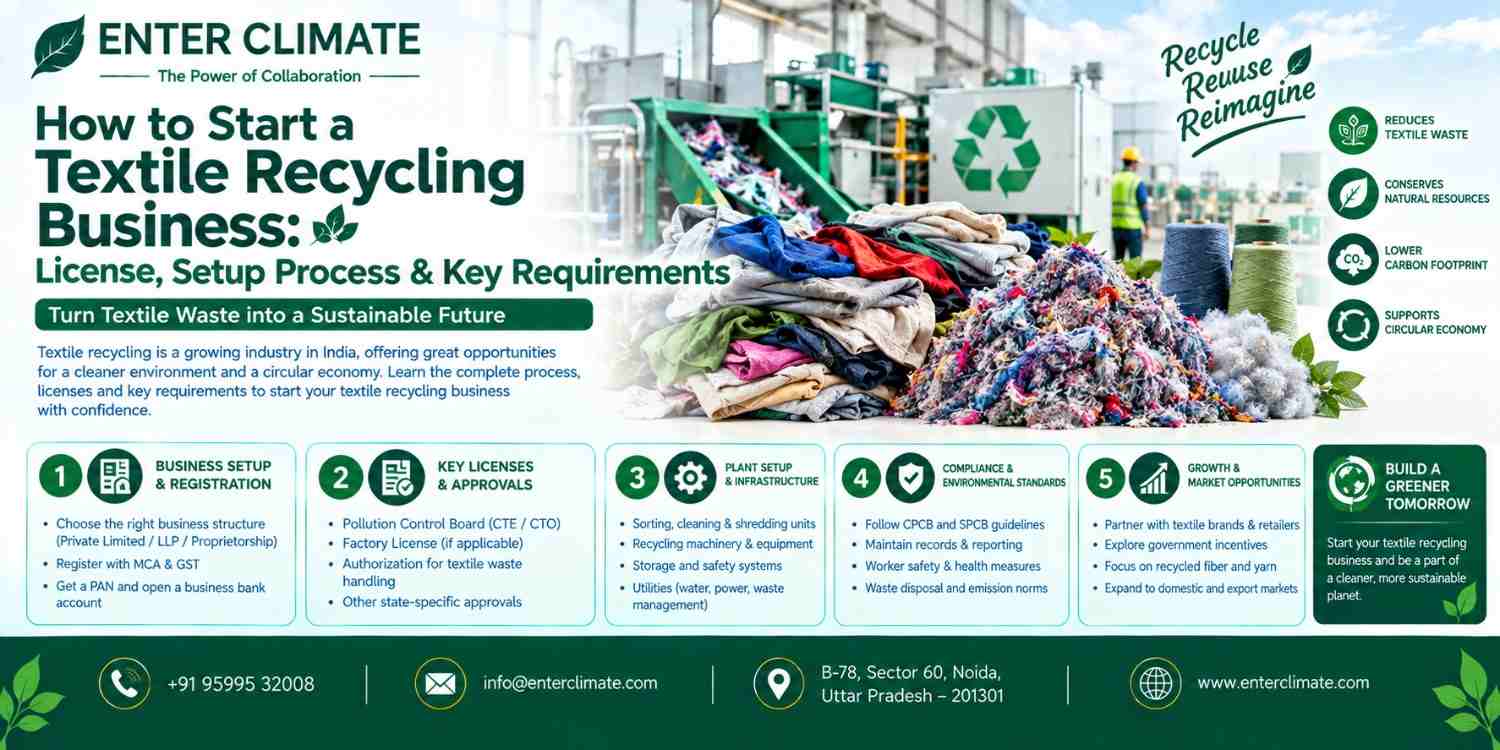
Every day, a large amount of old clothes, fabric waste, rejected garments, and textile scraps are thrown away. Instead of letting this waste go to landfills, it can be collected and turned into useful materials.
This is where a textile recycling business can help. It is a business that collects unwanted textiles and processes them so they can be reused or converted into new products.
If you are planning to start this business in India, you need more than just machines and a building. You also need the right permissions, waste management systems, and environmental approvals.
Textile recycling means taking old or unwanted textile materials and processing them for reuse.
For example, old cotton clothes can be turned into fibres, cleaning rags, insulation material, or other textile products. Some materials can also be blended with other fibres and used again in manufacturing.
The exact recycling method depends on the type of textile waste you handle.
The first thing is to decide what type of textile waste you want to process.
You may work with:
Your choice will affect the machinery, land, storage area, pollution-control systems, and approvals needed for the project.
Location is an important part of setting up a recycling unit.
The site should have enough space for raw material storage, processing machines, finished products, worker movement, and waste handling. Proper electricity, water supply, roads, and drainage should also be considered.
Before purchasing or renting land, it is useful to check whether the proposed activity is allowed at that location and whether environmental permissions will be required.
One of the most important requirements is getting the appropriate textile recycling business license and environmental approvals.
Depending on the nature and scale of the unit, the business may need registrations and permissions from different government departments. Environmental permissions may also be required from the concerned State Pollution Control Board.
The exact approvals can vary based on the process, location, waste category, and capacity of the plant. Therefore, it is better to identify the applicable approvals before starting construction or production.
Once the basic permissions and site planning are completed, you can start preparing the plant.
The machinery depends on your recycling process. A typical textile recycling unit may require equipment for sorting, cutting, shredding, fibre opening, cleaning, and packing.
You should also plan how dust, wastewater, noise, and other waste generated during operations will be managed.
If the process uses a significant amount of water, a proper wastewater management system becomes especially important. Businesses working with industrial wastewater may also explore requirements related to a Wastewater Treatment Business set up when planning treatment infrastructure and related operations.
A recycling plant can involve cutting equipment, shredders, moving machinery, dust, and large quantities of stored material.
Workers should therefore receive proper safety training. Fire safety equipment, protective gear, emergency exits, ventilation, and safe storage areas should be provided.
Raw textile waste should be stored in an organised manner so that it does not create unnecessary fire or health risks.
New entrepreneurs often search for information about different manufacturing permissions while planning their business.
For example, someone researching manufacturing projects may come across requirements related to Plaster of Paris Industry Licences, fermentation industry business Setup, or other industrial approvals.
These are separate business activities, and their licenses should not be confused with textile recycling requirements. The permissions for a textile recycling unit depend on its own manufacturing process, location, capacity, and type of waste handled.
The demand for recycled materials is growing as businesses look for ways to reduce waste and use resources more efficiently.
However, starting a recycling business requires proper planning. Buying machinery without understanding the applicable approvals can create problems later.
A better approach is to first understand the complete project, identify the waste category, check environmental requirements, prepare the necessary documents, and then move towards plant setup.
Environmental rules can sometimes be difficult for a new entrepreneur to understand. Professional guidance can make the registration and approval process easier.
Enterclimate provides environmental compliance support for businesses working on different industrial and waste-management projects. Its team can help businesses understand applicable approvals, documentation, and compliance requirements.
Before starting a textile recycling unit, it is always better to check the applicable requirements for your specific project rather than following a general checklist.
Upendra Sharma is an Environmental Compliance Consultant associated with Enterclimate. He writes about environmental approvals, waste management, pollution-control requirements, and compliance processes to help businesses understand regulatory requirements in simple language.{“success”:false,”data”:”The uploaded file exceeds the upload_max_filesize directive in php.ini.”}




