Physical Address
304 North Cardinal St.
Dorchester Center, MA 02124
Physical Address
304 North Cardinal St.
Dorchester Center, MA 02124

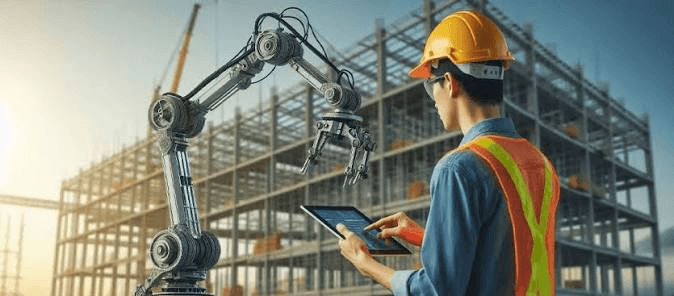
Construction projects involve hundreds of connected decisions, from material procurement and labour allocation to equipment scheduling and budget management. Even a small delay in one activity can affect several other stages, increasing costs and extending project timelines.
Artificial intelligence is helping construction businesses make these decisions with better access to project data. By analysing schedules, historical costs, site information and resource requirements, AI systems can support more informed planning and reduce avoidable inefficiencies.
Traditional construction planning often relies on spreadsheets, manual estimates and updates collected from different teams. Although these methods can work for smaller projects, they become difficult to manage as the number of contractors, activities and dependencies increases.
Common planning challenges include:
Inaccurate material and labour estimates.
Delays caused by unavailable equipment or supplies.
Poor visibility into project progress.
Unexpected changes in material prices.
Scheduling conflicts between contractors.
Limited ability to identify cost overruns early.
AI can help address these issues by identifying patterns across project information and highlighting potential problems before they become expensive.
Estimating construction costs involves considering materials, labour, equipment, transportation and other expenses. AI models can analyse historical project records alongside current pricing information to identify cost patterns.
For example, a construction company planning a commercial building can use historical data from similar projects to estimate concrete requirements, labour hours and equipment costs.
These estimates can help project managers identify unusual budget assumptions and compare different construction scenarios.
However, AI-generated estimates should be treated as decision-support tools. They still require professional validation, particularly when site conditions or design specifications differ from historical projects.
Construction schedules depend on multiple activities being completed in the correct sequence. Weather conditions, supplier delays, labour shortages and equipment failures can disrupt the entire timeline.
AI can analyse historical project schedules and current progress information to identify activities that may create delays.
For example, if a critical material delivery is repeatedly postponed, the system can highlight dependent activities that may be affected.
Project managers can then adjust procurement plans, redistribute resources or revise schedules before the disruption spreads.
Construction sites require different teams and equipment at different stages. Poor allocation can leave workers waiting for machinery or cause expensive equipment to remain unused.
AI-powered scheduling systems can analyse workforce availability, equipment usage and project priorities to suggest more efficient allocations.
This is particularly useful for contractors managing several projects simultaneously, where resources need to be distributed across multiple locations.
Computer vision systems can analyse images and video captured through authorised site cameras or drone inspections. These systems can help identify visible progress, compare completed work against planned milestones and flag certain safety or quality concerns.
For example, image analysis may help project managers estimate whether structural work is progressing according to schedule.
However, visual AI monitoring cannot replace engineering inspections or formal safety assessments. Human professionals must verify important findings.
Introducing AI into construction operations requires more than selecting a model. The system must connect with the information sources that project teams already use.
A practical implementation process includes:
Step 1: Identify the planning problem. Start with a measurable challenge, such as inaccurate material estimates, delayed procurement or poor equipment utilisation.
Step 2: Collect relevant project data. Gather historical budgets, work schedules, procurement records, site reports and resource utilisation information.
Step 3: Establish data quality standards. Remove inconsistent entries, standardise units and check whether project records contain enough detail for meaningful analysis.
Step 4: Select suitable AI capabilities. Predictive models may support cost forecasting, while optimisation algorithms can help with scheduling and resource allocation.
Step 5: Connect existing systems. Integrate the solution with project management platforms, procurement software and reporting tools where appropriate.
Step 6: Test with a limited project. Compare AI-generated recommendations with actual project outcomes before expanding deployment.
Businesses exploring these capabilities can work with an Ai Development agency in Dallas to develop forecasting models, integrate operational data and build AI-powered planning tools around their construction workflows.
Construction decisions can have significant financial and physical consequences. AI systems therefore need clear operational boundaries.
A cost prediction based on outdated material prices may be misleading. Businesses should establish processes for regularly updating supplier rates, labour costs and project information.
Historical records cannot account for every condition at a new construction site. Soil characteristics, access restrictions and environmental factors may require professional assessments beyond the capabilities of a general prediction model.
AI should support project managers rather than independently approve budgets, engineering decisions or safety procedures. Important recommendations need human review and documented approval.
Construction projects may contain confidential designs, financial information and contractor details. Access controls and secure data handling are essential when connecting information from multiple systems.
Businesses should evaluate whether AI improves actual project outcomes instead of focusing only on model accuracy.
Useful performance indicators include:
Difference between estimated and actual project costs.
Schedule variance across project milestones.
Equipment utilisation rates.
Material wastage.
Frequency of procurement delays.
Time spent preparing project reports.
Comparing these metrics before and after implementation helps determine whether the system delivers practical value.
AI can make construction project planning more data-driven by supporting cost estimation, delay prediction, resource allocation and progress monitoring. Its greatest value comes from helping project managers identify potential problems earlier and evaluate possible responses.
Successful adoption depends on reliable project data, suitable integrations and professional oversight. When these elements work together, AI becomes a practical planning tool that helps construction businesses manage complexity without losing control of important decisions.