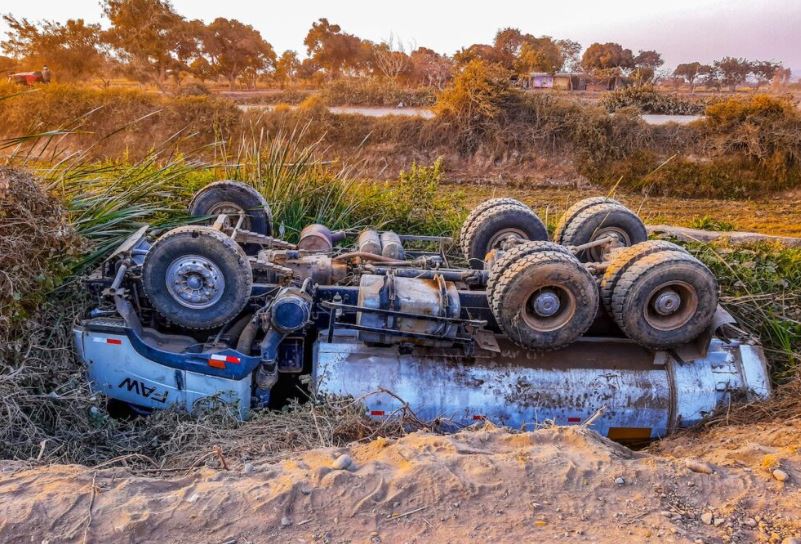
The interchange where the 134, 5, and 2 freeways meet is one of the more complex stretches of highway in the Los Angeles area, with sweeping connector ramps, tight curves, and heavy merging traffic. For a fully loaded commercial truck, that combination of curves, grade changes, and sudden slowdowns creates real risk of losing control. Jackknife and rollover crashes are among the most dangerous types of truck accidents, and they happen with some regularity at interchanges like this one.
If you were hurt in a jackknife or rollover crash involving a truck in Glendale, a Glendale truck accident lawyer can help you understand what caused the loss of control and who may be responsible.
What Is a Jackknife Accident?
A jackknife happens when a tractor-trailer’s trailer swings out of alignment with the cab, folding the vehicle into a shape resembling a pocketknife. This typically occurs when the trailer’s wheels lose traction and continue moving while the cab slows or turns, causing the trailer to skid sideways. A jackknifing truck can span multiple lanes, strike other vehicles, and block a roadway entirely, often with little warning for drivers nearby.
What Is a Rollover Accident?
A rollover happens when a truck tips onto its side or roof, often while taking a curve or ramp too fast, overcorrecting after drifting, or carrying a high or unevenly distributed load. Rollovers are especially common on freeway interchange ramps, where curves are sharper and speeds may still be too high for the truck’s center of gravity and cargo.
Why the 134/5/2 Interchange Presents Elevated Risk
- Curved connector ramps that require trucks to slow significantly, especially when loaded
- Elevation changes that affect braking and stability
- Heavy merge volume from three converging freeways
- Frequent lane changes as trucks navigate to the correct connector
- Congestion and sudden stops, which can force a truck driver to brake or swerve abruptly
- Construction activity, which can narrow lanes or shift traffic patterns with little notice
Common Causes of Jackknife and Rollover Crashes
- Speeding for conditions, particularly on curved ramps
- Sudden or hard braking, especially on wet pavement
- Improperly loaded or secured cargo, raising the truck’s center of gravity or shifting weight unevenly
- Worn or defective brakes, causing uneven braking between axles
- Worn or defective tires, reducing traction
- Driver inexperience or inadequate training for handling a loaded trailer on tight curves
- Driver fatigue, slowing reaction time when correction is still possible
- Mechanical defects in the coupling, suspension, or braking systems
- Wind, which can affect a high-profile or lightly loaded trailer
- Distracted driving, delaying recognition of a curve or slowing traffic ahead
Why These Crashes Are So Dangerous to Others
A jackknifing or rolling truck does not stay in one lane. It can:
- Span multiple lanes, striking vehicles that had no way to avoid it
- Spill cargo across the roadway, creating additional hazards
- Cause chain-reaction collisions as following traffic tries to avoid the truck
- Block the roadway entirely, leading to secondary crashes as traffic backs up
- Result in a rollover onto smaller vehicles in adjacent lanes
Because these crashes often unfold in seconds and involve multiple vehicles, sorting out exactly what happened requires careful investigation, including physical evidence at the scene and the truck’s own data.
What Investigators Look At
Determining the cause of a jackknife or rollover typically involves examining:
- Speed at the time of the incident, often available through event data recorder data
- Braking patterns, including whether brakes engaged evenly across axles
- Cargo loading and securement, including whether weight was properly distributed
- Tire condition at the time of the crash
- Maintenance history for brakes, suspension, and coupling systems
- Weather and road conditions
- The driver’s training and experience with the specific type of trailer and route
Who May Be Responsible?
- The truck driver, for excessive speed, following too closely, or failing to adjust for conditions
- The trucking or delivery company, for inadequate training, scheduling pressure, or poor vehicle maintenance
- A cargo loading company or shipper, if improper loading contributed to instability
- A maintenance or repair company that failed to properly service brakes, tires, or coupling systems
- A manufacturer, if a defective component contributed to the failure
- A government agency, in limited cases involving inadequate signage, curve design, or road maintenance at the interchange
Evidence in These Cases
Because jackknife and rollover crashes often involve significant vehicle and cargo movement, evidence can be lost quickly as the scene is cleared and the truck is towed. Important evidence may include:
- The police or CHP collision report
- Event data recorder (“black box”) data showing speed and braking before the incident
- Electronic logging device (ELD) data, where applicable
- Dash-cam and surveillance footage, including cameras on other vehicles
- Maintenance and inspection records for brakes, tires, and coupling systems
- Cargo manifests and loading documentation
- Photos and video of the scene, cargo spill pattern, and final resting position of the truck
- Witness statements
- Weather conditions at the time
An attorney can send preservation letters quickly, since wrecked trucks are often towed and cargo cleared before a full investigation can occur otherwise.
Common Injuries
- Traumatic brain injuries and concussions
- Spinal cord injuries and paralysis
- Broken bones and crush injuries
- Internal organ damage and bleeding
- Burns, particularly if fuel or cargo ignites
- Amputations
- Fatal injuries
- Emotional trauma, including PTSD
Multi-vehicle involvement in these crashes means injuries can vary widely depending on where a given vehicle was positioned relative to the truck.
Shared Fault Under California Law
California follows pure comparative negligence. If you are found partly at fault, your compensation is reduced by your percentage of responsibility, but not eliminated. For example, if you are found 10% at fault for a $600,000 loss, you could still recover $540,000. In multi-vehicle incidents, insurers may try to divide fault among several drivers, so a thorough investigation into the sequence of events matters.
Compensation You May Be Able to Recover
- Medical expenses, past and future
- Rehabilitation and long-term care
- Lost wages and loss of earning capacity
- Vehicle or property damage
- Pain and suffering, emotional distress, and loss of enjoyment of life
- Wrongful death damages for surviving family members, if the crash was fatal
- Punitive damages in rare cases involving especially reckless or malicious conduct
What to Do After a Jackknife or Rollover Crash
- Call 911 and request police and medical help.
- Get to safety if you can, being alert to secondary crashes from following traffic.
- Photograph the scene: the truck’s final position, cargo spillage, skid marks, and your vehicle’s damage, if it’s safe to do so.
- Get information from the truck driver and any witnesses.
- Do not discuss fault at the scene.
- Seek medical care right away, even if you feel fine.
- Follow your treatment plan and keep all medical records and bills.
- Do not give a recorded statement to the trucking company’s insurer.
- Contact an attorney quickly so black box data and other evidence can be preserved before the truck is repaired or scrapped.
Deadlines to Keep in Mind
- Personal injury lawsuits: generally two years from the date of the accident
- Property damage claims: generally three years
- Claims against government entities: generally six months for the initial claim
- Wrongful death claims: generally two years from the date of death
Mistakes That Can Hurt Your Claim
- Assuming a jackknife or rollover was simply an unavoidable accident
- Failing to document the scene and cargo before cleanup
- Talking to the trucking company’s adjuster without legal advice
- Accepting a quick settlement before the full extent of injuries is known
- Waiting too long to have black box and maintenance data preserved
How a Glendale Truck Accident Lawyer Can Help
An experienced attorney can:
- Send preservation letters for black box data, maintenance records, and cargo documentation
- Work with accident reconstruction experts to determine speed and cause
- Investigate cargo loading, driver training, and vehicle maintenance
- Identify every responsible party and available insurance policy
- Document your current and future losses with medical and financial experts
- Negotiate with insurers, or file suit and go to trial if necessary
Many personal injury firms work on a contingency fee basis, meaning you typically pay no attorney fees unless you recover compensation. Confirm the terms during your consultation.
Hurt in a Jackknife or Rollover Crash? Get Answers
These catastrophic crashes are often the result of preventable failures in training, maintenance, or loading. If you were injured in a jackknife or rollover truck accident in Glendale, contact a Glendale truck accident lawyer to talk through what happened and learn what options may be available.