Physical Address
304 North Cardinal St.
Dorchester Center, MA 02124
Physical Address
304 North Cardinal St.
Dorchester Center, MA 02124

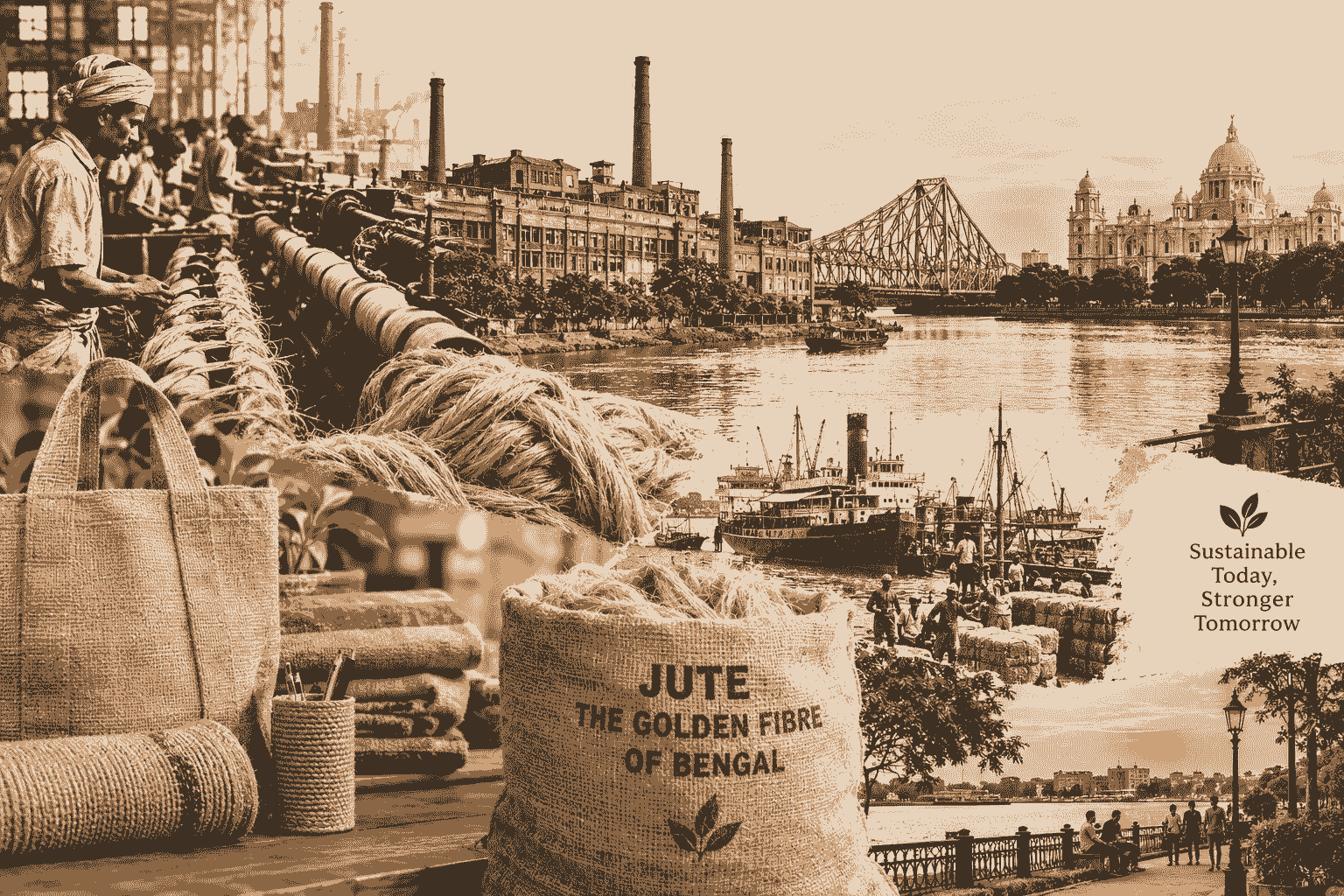
Kolkata is often described through its trams, its colonial architecture and its love of art and food. Beneath these famous images lies a story of industry. For more than a century, jute, the “Golden Fiber” of Bengal, powered the city’s economy and shaped the lives of hundreds of thousands of people along the Hooghly River.
In the nineteenth century, Calcutta (now Kolkata) was the capital of British India and its busiest port. The fertile Gangetic delta of Bengal was ideal for growing jute, a strong, low-cost plant fiber. Traders soon saw its potential for making sacks, ropes and hessian cloth.
The first mechanised jute mill in India was established at Rishra, on the Hooghly, in 1855. Many more followed on both banks of the river, in areas such as Howrah, Bally, Titagarh, Serampore and Budge Budge. The river carried raw jute in and finished goods out, and the port shipped them worldwide. The trade also linked Bengal to the Scottish city of Dundee, which had long been a centre of jute processing, and capital and machinery moved between the two.
The jute belt was more than a group of factories. Around each mill grew a small township of worker lines, markets, temples, mosques and schools. Workers came from across eastern and northern India, including Bengal, Bihar, Odisha and Uttar Pradesh, giving the mill towns a mix of languages and traditions that is still visible today.
The mills also left a distinctive architectural mark. Brick chimneys, long sheds, riverside ghats and managers’ bungalows still dot the banks of the Hooghly. Some are in use, some are ageing and some are silent, but together they form an industrial landscape found nowhere else in India.
The industry’s fortunes changed in 1947. Partition separated the jute-growing districts, which mostly fell in East Bengal, from the mills around Kolkata. Mill owners had to find new sources of raw fiber, and Indian farmers expanded jute cultivation in West Bengal, Bihar and Assam.
In later decades the industry faced rising competition from synthetic packaging, ageing machinery, labour disputes and fluctuating raw material prices. Many mills closed or struggled to keep going. Yet the sector survived, supported partly by government measures such as the Jute Packaging Materials (Compulsory Use in Packing Commodities) Act, which requires jute bags for packing certain items such as food grains and sugar.
Jute is having a quiet comeback. As consumers and businesses look for eco-friendly alternatives to plastic, jute’s appeal has grown. The fiber is biodegradable, renewable and compostable, and the plant absorbs carbon dioxide as it grows.
Modern Bengal producers now make far more than gunny bags:
Design schools, craft clusters and small enterprises in and around Kolkata are reinventing jute for new markets. Government bodies such as the National Jute Board, which is based in the city, promote research, product diversification and exports.
If you want to see this heritage first hand, Kolkata offers several ways to do it:
The best time to visit Kolkata is between October and February, when the weather is pleasant and the city’s festival season is in full swing. Travellers coming from the United States often begin by searching for Newark to Kolkata flights with IndianEagle.com, , then build a wider itinerary that includes Delhi or Mumbai. Whatever your route, allow at least three to four days in Kolkata so that you can combine industrial heritage with the city’s famous food, literature and street life.
Jute is more than an old industry in Kolkata. It is part of the city’s identity, tied to its river, its migrant communities and its economic rise. The mills gave Kolkata a working-class heart and a global trading presence, and the fiber’s revival shows how traditional materials can meet modern needs.
As the world looks for greener alternatives, the Golden Fiber of Bengal may yet write a new chapter. For travelers, students and history enthusiasts, understanding the story of jute is a rewarding way to understand Kolkata itself.




