Physical Address
304 North Cardinal St.
Dorchester Center, MA 02124
Physical Address
304 North Cardinal St.
Dorchester Center, MA 02124

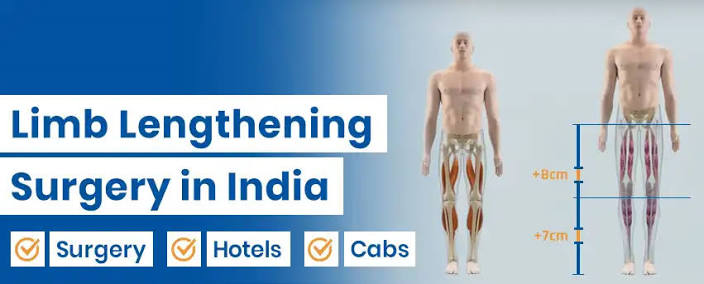
Limb lengthening surgery is a specialized orthopedic procedure used to increase the length of a bone. It may be considered for people with significant differences in leg length, certain bone conditions, deformities, or, in selected cases, cosmetic height enhancement. For patients researching height increase surgery cost in India, it is also important to understand that the total expense depends on the surgical technique, lengthening device, hospital, surgeon’s expertise, rehabilitation, and duration of treatment.
Limb lengthening surgery involves cutting a bone and gradually separating the two bone segments. A specialized internal or external lengthening device is used to slowly increase the distance between the segments.
As the bone is gradually separated, the body naturally produces new bone tissue in the gap. This process is called distraction osteogenesis.
Depending on the patient’s condition and treatment goals, lengthening may be performed on the femur, tibia, or another appropriate bone. The exact amount of lengthening depends on factors such as bone quality, soft-tissue flexibility, overall health, and the orthopedic surgeon’s assessment.
Limb lengthening may be considered for several medical conditions. One common reason is a significant difference in the length of the legs, which can affect walking mechanics and body alignment.
The procedure may also be considered for certain congenital limb differences, bone growth problems, skeletal deformities, or complications following injury or previous surgery.
In some cases, adults explore limb lengthening for height enhancement. However, cosmetic limb lengthening is a major orthopedic procedure and should only be considered after a detailed evaluation of the potential benefits, limitations, risks, and recovery requirements.
Not every person is a suitable candidate. A specialist needs to evaluate bone structure, overall health, joint movement, muscle flexibility, and the patient’s expectations before recommending surgery.
The procedure generally takes place in several stages.
Before surgery, the orthopedic team performs detailed examinations and imaging tests. X-rays and other investigations may be used to assess bone structure and alignment.
The surgeon may also evaluate joint movement, muscle condition, previous injuries, and overall health. For international patients, medical reports and previous imaging can often be reviewed before traveling, although an in-person assessment may still be required.
During surgery, the selected bone is carefully cut. This is known as an osteotomy.
A lengthening device is then positioned to allow controlled separation of the bone segments. Depending on the treatment plan, the device may be placed inside the body or outside the limb.
After surgery, the bone is generally given some time to begin healing before the lengthening process starts.
This initial period allows the body to form early healing tissue around the surgical site.
The bone segments are then gradually separated according to the surgeon’s treatment plan.
The process is intentionally slow because the surrounding muscles, nerves, blood vessels, skin, and other soft tissues also need time to adapt.
Regular clinical examinations and imaging are important during this stage to monitor bone formation and limb alignment.
Once the desired length has been achieved, the newly formed bone needs time to become stronger.
This phase is called consolidation. The lengthening device may remain in place until the bone has developed enough strength, depending on the technique used.
Limb lengthening can involve different bones depending on the patient’s anatomy and treatment objectives.
Femur lengthening involves gradually increasing the length of the thigh bone. The femur is one of the largest bones in the body, and treatment requires careful monitoring of surrounding muscles and joints.
Tibia lengthening involves the shin bone. The procedure may be used for certain leg-length differences or other orthopedic conditions.
The choice between femur and tibia lengthening is not simply based on preference. An orthopedic specialist considers the patient’s anatomy, proportions, bone condition, mobility, and treatment goals before deciding on the appropriate approach.
The potential benefits depend on why the procedure is being performed.
For patients with a significant limb-length discrepancy, correcting the difference may help improve limb alignment and walking mechanics.
For certain deformities or bone-growth conditions, lengthening may form part of a broader reconstruction plan.
For people considering cosmetic height enhancement, the potential benefit is an increase in overall height. However, expectations should remain realistic because the procedure does not provide an instant change and involves months of treatment and rehabilitation.
The primary objective in every case should be achieving a safe and functional outcome rather than focusing only on the final length.
Limb lengthening surgery is a complex procedure and carries potential risks. Patients should discuss these risks in detail with their orthopedic surgeon before treatment.
Possible complications can include:
Infection
Delayed bone healing
Poor or abnormal bone formation
Joint stiffness
Muscle or tendon tightness
Nerve or blood vessel problems
Changes in limb alignment
Pain or discomfort
Device-related complications
Difficulty walking during recovery
Need for additional procedures in some cases
The likelihood of complications can vary depending on the patient’s health, surgical technique, amount of lengthening, bone quality, rehabilitation, and other individual factors.
Regular follow-up is therefore an important part of the treatment rather than something that ends after surgery.
Recovery from limb lengthening surgery takes considerably longer than recovery from many routine orthopedic procedures.
Patients usually require regular medical monitoring and physiotherapy throughout the process. Physical therapy helps maintain joint movement, muscle flexibility, strength, and functional mobility.
The lengthening phase itself may take several weeks or months, followed by a consolidation period during which the new bone becomes stronger.
Patients may initially need crutches, walkers, or other mobility support. Weight-bearing instructions vary according to the surgical technique and the surgeon’s assessment.
For international patients, it is particularly important to discuss how long they need to remain near the treating hospital and how follow-up will be managed after returning home.
Physiotherapy is one of the most important parts of recovery.
As the bone gradually lengthens, surrounding muscles and soft tissues also need to adapt. Without appropriate rehabilitation, patients may develop stiffness, reduced mobility, muscle weakness, or difficulty with normal movement.
A rehabilitation program may include stretching, strengthening exercises, joint mobility exercises, gait training, and other activities based on the patient’s condition.
Patients should follow their physiotherapist’s instructions and avoid increasing activity or weight-bearing without medical approval.
India is considered by many international patients for specialized orthopedic procedures because treatment is available through hospitals and orthopedic centers with experienced specialists and modern medical facilities.
However, choosing a treatment destination should involve more than comparing prices. Patients should consider the surgeon’s experience, hospital facilities, surgical technique, rehabilitation support, expected follow-up, and the overall treatment plan.
International patients should also understand that limb lengthening requires a significant time commitment. Travel planning, accommodation, local transportation, medical appointments, physiotherapy, and follow-up should all be considered before starting treatment.
Hospidio can help international patients understand available treatment options, connect with hospitals and specialists, arrange consultations, and obtain information about the expected treatment process in India.
The cost of limb lengthening surgery in India can vary considerably from one patient to another.
Factors that may influence the total cost include:
Type of limb lengthening procedure
Bone being lengthened
Surgical technique and device used
Surgeon’s fees
Hospital and operating-room charges
Diagnostic tests
Physiotherapy and rehabilitation
Duration of hospital stay
Follow-up requirements
Treatment of any complications, if they occur
Patients should request a personalized estimate after medical evaluation rather than relying only on a general online price.
Before undergoing limb lengthening surgery, patients can ask:
Am I a suitable candidate for the procedure?
Which bone will be lengthened and why?
What technique and device will be used?
How much lengthening is realistically possible?
How long will the entire treatment take?
What restrictions will I have during recovery?
How frequently will I need follow-up imaging?
What physiotherapy will be required?
What complications should I be aware of?
How will follow-up be managed after returning home?
Having clear answers to these questions can help patients understand the treatment journey and prepare realistically.
Limb lengthening surgery in India is a complex orthopedic treatment that requires careful patient selection, specialized surgery, regular monitoring, and long-term rehabilitation. While the procedure can help address certain limb-length differences and orthopedic conditions and may provide height enhancement for selected patients, it is not a quick or simple procedure.
Understanding the surgical technique, potential benefits, risks, recovery requirements, and overall treatment cost is essential before making a decision. A consultation with an experienced orthopedic specialist can help determine whether limb lengthening is appropriate for your individual situation.
For international patients considering treatment in India, Hospidio can assist with exploring hospitals and orthopedic specialists, arranging online consultations, understanding treatment plans, and planning the medical journey.




