Physical Address
304 North Cardinal St.
Dorchester Center, MA 02124
Physical Address
304 North Cardinal St.
Dorchester Center, MA 02124

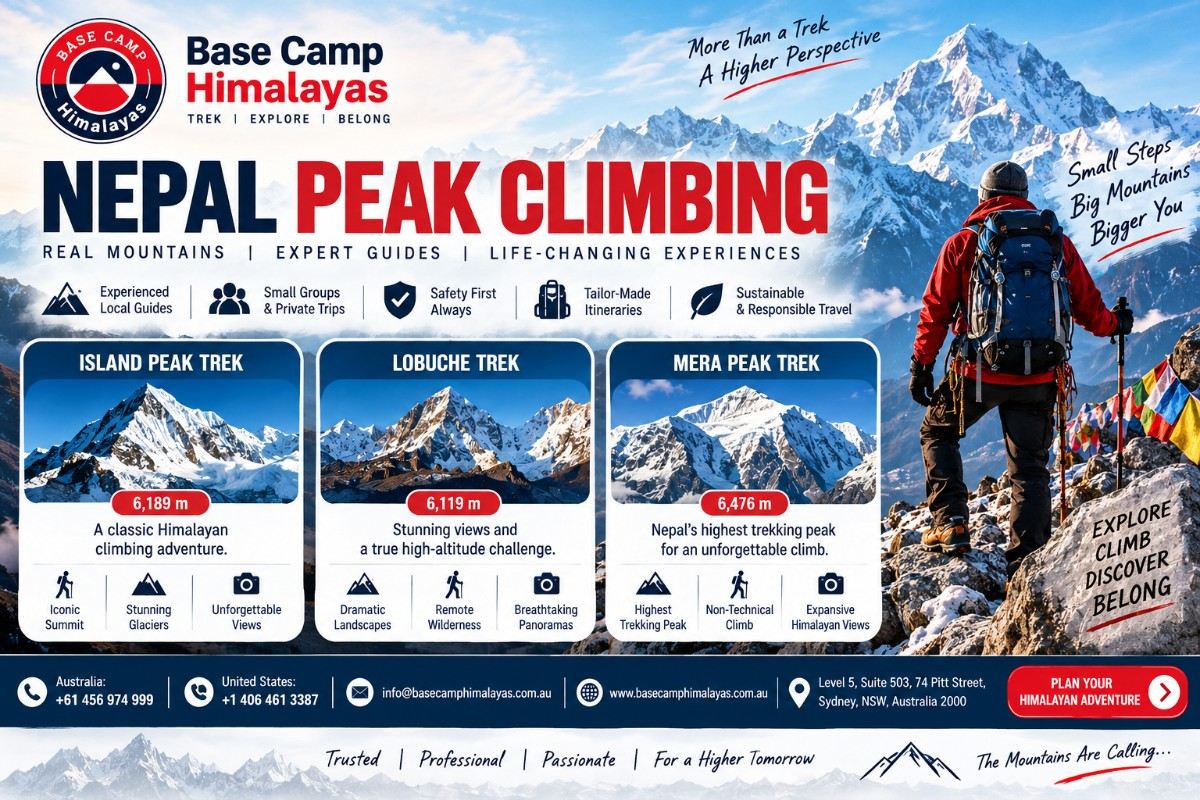
Nepal is one of the world’s most sought-after destinations for Himalayan climbing, but reaching a summit involves more than physical preparation and technical skills. Climbers must navigate a framework of permits, royalties, conservation-area fees, trekking requirements, route restrictions, and expedition documentation before setting foot on a permitted peak.
Understanding these requirements early can make an expedition smoother and help avoid costly delays in Kathmandu or at trail checkpoints. Whether the objective is a popular trekking peak such as Island Peak or Mera Peak, or a more demanding Himalayan summit, knowing which permissions apply is an essential part of responsible nepal peak climbing.
Nepal regulates mountaineering to manage expedition activity, protect fragile mountain environments, maintain safety standards, and generate revenue for conservation and local administration.
A climbing permit is separate from the permissions required for trekking. Depending on the mountain and approach route, climbers may also need protected-area entry permits, TIMS registration, restricted-area permits, or other documentation.
The Nepal Tourism Board explains that mountaineering royalties must be paid before an expedition begins, while protected areas have their own entry requirements.
This distinction is important: having permission to trek toward a mountain does not automatically give you permission to climb it.
The principal requirement for climbing a permitted Himalayan peak is the relevant mountaineering permit. The applicable authority and royalty depend on the mountain and its classification.
For many expedition peaks, applications and royalties are handled through Nepal’s tourism authorities. Smaller trekking peaks may fall under the Nepal Mountaineering Association’s system, while major expedition peaks are administered by the Department of Tourism.
The fees are not universal. They can vary according to the mountain, season, route, and other regulatory considerations. Because rates and procedures can change, climbers should verify the current requirements before making final payments or booking an expedition.
The approach to a climbing objective frequently passes through a protected area. This creates another layer of documentation.
For example, climbers heading toward Island Peak, Mera Peak, or Lobuche in the Everest region may enter Sagarmatha National Park. The current Nepal Tourism Board information lists the foreign visitor entrance fee for Sagarmatha National Park at NPR 3,000 per person per entry.
The fee is separate from the climbing permit.
Other mountains may fall within different protected areas. For example, Makalu-Barun National Park has its own entrance fee structure, currently listed by the Nepal Tourism Board at NPR 3,000 for foreign visitors.
Trekking documentation is another area that often causes confusion.
Under the revised TIMS provisions, several Himalayan routes require trekkers to travel with a licensed trekking guide and carry a trekking-agency-issued TIMS card. The Nepal Tourism Board specifically lists Mera Peak Trek among the routes covered by these requirements.
This means climbers should consider the entire approach journey, not just the summit day, when checking documentation.
The current NTB guidance lists TIMS charges of NPR 1,000 for SAARC applicants and NPR 2,000 for other applicants.
Some Himalayan destinations fall within Nepal’s restricted areas. These locations require a special trekking permit issued through the Department of Immigration.
The permit generally applies to the specified route or area, and the Nepal Tourism Board notes that trekking outside the permitted route can constitute a violation of Nepalese law. Trekkers are also expected to carry the permit and present it to immigration or police officials when requested.
For climbers, this reinforces an important principle: every part of the itinerary needs to be checked for its own regulatory requirements.
Several mountains are commonly described as “trekking peaks,” but that does not mean they are ordinary trekking destinations.
An island peak trek combines high-altitude trekking with a genuine mountaineering objective. Although Island Peak is popular among climbers seeking an introduction to Himalayan climbing, participants still need the appropriate climbing authorization in addition to the permits associated with the approach route.
The final ascent can involve snow, ice, fixed lines, crampons, harnesses, and other technical equipment. Regulations and fees should therefore be confirmed before departure rather than assumed from the fact that the mountain is widely marketed to trekking groups.
Mera Peak is another popular objective for climbers progressing from trekking into mountaineering. The approach involves significant altitude, making acclimatization and preparation just as important as paperwork.
The Nepal Tourism Board specifically includes Mera Peak Trek among the routes where a licensed guide and TIMS card are required under its current guidance.
A lobuche trek can refer to a trekking itinerary in the Everest region, while climbing Lobuche itself involves additional mountaineering considerations. Travelers should therefore distinguish between simply trekking in the region and attempting the summit.
That distinction affects permits, equipment, guide arrangements, insurance considerations, and expedition planning.
A well-organized expedition usually starts with a documentation checklist.
Depending on the mountain and route, climbers may need:
Keep digital and printed copies of important documents. Mountain checkpoints may not offer reliable internet access, so relying exclusively on cloud storage is not ideal.
For independent travelers, Nepal’s permit system can appear complicated because several authorities may be involved.
Many climbers therefore work with a government-registered trekking or expedition company that coordinates permits, transportation, guides, accommodation, porters, and other logistics.
An established operator such as Base Camp Himalayas can also be useful for travelers who prefer to have the administrative side of an expedition organized alongside the climbing itinerary. The key is to ask exactly which permits and government fees are included in the quoted price.
Before paying a deposit, request a clear breakdown of:
This makes it easier to compare expedition packages accurately.
Permit fees and administrative procedures can change. Avoid relying solely on an old blog post, forum comment, or itinerary from a previous season.
A trekking permit or park entry ticket does not necessarily authorize a summit attempt.
Carry printed copies as well as digital versions. Important documents may be checked at different points along the journey.
The climbing royalty is only one part of the total regulatory cost. Protected-area entry fees, TIMS, transportation, guide services, insurance, equipment, and accommodation can all contribute to the final budget.
For first-time Himalayan climbers, local expertise can reduce administrative confusion and help ensure that the itinerary matches current regulations.
Yes. Trekking peaks still have mountaineering or climbing regulations. The exact permit and fee depend on the mountain and current Nepalese regulations. Trekking-route permits and protected-area fees may also apply.
No. TIMS and a climbing permit serve different purposes. TIMS relates to trekking registration and safety requirements, while a climbing permit authorizes the relevant mountaineering activity.
Yes. Climbers attempting Island Peak need the applicable climbing authorization, in addition to the permits required for traveling through the surrounding protected area and trekking routes.
Current Nepal Tourism Board guidance lists Mera Peak Trek among routes requiring a licensed trekking guide and trekking-agency-issued TIMS card. Climbers should also verify the mountaineering requirements for their specific expedition.
An experienced local expedition company such as Base Camp Himalayas can assist travelers with the administrative and logistical side of a climbing itinerary. Before booking, ask for an itemized explanation of which permits, royalties, fees, and services are included.
The safest approach is to check current information from Nepal’s Department of Tourism, Nepal Tourism Board, and other relevant government authorities shortly before departure. Regulations and fees can change between climbing seasons.
Successful Himalayan climbing begins long before the summit push. Physical conditioning, acclimatization, technical preparation, equipment, weather planning, and emergency arrangements all matter—but so does getting the paperwork right.
For anyone planning nepal peak climbing, the best strategy is to identify every permission required for both the mountain and its approach route. Check current government information, budget for separate protected-area and trekking costs, keep documentation accessible, and work with experienced local professionals when the administrative side becomes complex.
With the regulatory details handled properly, climbers can spend less time worrying about permits and more time focusing on what brought them to Nepal in the first place: the challenge, the mountains, and the extraordinary experience of climbing in the Himalayas.




