Physical Address
304 North Cardinal St.
Dorchester Center, MA 02124
Physical Address
304 North Cardinal St.
Dorchester Center, MA 02124

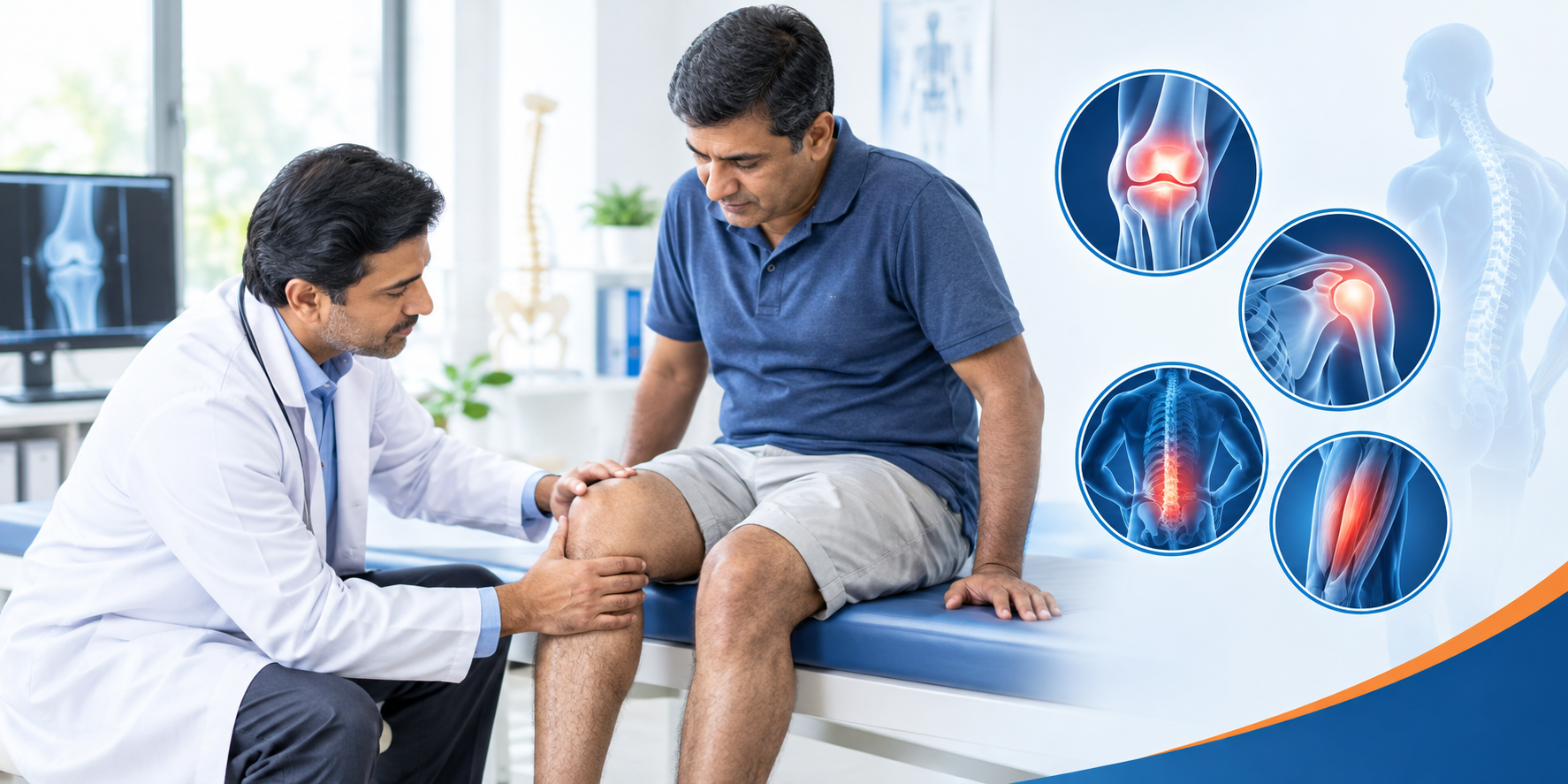
A man in his fifties tells the doctor his knee has been “a bit off” for nearly a year. He no longer sits cross-legged at family functions, he takes the lift whenever there is one, and his morning walk quietly stopped. He did not come because of an injury. He came because his daughter insisted.
Most orthopaedic clinics see this story every week. Bone, joint, and muscle problems rarely announce themselves, and people shrink their routines around the pain until daily life feels smaller. If you are looking for an Ortho Doctor Near Chromepet Chennai, this guide covers the conditions seen most often, the symptoms that should not be left alone, and what a proper consultation involves.
This article is general information and does not replace examination or advice from a qualified doctor.
Bones form the frame, and joints let it move. Cartilage cushions the joint surfaces, ligaments hold them steady, and tendons connect muscle to bone. Pain usually means one of these structures is carrying more load than it can manage.
A pulled muscle often settles in a week or two. Pain that lingers beyond a few weeks, or keeps climbing, deserves a proper look, because wear in a joint or a small stress fracture does not resolve on its own.
Osteoarthritis is the slow thinning of cartilage inside a joint. The pain tends to build with walking, stairs, and getting up from the floor, then eases with rest. Stiffness after waking usually passes within half an hour.
Age, an old injury, body weight, and family history all play a part. Scans and symptoms do not always agree, either. Some people with advanced X-ray changes cope well, while others with mild changes are quite troubled.
In Chennai, daily life adds its own strain. Squatting, floor sitting, and long hours on a two-wheeler are hard on the knees and lower back, which is why many patients first notice trouble during ordinary tasks.
Most back pain is muscular or ligamentous and improves within a few weeks. Long hours at a laptop, a sagging mattress, or lifting awkwardly are frequent triggers.
The concern begins when pain shoots below the knee or down the arm, or when tingling or weakness appears. That pattern points towards an irritated nerve, often from a disc, and calls for examination.
Rotator cuff irritation, frozen shoulder, tennis elbow, and Achilles tendon pain are mainly overuse conditions. They often appear after a sudden return to cricket, gym work, or heavy housework. People with diabetes are more prone to frozen shoulder, so tell your doctor if you have it.
Bone density falls with age, and faster in women after menopause. Low vitamin D is also widespread in India, even in sunny cities. Weak bones can break after a trivial fall, typically at the wrist, spine, or hip. Your doctor can tell you whether a bone density test makes sense for you.
Get assessed promptly if you have:
The last item is an emergency. Go straight to a hospital casualty department.
The visit should begin with questions, not a prescription. When did it start? What makes it worse? Was there an injury? How is it affecting your sleep, work, and walking?
The examination checks movement, strength, alignment, and nerve function. An X-ray is often enough. Ultrasound or MRI is useful when a tendon, ligament, or nerve is suspected, but a scan should answer a specific question rather than be routine.
Bring old reports, films, and your medicine list. When you meet an Ortho Doctor Near Chromepet Chennai, this saves repeat tests and shows how the problem has changed over time.
Many people avoid the clinic because they expect to be told they need an operation. In practice, most patients begin with physiotherapy, strengthening exercises, adjusted activity, and prescribed medicines. Braces, walking aids, weight management, and selected injections have a role too.
Surgery enters the conversation when pain and function stay poor after a fair trial of these measures, or when a fracture, torn ligament, or badly damaged joint needs repair.
For advanced hip or knee arthritis, replacement can reduce pain and improve mobility in suitable patients. Outcomes depend on age, general health, bone quality, the implant and technique, and how well rehabilitation is followed. Infection, clots, and stiffness are uncommon, but a responsible surgeon will discuss them before you sign a consent form.
Patients often type “Best Hip Replacement Surgeon In Chennai” into a search bar hoping for a single name. The better question is whether the surgeon examines you thoroughly, explains alternatives, and gives you realistic expectations.
Recovery means repeat visits for wound checks, physiotherapy reviews, and X-rays, so travel time matters. Clinics close to home are easier to keep going back to, particularly for older patients.
Check that the doctor holds valid medical council registration. Ask for explanations in plain language. Expect costs, recovery time, and risks to be discussed openly. For major surgery, a second opinion is reasonable, and a confident doctor will not take offence.
At Jeshwanth Orthopaedics, patients with joint, spine, or sports-injury complaints can be assessed by Dr. Jeshwanth Netaji and can ask about surgical and non-surgical routes before deciding on anything. Searching for the Best Hip Replacement Surgeon In Chennai matters less than finding a doctor who listens.
Walking, swimming, and cycling keep joints moving with less impact. Stronger thigh, hip, and core muscles take pressure off the knees and spine. A short warm-up before exercise lowers the chance of tendon strain.
At a desk, raise the screen to eye level and stand up every 30 to 45 minutes. Replace worn footwear. When starting a new fitness routine, build up over weeks, not days.
These habits help, but they do not replace a medical opinion when pain persists.
Aches in the bones, joints, and muscles are common, but you do not have to simply live with them. Knowing which symptoms can be watched and which cannot helps you act at the right time. Many conditions improve with conservative care, and surgery is kept for those who genuinely need it.
If pain is limiting your movement or sleep, an assessment at Jeshwanth Orthopaedics can help you understand your options, so book a consultation today and get moving comfortably again.




