Physical Address
304 North Cardinal St.
Dorchester Center, MA 02124
Physical Address
304 North Cardinal St.
Dorchester Center, MA 02124

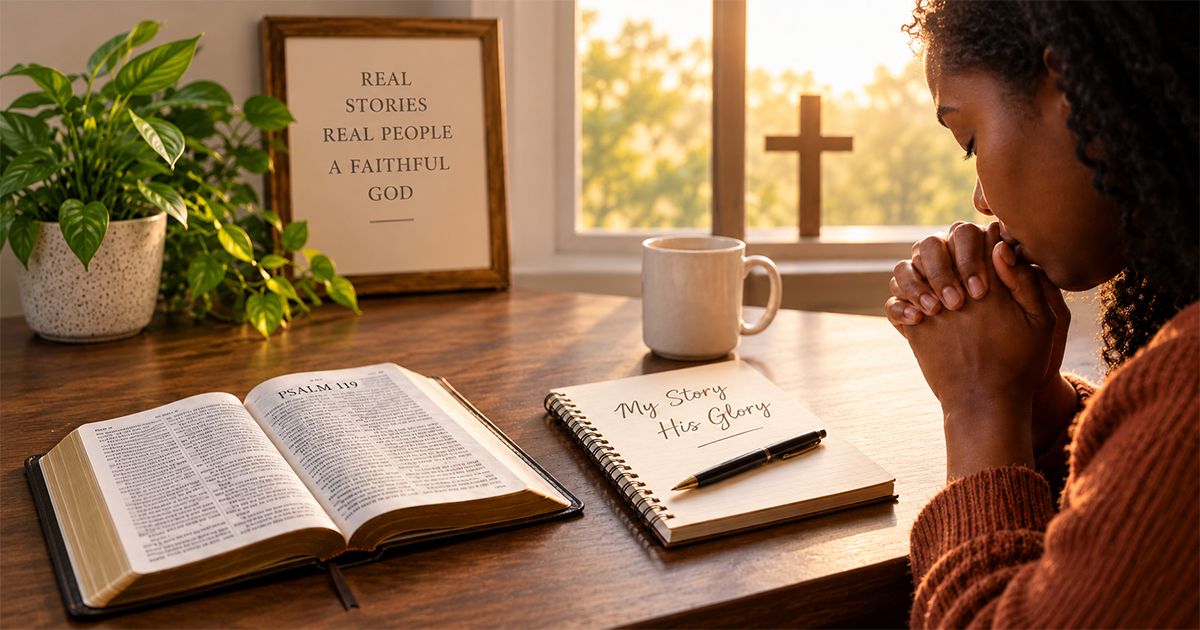
Personal testimony has long held an important place in Christian life. People share stories about answered prayer, difficult seasons, unexpected help, spiritual growth, and moments when they believe God made His presence known. These accounts can encourage others because they place faith within recognizable human experiences rather than discussing belief only in abstract terms. When testimony is combined with Scripture and prayer, however, it can become more than a personal story. It can function as a devotional practice that invites readers to consider how biblical teaching may connect with their own lives.
This approach is central to Your Glory, My Story by Rev. Dr. Pamela Jean Lucas. The author describes the book as a devotional that records events in her life in which she believes Christ manifested His presence. The experiences are not presented in chronological order. Instead, they are organized around particular spiritual lessons involving prayer, protection, waiting, obedience, calling, relationships, health, travel, loss, and trust in God. Many entries begin with a Scripture reading, move into an event from the author’s life, and conclude with a prayer connected to what she learned from that experience.
What Makes Personal Testimony Devotional?
A memoir generally asks readers to follow the events of a person’s life. A devotional has a different purpose. Its primary concern is spiritual attention. It encourages readers to consider Scripture, prayer, faith, and their relationship with God. Personal experience can become part of that process when it is used to explore a spiritual question rather than simply to document what happened.
That distinction is visible throughout Your Glory, My Story. Rev. Dr. Pamela Jean Lucas tells many stories from different periods of her life, but the focus is rarely on the event alone. She asks what the experience meant in relation to her faith. A dangerous moment on the road becomes an occasion to consider God’s protection. A delayed answer to prayer becomes a lesson in waiting. Career decisions lead to questions about obedience and calling. Health emergencies become occasions to discuss trust, fear, gratitude, and dependence on God. In this structure, the personal story provides the setting, while the devotional purpose comes from the meaning the author draws from it.
This format can be especially effective for general readers because it begins with situations they can understand. Not everyone has studied theology, but most people understand fear, disappointment, uncertainty, illness, family concerns, difficult decisions, and the frustration of waiting. Personal testimony gives these common experiences a spiritual context without requiring the reader to begin with advanced religious knowledge.
Scripture Gives the Experience a Larger Frame
Personal experience becomes more useful as devotional material when it is connected to something beyond the individual. In Christian devotional writing, Scripture provides that wider frame.
The chapters in Your Glory, My Story regularly begin with a biblical passage. “Order My Steps in Your Word,” for example, directs readers to Psalm 119:133 before the author discusses her daily prayer that God would guide her steps, words, thoughts, and actions. “Wait on the Lord” begins with Psalm 27:14 before describing a prayer that took many years to be answered. “The Heart Attack” begins with John 14:21 and recounts a medical emergency that the author interprets in relation to Christ’s presence and care. “Talents and Gifts” connects the author’s experiences as a teacher and singer with biblical passages concerning gifts and service.
This pattern matters because a devotional based only on personal experience can easily become centered entirely on the writer. Scripture changes the direction of the discussion. The experience becomes an example through which the author considers a larger spiritual principle.
That does not mean every reader will interpret each event in exactly the same way as the author. Personal testimony remains personal. It tells readers how one individual understood what happened and how those events affected her faith. Its value does not depend on proving that every event must have one particular explanation. Instead, testimony can invite readers to examine their own experiences alongside Scripture and ask what they are learning about trust, obedience, patience, gratitude, or prayer.
Prayer Turns Reading Into Participation
The movement from Scripture to experience becomes even more distinctly devotional when it ends in prayer. A story can inform or encourage a reader, but prayer asks the reader to respond.
This pattern appears consistently in the book. After writing about fear of failure while completing her doctoral work, the author ends by asking God to help her remember that fear does not have to control her. Following an experience involving travel and danger, she prays for safety and traveling grace. After discussing gifts and talents, she asks God to use what He has given her for His glory. Her chapter about accepting her call concludes with a prayer for strength, wisdom, and obedience.
This structure creates a clear movement: read, consider, and pray. The reader is first given a biblical reference, then shown one person’s experience of the subject, and finally invited into a prayer connected to the lesson.
That movement is one reason testimony can work well in devotional writing. The author’s story does not have to become the reader’s story. Instead, it can become a starting point. A reader may never experience the same medical emergency, travel problem, career decision, or family situation, but the underlying concern may still be familiar. Fear, waiting, uncertainty, loss of control, and the desire for guidance are widely shared experiences.
Everyday Events Can Become Spiritual Material
One of the notable features of testimony-based devotionals is that they do not require extraordinary events in every chapter. Ordinary life can provide meaningful spiritual material.
Your Glory, My Story includes major experiences such as a heart attack, medical procedures, the deaths of the author’s parents, divorce, and questions about ministry. It also includes matters that may appear much more ordinary: shopping, looking for a house, traveling by train, choosing where to live, dealing with a delayed journey, making professional decisions, and wanting a particular pair of glasses. The author treats these experiences as part of the same spiritual life because she believes God’s presence and provision are not limited to major crises.
This broad understanding of devotional life can be valuable because people often divide their lives into “spiritual” and “ordinary” categories. Prayer may be associated with church, emergencies, or major decisions, while daily responsibilities are treated as separate. Testimony-based devotional writing challenges that division by asking whether faith also influences how people handle work, travel, money, relationships, frustration, waiting, and everyday choices.
The result is not necessarily that every small event must be given a dramatic spiritual meaning. Rather, it encourages greater attention to how faith operates in daily life. A person can ask whether prayer changes the way they make decisions, whether Scripture affects how they respond to frustration, or whether gratitude becomes easier when they pay closer attention to what they already have.
Testimony Is Strongest When It Points Beyond the Storyteller
The most effective personal testimony does not end with the idea that one person’s life is unusually important. It directs attention toward the larger belief or lesson the writer wants readers to consider.
The title Your Glory, My Story expresses that relationship clearly. The author’s life provides the story, but the stated purpose is to give glory to God. In the introduction, Rev. Dr. Pamela Jean Lucas describes herself as small within God’s larger plan while also expressing her belief that God knows her needs and hears her prayers. She explains that she wants her experiences to show what God has done in her life and hopes that readers will be spiritually encouraged.
The book’s ending reinforces that purpose. The epilogue moves beyond recounting the author’s experiences and directly addresses readers concerning faith, salvation, and responding to God’s call. The final section provides a prayer for accepting Christ as Lord and Savior. In other words, the devotional moves from one person’s testimony toward an invitation for readers to consider their own relationship with God.
This is an important feature of testimony as devotional practice. The writer’s experience may attract attention, but the lasting question becomes what readers do with the ideas raised by that experience.
Why This Form Continues to Matter
Many people connect with faith most easily when they can see how it is lived. Principles such as patience, trust, obedience, gratitude, and prayer may sound straightforward until someone must practice them during uncertainty or hardship. Personal testimony gives those ideas a human setting.
At the same time, good devotional testimony does more than say, “This happened to me.” It asks what the experience taught, how Scripture speaks to the situation, and how the lesson might affect the reader’s own spiritual life. When personal experience, biblical teaching, and prayer work together, a devotional can create a conversation between the writer’s life and the reader’s circumstances.
That is the approach taken in Your Glory, My Story. Rev. Dr. Pamela Jean Lucas uses events from across her life to examine how she understands God’s guidance, protection, provision, timing, and call. The stories differ widely, but their purpose remains connected: to consider where faith appears within real circumstances and how those experiences can lead back to Scripture and prayer.
For readers interested in exploring this form of Christian devotional testimony further, Your Glory, My Story by Rev. Dr. Pamela Jean Lucas brings together personal experiences, Scripture readings, prayers, and lessons drawn from the author’s life of faith. The book is available on Amazon KDP.