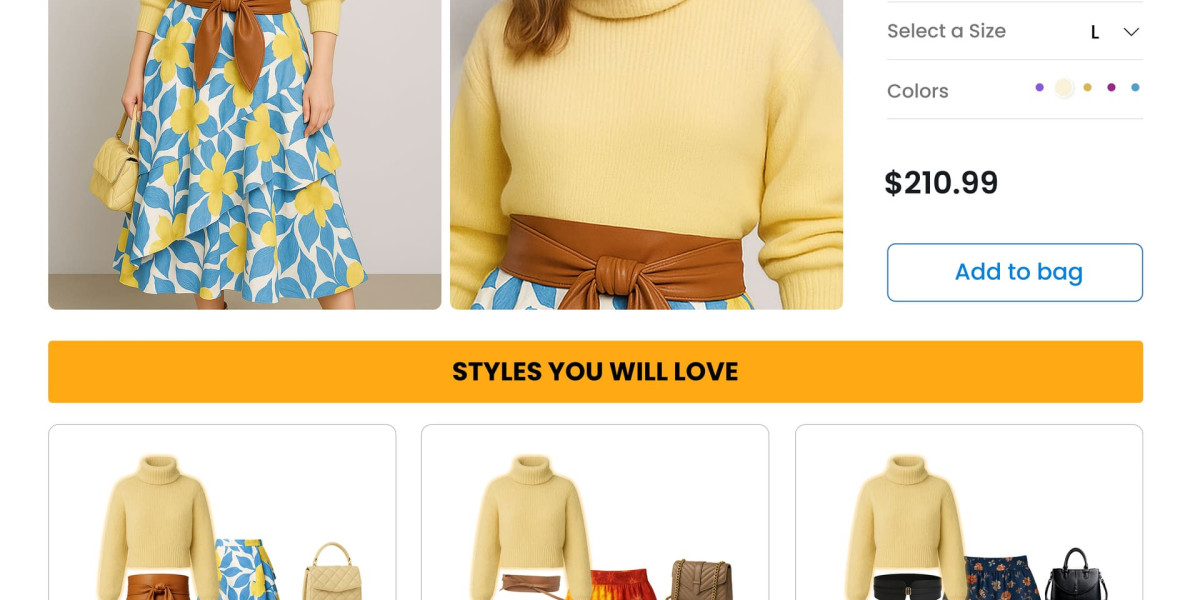

Consumers today are overloaded with too many alternatives in retail and don't have time to sort through them all. As a result, it is very difficult for many organization to bring their line of products to the attention of potential customers. It usually ends up with lower revenues and lower conversions for the firms.
However, the emergence of artificial intelligence has enabled businesses to overcome these challenges. It can act as a personal stylist that understands a customer's preferences and recommends outfits and full ensembles. This AI-powered stylist integrates data, such as a customer's clicks, purchases, and viewing history, to gather unique insights about the customer and offer a digital experience that increases engagement and conversions.
3 Top Use Cases of AI-powered Personal Stylists
Consumers will drop their purchasing journey if they are not able to see how multiple products will fit together in real-time. AI stylists can help the situation by developing product bundles intelligently and letting the buyers see them in a real-time environment.
AI-powered stylists further provide straightforward suggestions to create whole product bundles based on client preferences, industry trends, and product affinities. This can be beneficial for a number of businesses across sectors. Here are the top 3 industries that leverage AI-powered personal stylists effectively.
Fashion Collections with Themes
AI stylists can be used by fashion industry businesses to offer a service akin to an in-store assistant. Based on their sense of style, it can assist consumers in achieving the clothing they want. Retailers can create collections in minimalist or bohemian designs, for example. Shoes, jeans, and a number of additional accessories are included in this product bundle. Customers may shop for a full outfit using it without having to do a lot of searching.
Designing a Space
AI-powered stylists can help clients with home decor in a variety of ways. One of them is finishing the room's appearance. They can help clients by supplying the furniture needed for particular spaces, such as living rooms or bedrooms. They can also further customize these recommendations according to the customer's preferred material and room hue. This increases revenue while simplifying decision-making.
Collections based on Skin Type
AI-powered personal stylists can be used by the wellness and beauty sector to develop customized product bundles according to the diverse interests of their clientele. These include their hair issues, makeup preferences, skin type, and a host of other things. Retailers can help customers with oily skin by offering a variety of goods in one package.
How an AI-powered Personal Stylist Helps to Increase Revenue
Through the use of AI stylists, retailers can greatly boost customer engagement. They can increase customer satisfaction and decrease the search time for related products by making customized styling suggestions. This, in turn, increases the average order value and the revenue.
Below are some ways AI-powered personal stylists can help merchants improve their conversion rates and sales.
1. Customer Behavior-Based Bundling
Shopping habits vary among consumers. Some consumers like the idea of multiples having to be purchased at once, or at least within one shopping experience. Others purchase a few things as needed. AI stylists know how a customer shops and buys and can produce combinations of products tailored to this shopping response, increasing the chances of conversion.
In addition to increasing the likelihood of increased sales, this kind of sophisticated packaging builds trust and long-term loyalty.
2. Combining Low-Moving and High-Demand Items
Combining best-selling items with slower-moving ones is one of the most intelligent strategies to increase AOV and control inventory. It adds to the whole value of each purchase, while at the same time freeing up store space.
For example, AI stylists take a well-known skin care product and combine it with a lesser-known moisturizer or serum. The original product line gains recognition, which highlights the add-on.
When done correctly, this makes an impossible sale a practical win-win for both the company, which sells more products, and the buyer, who gets far more for their money.
3. Making Use of Seasonal or Time-limited Bundles
When people are fearful of missing out, they frequently make quick purchases. AI-powered stylists use this approach to bundle seasonal or limited-time items with regularly available products. For example, summer special outfits bundled with discounted sunglasses.
Because consumers are more inclined to purchase several things at once rather than wait and lose out on the bargain, this sophisticated bundling promotes quicker decisions and raises AOV.
4. Providing Personalized Bundle Choices
Fixed product bundles might not always be suitable for all customers. Offering clients the option to create their own bundle from a selection can be a very effective tactic. For example, AI-powered personal stylists pair a shirt with different sets of pants and shoes and allow customers to choose among them.
This encourages clients to make larger purchases while feeling more adaptable and in control. Additionally, it is a simple approach to get clients to look at more products that they might not have otherwise thought to purchase.
Bottom Line
The ability of AI-powered personal stylists to provide highly customized consumer experiences is revolutionizing the retail sector. They increase company profits and enhance the shopping experience for customers across all industries. However, the degree to which these product bundles are pertinent to the demands of the clients determines their success.
Despite AI's ability to automate the bundle creation pipeline, businesses must continuously optimize it according to their performance. Thus, they can provide customers with relevant bundles, build a devoted clientele, and preserve a competitive edge in the retail industry.


