Physical Address
304 North Cardinal St.
Dorchester Center, MA 02124
Physical Address
304 North Cardinal St.
Dorchester Center, MA 02124

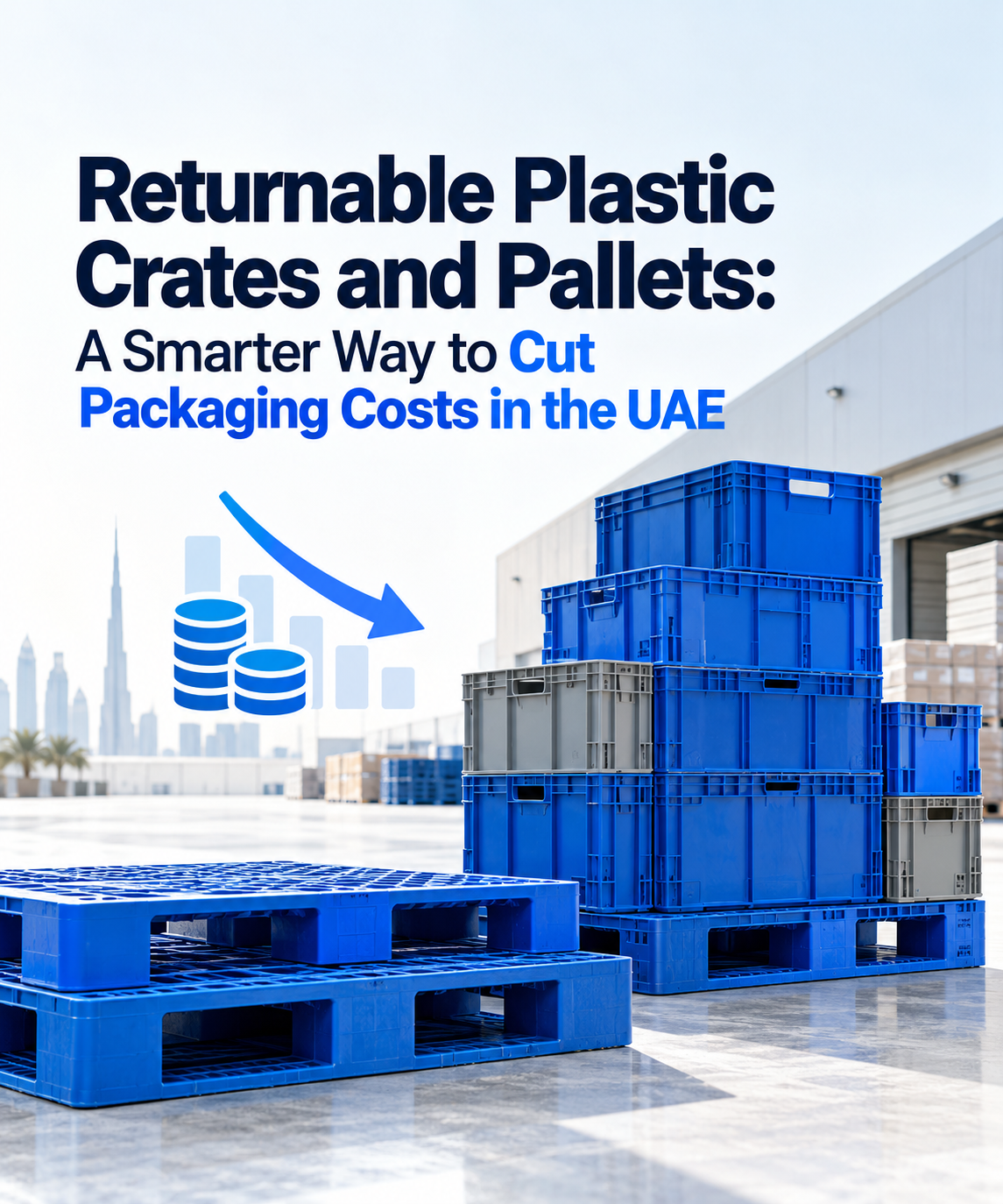
Packaging is one of those costs that businesses accept without questioning. Cartons are bought, used once, flattened and thrown away, and the next order brings the same bill again. For warehouses, distributors and manufacturers across the UAE, there is a better option: reusable plastic packaging that stays in circulation for years. Here is how it works, where it pays off first, and how to work out whether it makes sense for your operation.
The price of a carton or a wooden pallet is only part of the story. Add the cost of storing spare stock, labour to assemble and tape boxes, product damage from crushed or soaked packaging, and waste collection at the other end. Wooden pallets add more: they can splinter, absorb moisture and need treatment for export. None of these costs shows up on one invoice, which is why single-use packaging often looks cheaper than it really is.
Reusable packaging is simply packaging designed to make many trips. The most common formats are:
Most are made from HDPE or polypropylene, which resist moisture, do not rot and wash clean with water and standard cleaning agents.
Reusable packaging works best in closed loops, where the same containers go out and come back. Good examples are a supplier delivering to one factory every week, a distribution centre serving a chain of stores, or a farm sending produce to the same market buyers. In these flows you control the return trip, so every crate and pallet gets used again and again. Open, one-way flows, such as shipping to many one-time customers, are harder, though pallets used inside your own warehouse still deliver savings.
You do not need a complex model. Start with this:
Cost per trip = (purchase price + cleaning, handling and expected losses) ÷ number of trips
Compare that figure with the cost of a single-use carton or pallet for the same trip. If a crate costs more than a carton but makes dozens of trips, the cost per trip drops quickly. The numbers that matter most are your realistic return rate and how many trips each item will make before it needs replacing. Be honest about losses: if one in twenty containers never comes back, include that in the calculation.
Heat, humidity, dust and strong sunlight are tough on packaging. Cardboard softens in humid storage, and untreated wood warps, cracks and can grow mould. Plastic holds its shape in warm conditions and is easy to wash after contact with dust or spills. If containers will sit outdoors, ask your supplier whether the material is UV-stabilised. For food and pharmaceutical use, confirm food-grade suitability and any relevant requirements before ordering, rather than assuming.
Ask any supplier for written specifications, including static, dynamic and racking load ratings for pallets, dimensions for crates and the material used. A good supplier will help you match products to your use case before you buy, not after. If you are looking for plastic pallets, crates, IBC tanks and other handling equipment in the UAE, NextBridge is based in Ajman and supplies businesses across the Emirates. Whichever supplier you choose, start small, measure the results and scale what works.
Reusable packaging is not a trend. It is a practical way to cut recurring costs, reduce damage and waste, and make storage and transport more predictable. The businesses that benefit most are the ones that do the calculation first.




