
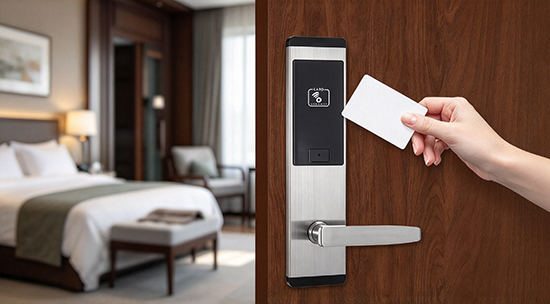

RFID hotel key cards are widely used in hotels, resorts and serviced apartments to provide convenient access to guest rooms. They work with compatible electronic locking systems and can be customized to match a property’s branding requirements.
For hotel operators and purchasing teams, choosing the right card involves more than selecting a product labeled as RFID. Chip technology, lock compatibility, card quality and order requirements all need to be considered before purchasing.
What Are RFID Hotel Key Cards?
RFID stands for Radio Frequency Identification. An RFID hotel key card contains an integrated chip and antenna that communicate with a compatible reader.
When a guest presents the card to an electronic door lock, the access system checks the credential according to its configuration. If the credential is authorized, the lock allows entry.
Unlike traditional metal keys, RFID credentials can be managed through compatible access control systems. Depending on the system, staff may be able to issue new cards, update access permissions or deactivate lost credentials.
The available functions depend on the hotel’s locking hardware, software and credential configuration.
Understanding RFID Frequencies and Chip Types
One of the most important steps in purchasing RFID hotel key cards is identifying the correct technology.
Some hotel access systems use high-frequency cards operating at 13.56 MHz, while other installations may use low-frequency credentials operating at 125 kHz. These technologies serve different applications and are not interchangeable.
Even when two cards operate at the same frequency, they may use different chips, communication protocols or security configurations.
Depending on the locking system, potential chip options across RFID card applications include MIFARE Classic 1K, F08, Ultralight EV1, Ultralight C and T5577. Not every option is suitable for every hotel lock.
Before ordering, confirm the exact credential requirements with the lock manufacturer or system integrator. Avoid choosing a card based on frequency alone.
Why Compatibility Testing Matters
A card may have the correct dimensions and frequency but still fail to work with a particular electronic lock.
Compatibility can depend on the chip, card configuration, encoding requirements and access system settings. Some installations may also require specific security features or authorized credential programming.
For replacement projects, buyers should provide the existing card specifications and lock model whenever possible. If the requirements remain uncertain, consult the system provider before approving production.
Testing a sample with the actual locking system can help identify potential issues before a large order is placed.
Choosing the Right Card Material
The physical card is also an important consideration for hotels that issue credentials to guests every day.
PVC is commonly used for hotel key cards because it supports full-color printing and different surface finishes. Hotels can select designs that incorporate logos, brand colors and other relevant information.
Common finish options may include:
-
Glossy: A polished appearance suitable for colorful designs.
-
Matte: A more understated finish for simple or minimalist branding.
-
Frosted: A translucent effect for selected custom designs.
Buyers should confirm the card dimensions, thickness and finish before ordering. A physical sample can help evaluate print quality and overall appearance.
Customization for Hotels and Resorts
RFID hotel key cards can also serve as a branding element. A well-designed card helps maintain visual consistency across the guest experience.
Hotels may print their logos, property names, brand colors or other relevant graphics on the card. Resorts can use designs that reflect their surroundings, while hotel groups may prefer standardized artwork across multiple locations.
When preparing artwork, keep important information readable and avoid overcrowding the limited printing area. Confirm the final design with the supplier before production begins.
Customization should always be planned alongside the technical card requirements to ensure that the finished product meets the project’s needs.
What Should Buyers Check Before Ordering?
Hotels, distributors and purchasing teams can simplify the sourcing process by preparing a clear specification before requesting quotations.
Consider the following points:
-
Lock system: Identify the installed lock brand and model.
-
Chip requirements: Confirm the required chip type, frequency and encoding method.
-
Card specifications: Establish the required dimensions, thickness and material.
-
Design: Prepare the artwork and choose the preferred surface finish.
-
Testing: Ask whether samples are available for compatibility checks.
-
Order planning: Confirm the minimum order quantity, production lead time and shipping arrangements.
Providing these details helps suppliers assess the project more accurately and reduces the risk of purchasing unsuitable cards.
Finding RFID Hotel Key Cards for Your Project
Selecting a suitable supplier involves reviewing technical specifications, customization options and the information available to verify compatibility.
Newbega offers RFID hotel key card options for business buyers, with card and customization choices to consider according to project requirements.
Hotels and distributors can review available chip options, card finishes and printing choices before requesting a quotation. Providing the lock system details and estimated order quantity can help clarify the requirements at an early stage.
If the correct credential is uncertain, confirm the required specifications and arrange sample testing before moving forward with bulk production.
Final Thoughts
RFID hotel key cards provide a practical way for hotels to manage guest room access through compatible electronic locking systems. However, successful purchasing depends on choosing the correct credential rather than simply selecting a card with an RFID label.
By confirming chip compatibility, reviewing card specifications and planning customization before production, hospitality businesses can make more informed decisions when sourcing hotel key cards.



