Physical Address
304 North Cardinal St.
Dorchester Center, MA 02124
Physical Address
304 North Cardinal St.
Dorchester Center, MA 02124

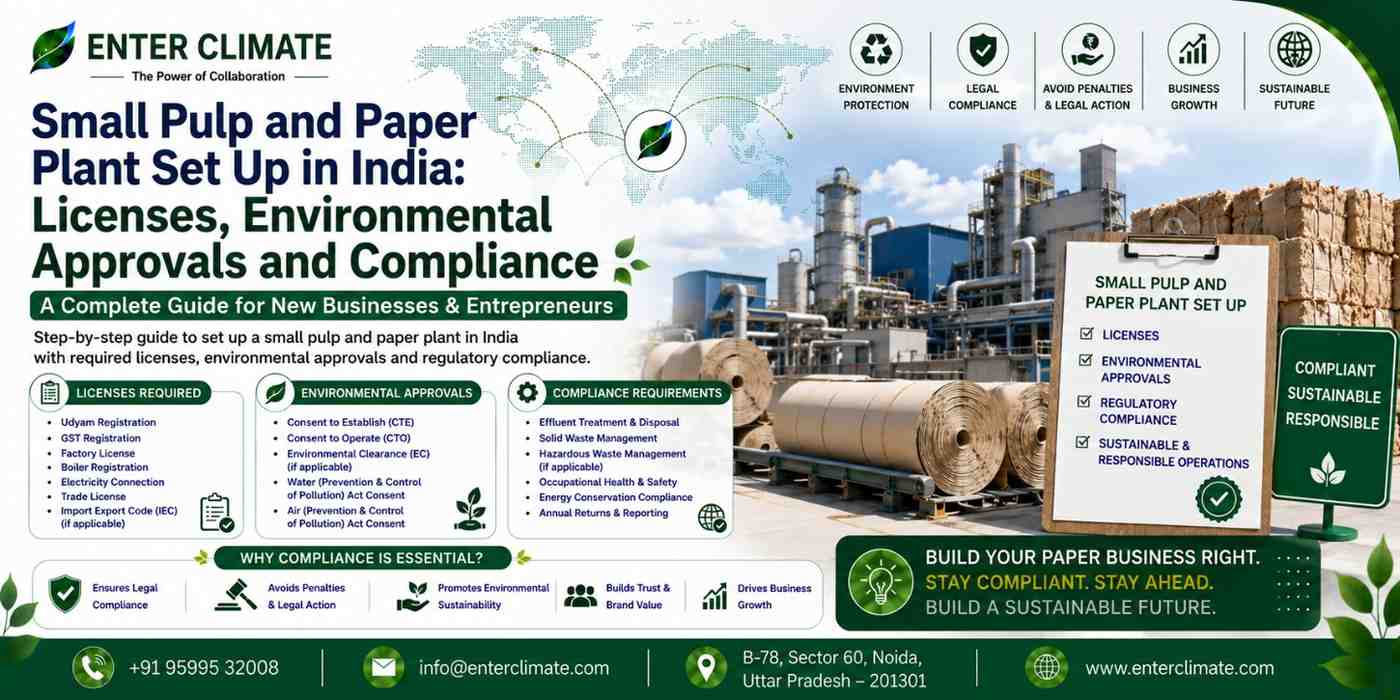
Starting a Small Pulp and Paper Plant Set Up in India can be a good business opportunity because paper is used almost everywhere. Schools, offices, shops, packaging companies, and many other businesses need paper products every day.
But setting up a paper plant is not only about buying machines and starting production. A business owner also needs to understand licenses, pollution control requirements, waste management, and other legal approvals.
A pulp and paper plant converts raw materials such as wood, agricultural waste, recycled paper, or other suitable materials into pulp and then paper.
A small plant may focus on products such as:
The size and type of plant will decide the machinery, investment, permissions, and environmental requirements.
Before starting a small paper plant, entrepreneurs should identify the approvals that apply to their particular project.
Some common requirements may include:
First, the business needs a suitable legal structure, such as a proprietorship, partnership, LLP, or private limited company. PAN, GST registration, and other applicable registrations may also be required.
This is one of the most important areas for a pulp and paper plant.
Depending on the project and state, the business may need Consent to Establish (CTE) before construction and Consent to Operate (CTO) before starting commercial production.
The State Pollution Control Board checks issues such as wastewater, air emissions, waste generation, and pollution-control systems.
Depending on the size, capacity, location, and nature of the project, environmental clearance or other environmental permissions may apply.
It is better to check the project’s category and applicable rules before investing in machinery.
If the plant comes under applicable factory laws, factory registration or a factory licence may be required. Fire safety approval may also be necessary depending on the building, machinery, fuel, and storage arrangements.
Paper manufacturing can use a considerable amount of water and may generate wastewater. This makes environmental planning very important.
A plant may need systems for:
For example, wastewater generated during production should not simply be released into a drain or nearby water body. It should be treated through a suitable treatment system before disposal or reuse.
Using recycled water can also help reduce freshwater consumption and operating costs.
A small paper plant may generate waste such as paper rejects, sludge, packaging waste, ash, and other process-related waste.
The business should identify each type of waste and decide how it will be stored, reused, recycled, treated, or disposed of safely.
If chemicals are used in the process, additional safety and waste-management requirements may apply.
People planning different manufacturing businesses often face similar licensing and compliance questions.
For example, a Nitric Acid Plant Set Up involves chemical handling, safety measures, pollution control, and specific regulatory requirements. Similarly, a Grain Processing Industry set up may require approvals related to factory operations, pollution control, food-related regulations, and waste management.
Even a business outside manufacturing, such as setting up an electric vehicle facility, needs to understand local rules. For example, entrepreneurs searching for a Charging Station license in UP need to check the applicable electricity, local, land-use, and safety requirements.
This shows why compliance should be considered at the planning stage instead of after the plant is already built.
A simple approach can make the setup process easier:
Step 1: Select the product
Decide what type of paper you want to manufacture.
Step 2: Choose the location
Check land-use rules, water availability, electricity, transportation, and environmental restrictions.
Step 3: Prepare a project plan
Estimate machinery, raw materials, workers, water consumption, power requirements, and production capacity.
Step 4: Identify approvals
Find out which business, factory, pollution-control, environmental, fire, and other approvals apply.
Step 5: Install pollution-control systems
Plan wastewater treatment, air pollution control, waste handling, and other systems according to the project’s requirements.
Step 6: Apply for required permissions
Complete the applicable registrations and approvals before starting the relevant activity.
Step 7: Maintain compliance
After starting operations, continue with monitoring, record keeping, returns, testing, renewals, and other applicable requirements.
A Small Pulp and Paper Plant Set Up can become a useful business when it is planned properly. However, the focus should not be only on production and profits. Environmental protection and legal compliance are equally important.
Starting the approval process early can help avoid delays, unexpected expenses, and compliance problems later.
If you are planning a pulp and paper plant or another industrial project, Enterclimate can help businesses understand environmental approvals and compliance requirements. Taking professional guidance at the beginning can make the setup process more organised and easier to manage.
Upendra Sharma is an Environmental Compliance Consultant who writes about environmental approvals, industrial setup, pollution-control requirements, and regulatory compliance in India. Through his work with Enterclimate, he helps businesses understand complex compliance requirements in simple and practical language.




