Physical Address
304 North Cardinal St.
Dorchester Center, MA 02124
Physical Address
304 North Cardinal St.
Dorchester Center, MA 02124

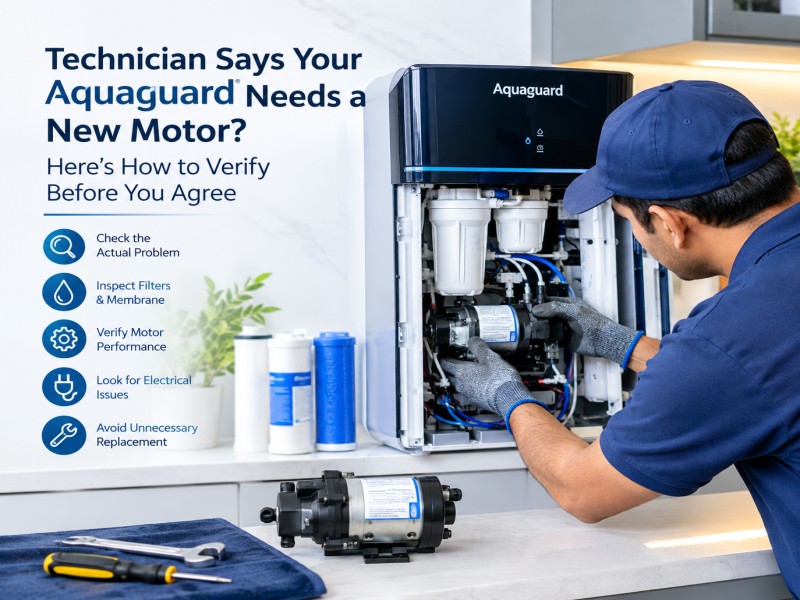
When a technician says your Aquaguard water purifier needs a new motor, it is reasonable to ask for a proper diagnosis before approving an expensive repair. A weak water flow, unusual noise, delayed filtration, or a purifier that stops working does not automatically mean the motor has failed. Several other components can produce similar symptoms.
Before agreeing to a motor replacement, understand what should actually be checked, what signs point toward a genuine motor problem, and when professional inspection is necessary. A reliable AToZ Enterprises technician should be able to explain the fault clearly rather than recommending a replacement based only on symptoms.
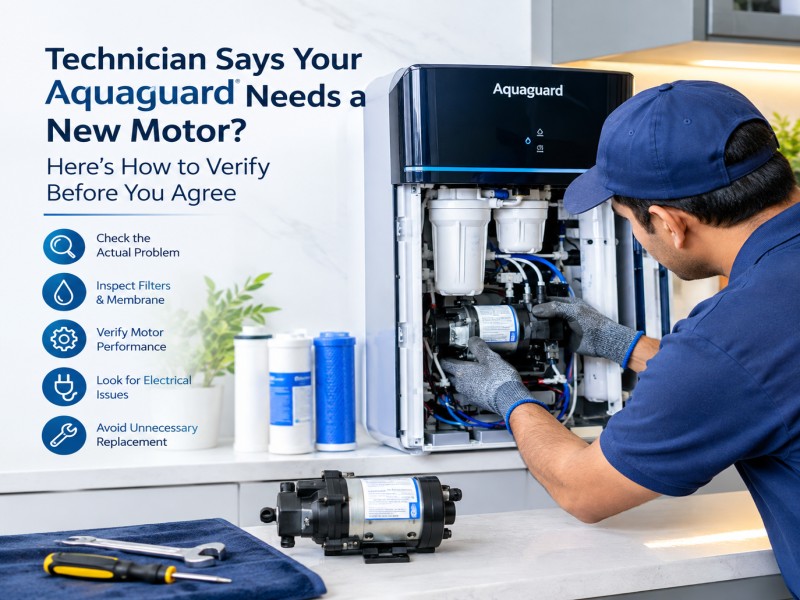
In many RO-based water purifiers, the pump or motor helps create the pressure required for the reverse osmosis membrane to operate effectively. If the pump cannot generate sufficient pressure, purified-water production may become slow or inconsistent.
However, the motor is only one part of the complete purification system. Filters, membrane condition, electrical components, water pressure, tubing, valves, and flow restrictions can also affect performance.
That is why a proper diagnosis should identify the actual source of the problem before a component is replaced.
Start by asking the technician what evidence indicates motor failure. “Low water flow” alone is not enough to establish that the motor needs replacement.
Ask whether the issue is related to insufficient pump pressure, abnormal electrical readings, mechanical noise, overheating, or another component.
A professional diagnosis should connect the observed symptom with a specific technical cause.
Low or irregular inlet-water pressure can affect purifier performance and may sometimes be mistaken for a pump problem.
Before replacing the motor, the technician should verify whether adequate water is reaching the purifier. A blocked inlet, closed valve, or supply-pressure issue can create performance problems without the motor itself being defective.
Clogged pre-filters can restrict water entering the system. An aging or fouled RO membrane can also reduce output and increase the time required to produce purified water.
If filters have not been maintained for a long period, they should be inspected before concluding that the pump is responsible.
This is one reason regular aquaguard water filter service can help identify maintenance-related issues before they become larger repair problems.
A motor that produces persistent grinding, rattling, excessive vibration, or an unusual humming sound may require closer inspection.
Still, unusual noise does not automatically prove that replacement is necessary. Loose mounting, damaged tubing, electrical issues, or other mechanical problems can sometimes create abnormal sounds.
Ask the technician to identify the source of the noise and explain whether repair or replacement is technically justified.
A qualified technician can check the pump’s electrical supply and operating condition using appropriate testing equipment.
If the motor is receiving the correct electrical input but is unable to operate properly or maintain the required pressure, the evidence for a motor-related fault becomes stronger.
Electrical testing is more reliable than diagnosing the component simply by observing that the purifier is not producing water quickly.
Kinked tubes, blocked flow paths, faulty valves, and leaks can reduce water movement through the purifier.
These problems may produce symptoms similar to a weak pump. Therefore, the complete water path should be checked before replacing a major component.
A systematic inspection can prevent unnecessary spending on parts that are still functional.
If replacement is genuinely required, ask the technician for the motor or pump specification, expected service life, warranty, and total replacement cost.
You can also ask whether the existing component can be repaired or whether replacement is the more practical option.
A transparent technician should be comfortable explaining these details before beginning the work.
Motor replacement becomes more reasonable when testing confirms that the pump is unable to generate the required pressure, has a confirmed electrical or mechanical fault, or has sustained damage that makes repair impractical.
The important point is confirmation through diagnosis.
If a technician recommends a new motor without checking inlet supply, filters, membrane condition, tubing, electrical input, and pump performance, consider asking for a more complete inspection.
If the purifier was recently moved, reinstalled, or connected to a new water source, incorrect tubing connections, restricted flow, unsuitable inlet conditions, or installation-related issues may affect performance.
In such cases, an aquaguard installation service can involve checking the installation configuration, connections, water supply, and operating conditions rather than immediately replacing internal components.
This distinction is particularly useful when the purifier worked normally before relocation or installation.
The objective of professional aquaguard service should not simply be to replace parts. It should be to identify the cause of the malfunction and recommend the appropriate solution.
A good service visit should ideally include symptom assessment, visual inspection, relevant pressure or electrical checks, examination of filters and tubing, and a clear explanation of the recommended repair.
If the technician provides a diagnosis and explains why the motor is responsible, you can make a more informed decision.
For homeowners looking for aquaguard water purifier service, asking the right diagnostic questions can be just as important as comparing repair prices.
Before approving the replacement, ask:
What specific test confirms the motor has failed?
Was inlet-water pressure checked?
Were filters and membrane condition inspected?
Were tubes, valves, and connections checked?
Was the motor’s electrical supply tested?
What is the replacement part specification?
Does the replacement include a warranty?
What is the complete cost, including installation?
Is repair possible, or is replacement technically preferable?
These questions help you distinguish a verified repair requirement from a diagnosis based only on symptoms.
A slow Aquaguard purifier does not automatically mean it needs a new motor. Water pressure, clogged filters, membrane condition, blocked tubing, valves, electrical supply, and installation issues can all influence performance.
The safest approach is to request a proper technical diagnosis and understand the evidence before approving a replacement. If a motor fault is confirmed through appropriate checks, replacement may be justified. If the diagnosis is unclear, asking for a second professional assessment can help you make a better-informed maintenance decision.
For transparent purifier inspection, repair guidance, and related support, AToZ Enterprises can be contacted for professional assistance and service information.




