Physical Address
304 North Cardinal St.
Dorchester Center, MA 02124
Physical Address
304 North Cardinal St.
Dorchester Center, MA 02124

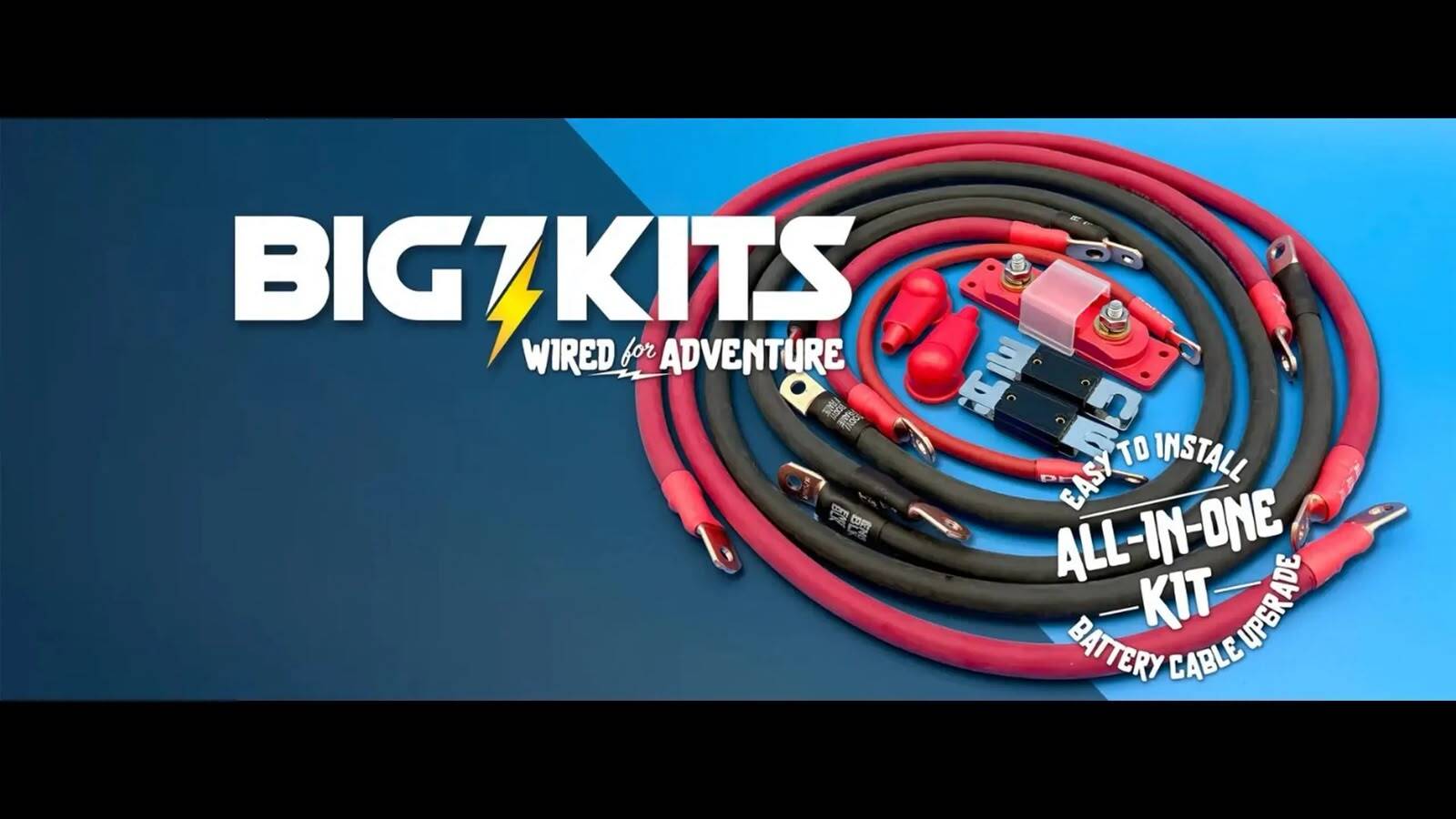
In the world of extreme off-roading, rock crawling, and long-term overlanding, standard vehicle
configurations rarely survive the demands of the trail. As enthusiasts push their rigs further into
the wilderness, the modifications become increasingly complex. What starts as a simple
suspension lift and larger tires often evolves into a highly customized, purpose-built machine.
During this evolution, builders quickly realize that under-hood real estate is one of the most
valuable commodities on a vehicle. Between the engine, massive steering shafts, upgraded
cooling systems, and specialized shock towers, space disappears rapidly. To make room for
essential trail gear like high-output dual air compressors, complex air-locker manifolds, or
secondary alternator setups, builders often have to make a drastic structural change: relocating
the primary or secondary battery to the rear of the vehicle.
While moving a battery to the trunk of an SUV or the bed of a heavy-duty truck solves space
and weight distribution issues, it introduces an incredibly complex electrical engineering
challenge. In this comprehensive guide, we will explore the physics of long electrical runs, the
severe dangers of voltage drop over distance, and why relying on a specialized, built-to-order
power line is the only safe way to complete a custom battery relocation.
The Driving Forces Behind Battery Relocation
Why go through the massive effort of moving a 50-pound battery from the engine bay to the rear
of the vehicle? For serious builders, the benefits far outweigh the initial installation challenges.
1. Reclaiming Under-Hood Real Estate: Modern 4x4s have notoriously cramped engine bays.
If you want to install an onboard air system to inflate 37-inch tires, or if you need to mount a
dual-battery management system (BMS) for your 12-volt refrigerator, you need physical space.
Removing the massive factory lead-acid battery and its mounting tray instantly frees up a
massive cavern under the hood, allowing you to mount critical accessories safely away from
extreme engine heat.
2. Optimizing Weight Distribution: A heavy-duty AGM or Lithium off-road battery can weigh
anywhere from 50 to 75 pounds. In off-road racing, rock crawling, and high-speed desert
running, having excessive weight hanging over the front axle negatively impacts suspension
dynamics and steering response. Relocating that dense weight to the rear cargo area or over
the rear axle drastically improves the vehicle’s center of gravity and overall balance, providing
better traction and handling on unpredictable terrain.
3. Environmental Protection: The engine bay is a hostile environment. It subjects the battery
to extreme heat cycles, intense vibrations, and constant bombardment from water, mud, and
corrosive road salts. Moving the battery to a sealed marine box in the rear cargo area protects it
from extreme temperature fluctuations, significantly extending the lifespan of the battery cells.
The Ultimate Solution: Precision Manufacturing
To safely route hundreds of amps from the rear of a vehicle to the engine bay without suffering
catastrophic voltage drops, you must completely eliminate weak points in the circuit. The only
professional, fail-safe way to achieve this is by ordering a dedicated Custom Single Cable
manufactured specifically for your vehicle’s exact dimensions.
By measuring the exact routing path—down the frame rail, over the crossmembers, and up into
the engine bay—you can order a continuous, unbroken line of heavy-gauge copper. A
continuous line means zero mid-point connections, zero resistance bottlenecks, and maximum
voltage delivery to your starter and accessories.
When a professional electrical supplier builds this specific cable, they use industrial hydraulic
crimping presses that apply thousands of pounds of pressure to the terminal ends. This
cold-welds the copper wire to the ring terminal, creating a bond that is mechanically
indestructible and electrically perfect. The connection is then sealed with dual-wall,
adhesive-lined marine heat shrink, ensuring that water, mud, and road salt can never penetrate
the cable.
Routing and Protection Strategies
Once you have your unbroken, heavy-duty copper line, the installation process requires
meticulous attention to detail. Routing a live 12-volt power line the entire length of a steel
vehicle chassis is inherently dangerous if not done correctly.
1. Avoid Heat and Moving Parts: Never route your power cable near the exhaust manifold,
catalytic converters, or moving suspension components like control arms and driveshafts.
Intense heat will melt the cable insulation, and moving parts will quickly chafe through the
protective casing.
2. Utilize Protective Loom: Even the toughest wire insulation needs a secondary layer of
defense. The entire length of the cable should be encased in heavy-duty split loom tubing or
braided nylon shielding to protect it from sharp rocks and road debris kicked up by the tires.
3. Secure Mounting: Use rubber-lined metal Adel clamps (P-clamps) to secure the cable to the
inside of the vehicle’s frame rail every 12 to 18 inches. Do not use standard plastic zip ties, as
they will become brittle and snap off when exposed to the elements, allowing your heavy power
wire to sag and drag beneath the vehicle.
4. Proper Terminals at Both Ends: Finally, ensure the ends of your massive new wire are
securely bolted down. At the front of the vehicle, where the cable interfaces with the engine bay,
connect it to a high-quality distribution block or directly to heavy-duty diesel truck battery
terminals if utilizing a dual-battery setup. In the rear, ensure the battery is held down by a
rugged steel cage, not bungee cords or cheap plastic straps.
Conclusion: Precision Engineering for Custom Rigs
Relocating your vehicle’s battery is a top-tier modification that unlocks immense potential for
custom fabrication and accessory management. However, it completely rewrites the electrical
physics of your vehicle.
Attempting to cheat the system with undersized wire, cheap DIY crimps, or daisy-chained
cables will inevitably result in ruined starters, dead batteries, or dangerous electrical fires. By
investing in a professionally manufactured, continuous heavy-gauge power line, you guarantee
that your vehicle’s heartbeat remains strong, delivering uncompromised, zero-resistance voltage
from the rear bumper to the engine block, no matter how remote the trail becomes.




