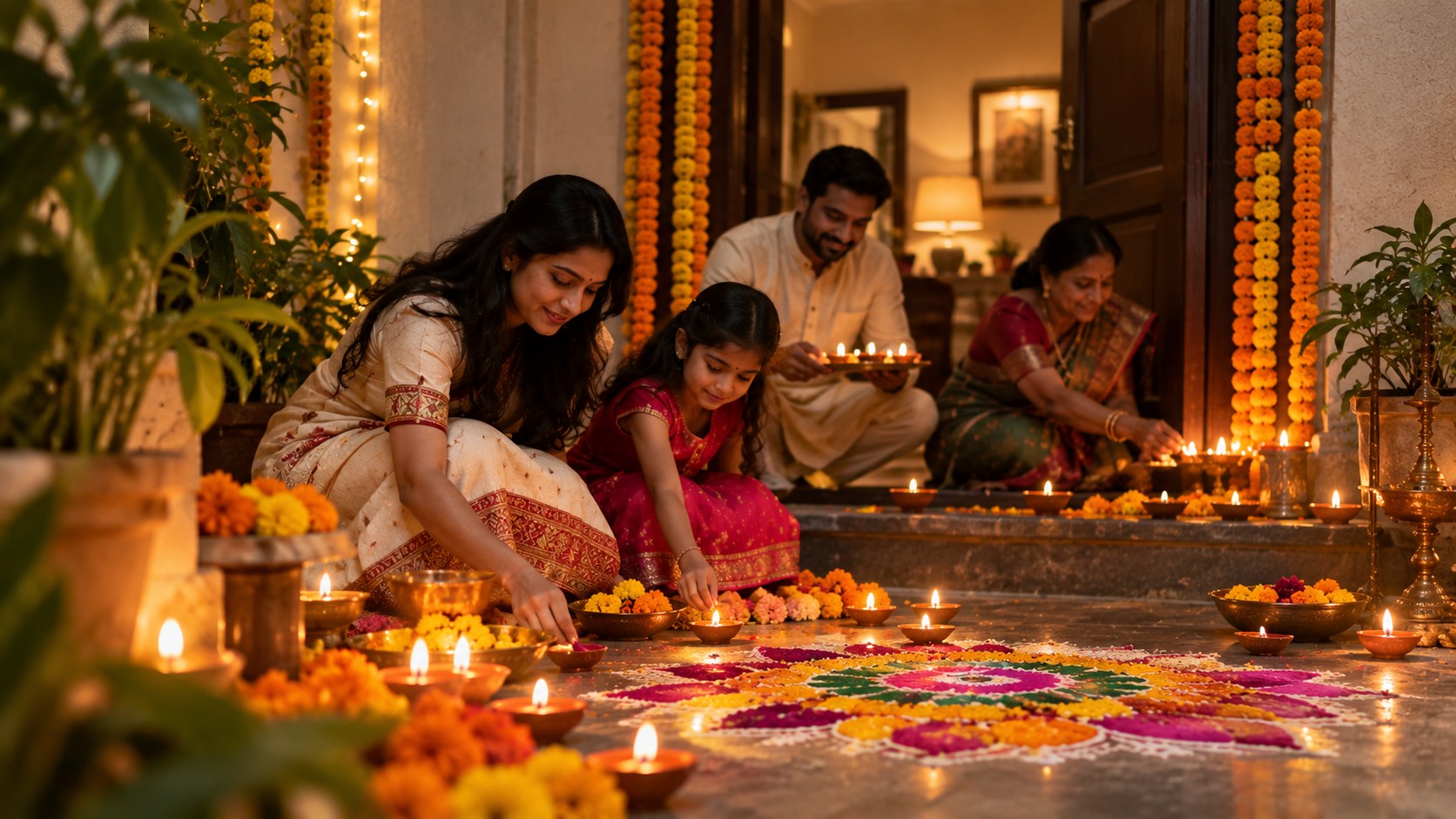

Diwali is a huge deal in India, you know? People go all out decorating with little oil lamps called diyas, making these colorful patterns on the floor with rangoli powder, and of course, there are tons of sweets involved. It’s really about connecting with family and friends. They call it the Festival of Lights for a reason; it’s meant to represent good triumphing over bad, light winning against darkness, and basically, knowing over being in the dark.
Now, Diwali isn’t exactly the same everywhere in India. Each region has its own spin, but the core message stays the same: it’s all about hope, starting fresh, wishing for good fortune, and just being together. All these different customs really do feel like they bring different generations closer.
But have you ever stopped to think about why we do all these specific things before Diwali? Like, why light the diyas, why draw those rangolis, why exchange sweets, and why do the big house cleaning? These aren’t just random holiday activities. They’re deeply woven into India’s culture and the values that make this festival so meaningful.
Why is Diwali Celebrated?
Diwali’s really a mix of things, drawing from different religious roots, tales, and local ways of celebrating. A lot of Hindus see it as marking Lord Ram’s comeback to Ayodhya after 14 years away, and the win over Ravana. The story goes that the folks in Ayodhya lit up lamps all over the city to greet him.
Then there are other takes. Some connect Diwali to Goddess Lakshmi, who’s all about money and good fortune. It’s a big deal in Jainism too, marking Lord Mahavira’s spiritual liberation. And for Sikhs, it’s Bandi Chhor Divas, celebrating Guru Hargobind Sahib’s freedom.
These different strands give Diwali its cultural and spiritual significance. People mark the festival in ways such as prayer, family gatherings, community celebrations, or acts of generosity. Across all these observances, Diwali remains a time for reflecting on hope, goodness, and new beginnings.
Why Do We Light Diyas During Diwali?
The diya is probably the most familiar symbol of Diwali. On the day of the festival, small earthen lamps filled with oil or ghee, and equipped with cotton wicks to hold them up, are lit in homes, courtyards, temples and doorways.
The tradition is closely linked to the story of Lord Ram’s return to Ayodhya. The lamps symbolised the happiness of the people welcoming him home. Lighting diyas has since become one of the most recognisable Diwali customs.
The story goes further than this. Light symbolizes hope during difficult times, thirst for knowledge, and the hope that good will overcome evil.
It is also a time for meditation when people light diyas. For many families, it is the time for evening prayers and a peaceful atmosphere in the house.
The clay diyas are an important part of this tradition as they are very simple handmade products connecting this festivity with the Indian tradition of claymaking.
What is the Significance of Rangoli During Diwali?
In Indian homes during Diwali, rangoli designs are often made with colored powders, flower petals, rice flour, and other things to decorate the entrance and courtyard.
The way people make rangoli can be quite different depending on where you’re from, but generally it’s all about good luck, being creative, and being a good host.
Many families prepare rangoli because it’s like an invitation. It welcomes guests, and also, it’s thought to invite positive energy into the home. You’ll often see designs featuring flowers, geometric shapes, peacocks, diyas, and lotus flowers. For some, the rangoli preparation is even connected to specific Goddess Lakshmi rituals done during Diwali pujas.
Making rangoli is often something the whole family does together. Parents will show the kids the patterns, everyone chips in with their own colours, and neighbours might even share ideas for new designs. So it ends up being as much about spending time as it is about decorating.
Why Do Families Clean and Decorate Their Homes Before Diwali?
Preparing the home is an important part of the Diwali season. Families clean their rooms, organise belongings, decorate entrances, and bring out festive items before the celebrations begin.
This practice is often associated with welcoming Goddess Lakshmi, particularly on Lakshmi Puja. A clean, well-maintained home symbolises readiness for prosperity, positivity, and a fresh start.
The tradition also has a practical side. Diwali is a time when relatives and friends visit one another, share meals, and participate in prayers. Preparing the home helps create a comfortable and welcoming environment for these gatherings.
Today, decorations may include traditional torans, marigold garlands, candles, lanterns, and strings of lights. While styles have evolved, the underlying idea remains familiar: preparing a space that feels inviting and special for the occasion.
Why is Goddess Lakshmi Worshipped During Diwali?
For a lot of Hindu families, Lakshmi Puja really stands out as a key part of Diwali. It’s all about Goddess Lakshmi, who people turn to for wealth, good fortune, and abundance.
When it’s time for the puja, families get their homes spick and span, decorating them and getting offerings ready. They light up diyas, those little oil lamps, and offer prayers for a healthy and prosperous year. Some families also include Lord Ganesha in their worship, as he’s known for wisdom and clearing away obstacles.
But it’s not just about money. For many, true prosperity includes good health, smooth relationships, peace of mind, and the ability to help others.
The ways people do this can differ a lot depending on where they are and their own family traditions. Some go all out with big ceremonies, while others prefer a quieter prayer at home. No matter how they celebrate, it’s a time to feel thankful and think about what they hope for in the future.
Why Do We Exchange Sweets During Diwali?
Sweets have always been a standout at Diwali celebrations. People prepare traditional goodies like laddoos, barfis, and gulab jamun, among others.
Celebrating with sweets refers to happiness. Families exchange mithai with their relatives, friends, and co-workers during the period.
Moreover, regional food provides a sense of identity. Each place in India has its festive food made out of local delicacies.
People in Maharashtra enjoy karanji and similar items during festivals. In Bengal, sweets like sandesh are famed. In North India, barfis, peda, and laddoos are a sight during Diwali celebrations.
Additionally people keep preparing savoury items with sweets.
Why Are Gifts Exchanged During Diwali?
Gift-giving represents another wonderful tradition celebrated during Diwali. Gifts ranging from sweets, dry fruits, decorative things, clothing, and meaningful presents are shared among friends and family to reflect their love and bond with one another.
The significance of the present outweighs its price. It could be a box of homemade sweets, another diya, or another item that expresses one’s feelings for the gift receiver.
Diwali gifts have also been used to recognize employees and common achievements in many businesses. In families, gifts are usually exchanged among parents and children, brothers and sisters, and other relatives.
The tradition has also evolved with modernity, where the concept of gifting has become more popular in sending gifts to different places.
How Do Diwali Traditions Differ Across India?
Although diyas, sweets, and family gatherings are common elements of Diwali, the festival is not celebrated identically everywhere. Regional stories, local customs, and religious traditions shape how communities observe the occasion.
North India: Celebrating Lord Ram’s Return
In many parts of North India, Diwali is closely associated with Lord Ram’s return to Ayodhya. Homes are illuminated with diyas, Lakshmi Puja is performed, and families gather for festive meals.
Ayodhya holds particular significance because of its association with the Ramayana. Its Deepotsav celebrations bring the tradition of welcoming Lord Ram with lamps to a grand public setting.
West India: Prosperity and New Beginnings
In Gujarat, Diwali is celebrated with rangoli, decorative lights, family gatherings, and traditional foods as well as the worship of Goddess Lakshmi and the start of a new financial year.
In Maharashtra, the broader Diwali festivities include traditions such as Abhyang Snan, faral (a selection of festive snacks), and family visits.
South India: Rituals and Regional Traditions
In Tamil Nadu and other parts of South India, Deepavali is often associated with the story of Lord Krishna’s victory over Narakasura. Celebrations may begin early in the morning with an oil bath, new clothes, prayers, and traditional festive food.
The exact rituals and stories vary by community, making the festival a reflection of the region’s distinct cultural traditions.
East India: Kali Puja and the Festival of Lights
In West Bengal, Odisha, and some other eastern regions, Kali Puja is an important part of the Diwali period. Devotees worship Goddess Kali, while homes and neighbourhoods are illuminated with lamps and decorative lights.
These regional variations show how one festival can bring together different stories, rituals, and expressions of devotion while retaining a shared spirit of celebration.
How Do Indians Living Abroad Celebrate Diwali?
For the large number of Indians living abroad, Diwali offers the chance to reconnect with their heritage and even develop new rituals in foreign lands.
In some countries like the U.S., families also decorate their homes by placing diyas and fairy lights, cook and serve special meals, have gatherings, and attend celebrations at local temples or community centres.
Schools, cultural associations, and Indian organisations in countries such as the United States, Canada, the United Kingdom, and Australia often organise Diwali events featuring dance, music, food, and cultural performances.
Celebrating away from home can also mean adapting familiar customs to different circumstances. Some families use electric diyas where open flames are restricted, prepare simpler festive meals, or celebrate on a weekend to accommodate work and school schedules.
For children growing up outside India, these rituals provide an opportunity to learn about family traditions, stories from Indian epics, and the cultural meaning behind the festival.
Distance may change how Diwali is celebrated, but it does not have to diminish the sense of connection it creates.
Ayodhya Deepotsav: Keeping Diwali Traditions Alive Across Borders
One of the most spectacular expressions of Diwali traditions takes place in Ayodhya, the city associated with Lord Ram’s return after fourteen years of exile. Known as Ayodhya Deepotsav, the celebration brings the story to life through thousands of earthen lamps illuminating the city’s ghats, temples, and surroundings.
The tradition of lighting diyas in Ayodhya reflects the joy of welcoming Lord Ram home. Today, Deepotsav has become a major cultural celebration, allowing devotees to connect with the history and spiritual significance of Diwali on a grand scale.
For Indians living in the United States, experiencing this celebration in person may not always be possible. However, being far from India does not mean having to miss out on the tradition.
Through Quicklly’s Ayodhya Deepotsav 2026 initiative, people in the USA can choose diyas to be lit in Ayodhya on their behalf during the November 7, 2026 celebration. Participants can dedicate a diya to themselves, their family, someone special, or in someone’s honour. They also receive a personalized certificate by email and event-highlight photos.
This offers a meaningful way for people living abroad to stay connected with a tradition that has been part of Diwali for generations. Whether the dedication is a prayer for family, a gesture of remembrance, or simply a way to celebrate one’s cultural roots, the act carries personal significance even across thousands of miles.
Ultimately, traditions endure because people continue to find ways to practise and share them. From lighting a diya at home to participating in Ayodhya’s Deepotsav from overseas, the spirit of Diwali can travel far beyond geographical boundaries.
How Are Diwali Traditions Evolving Today?
Diwali is changing along with changing lifestyles, technology, and environmental awareness. A number of families are opting for reusable decorations, locally produced diyas, and more considerate gift-giving. Other families minimize the use of fireworks, avoid excessive packaging, and come up with other means of celebration aimed at protecting air quality, animals, and people living around.
The emergence of communication results in significant changes in the way people celebrate together. Video calls allow people to connect with people living in time zones, online gifts enable families to send presents to each other and online cultural events give people the opportunity to participate in different activities while being unable to travel. These alterations do not mean that traditions can be dropped. On the contrary they indicate that the traditions conform to requirements without losing their original sense.
What is the Deeper Message of Diwali?
Beyond the decorations, gifts and festivities Diwali encourages people to reflect on values that remain relevant throughout the year.
Hope: The lighting of lamps represents the possibility of finding light during difficult times.
Knowledge: The victory of light over darkness is often understood as a reminder to seek wisdom, understanding and clarity.
Gratitude: Prayers and family gatherings provide an opportunity to appreciate loved ones, opportunities and life’s blessings.
Generosity: Sharing food, giving gifts and helping those in need reflect the spirit of kindness associated with the season.
Togetherness: Diwali brings people together across generations and communities creating memories through shared meals, rituals and celebrations.
These values help explain why the festival remains meaningful to many people regardless of where or how they celebrate it.
Conclusion
Diwali is more than lighting lamps you know. What really makes the festival special are the stories behind it, the beliefs people hold, the customs and that great feeling of being together.
Think about it: a little diya is meant to symbolize hope. The rangoli patterns you see are all about creativity and welcoming people in.. Those delicious sweets? They’re a way to share wishes. Then you have the family prayers and gatherings which really help connect the younger generations.
People celebrate Diwali in all sorts of ways both in India and out in the world. Even though the traditions might look different from place to place the core spirit of the festival stays the same. Every new generation comes up with ways to mark the occasion, tweaking the old rituals a bit while still holding onto what they mean.
It doesn’t matter if you’re celebrating in a big family home in India or a small apartment on the side of the planet; Diwali’s spirit can be felt anywhere.
Frequently Asked Questions
Why is Diwali called the Festival of Lights?
Diwali gets its name from the lights that fill homes, temples, streets, and public spaces. People light diyas, candles, and decorative lights. The light represents hope, knowledge, and good triumphing over evil.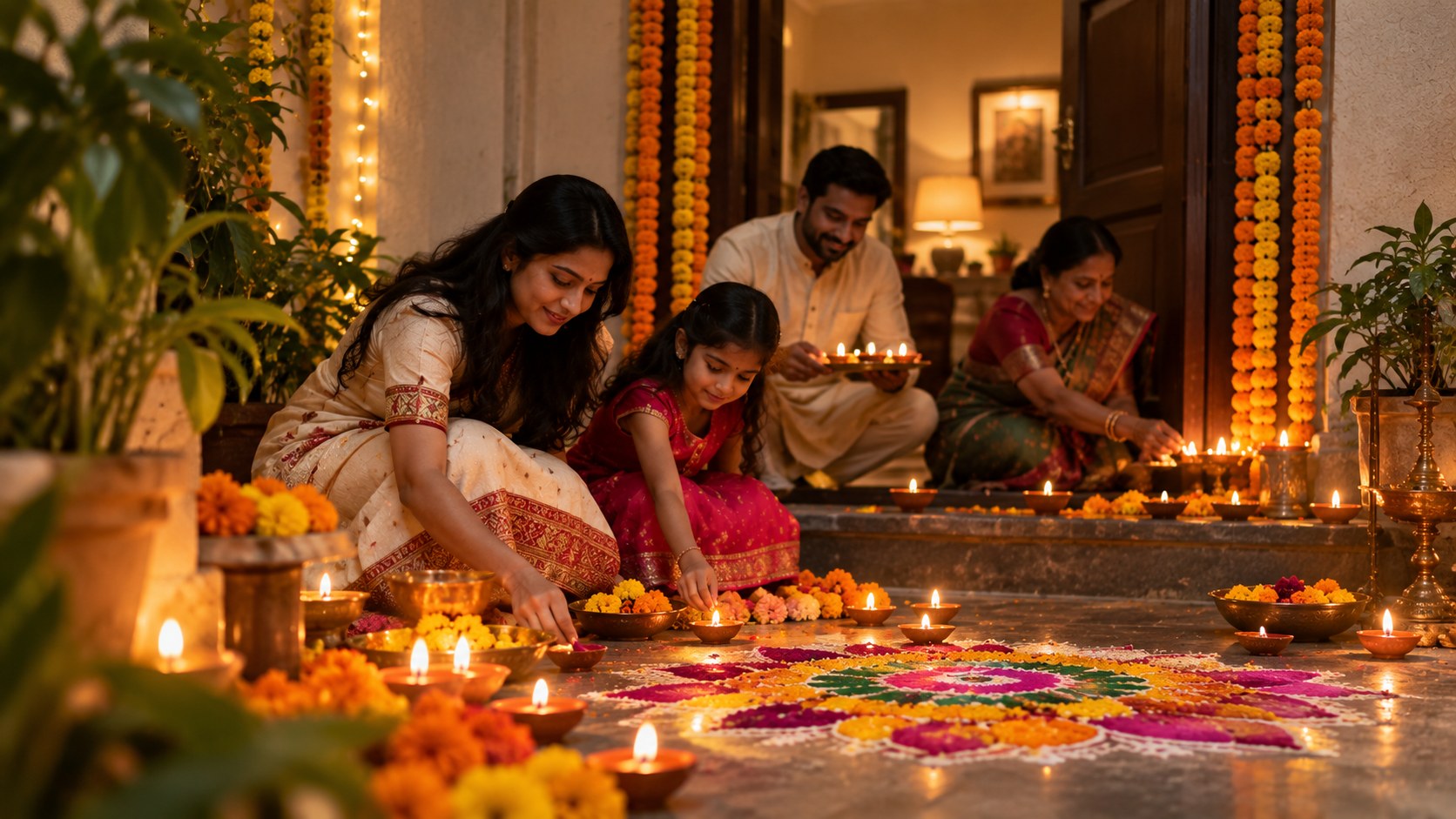
Why do we light earthen diyas during Diwali?
Lighting earthen diyas is a traditional practice meant to show light overcoming darkness. Many households light them to welcome Lord Ram to Ayodhya, and they remain central to prayers and festive decoration.
What is the significance of rangoli during Diwali?
Rangoli designs are considered auspicious and creative expressions of hospitality. Families make colourful patterns near entrances to welcome guests and, in some traditions, to invite prosperity and good fortune.
Why is Goddess Lakshmi worshipped during Diwali?
Goddess Lakshmi represents wealth, prosperity, and abundance. During Lakshmi Puja, devotees pray for well-being, give thanks, and hope for a prosperous year ahead.
Do all Indian states celebrate Diwali in the same way?
No. Regional and community traditions vary. Many households light diyas and gather with family, but the stories, rituals, foods, and religious practices can differ significantly.
How can Indians living abroad celebrate Diwali?
Indians abroad can decorate their homes, prepare traditional foods, and join local cultural or temple events. They can exchange gifts and stay connected to family through calls or video chats. These traditions adapt to local life while keeping their cultural meaning.