Physical Address
304 North Cardinal St.
Dorchester Center, MA 02124
Physical Address
304 North Cardinal St.
Dorchester Center, MA 02124

Learn what technical 3D animation is, how it works, where businesses use it, and what to consider before planning a technical animation project.
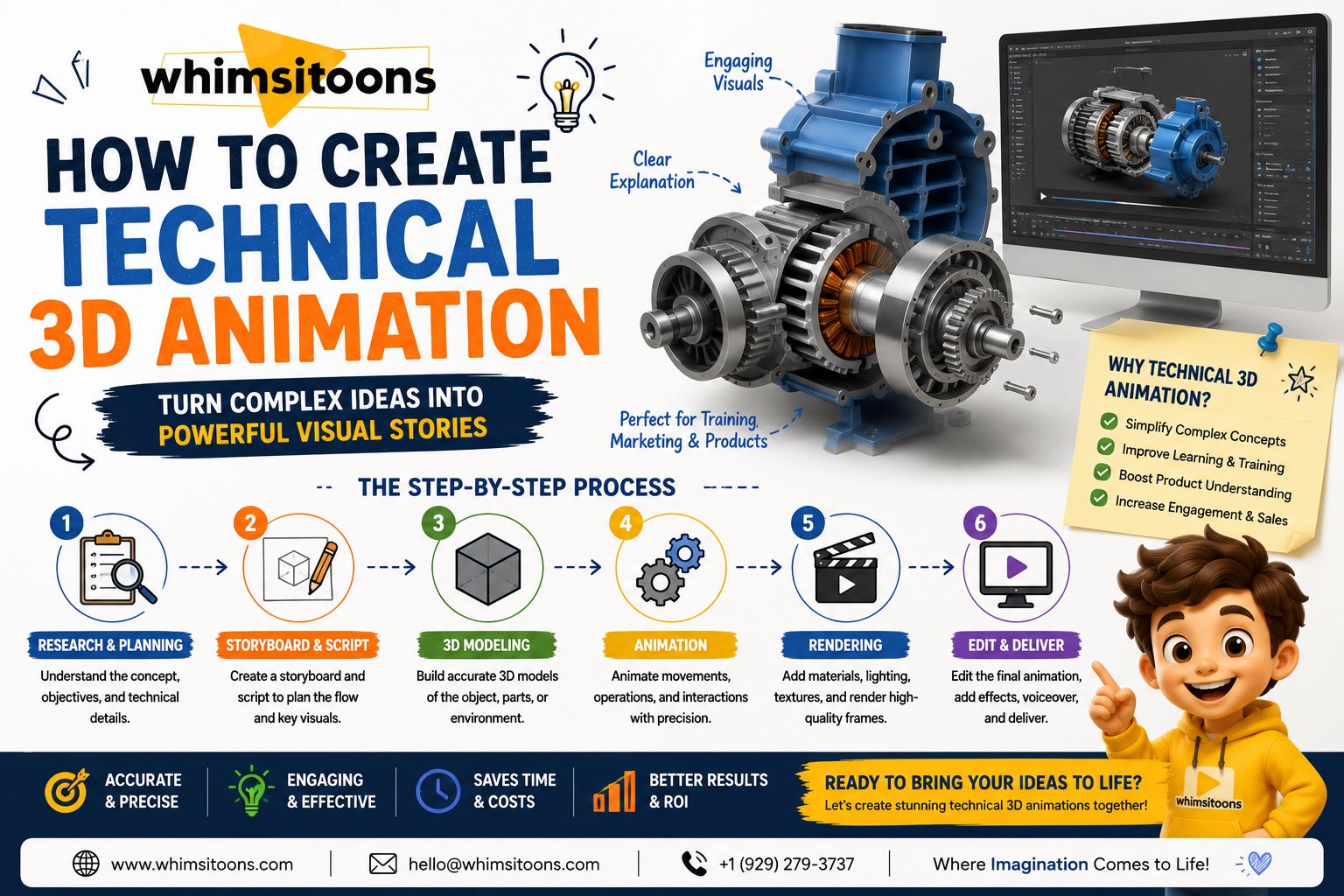
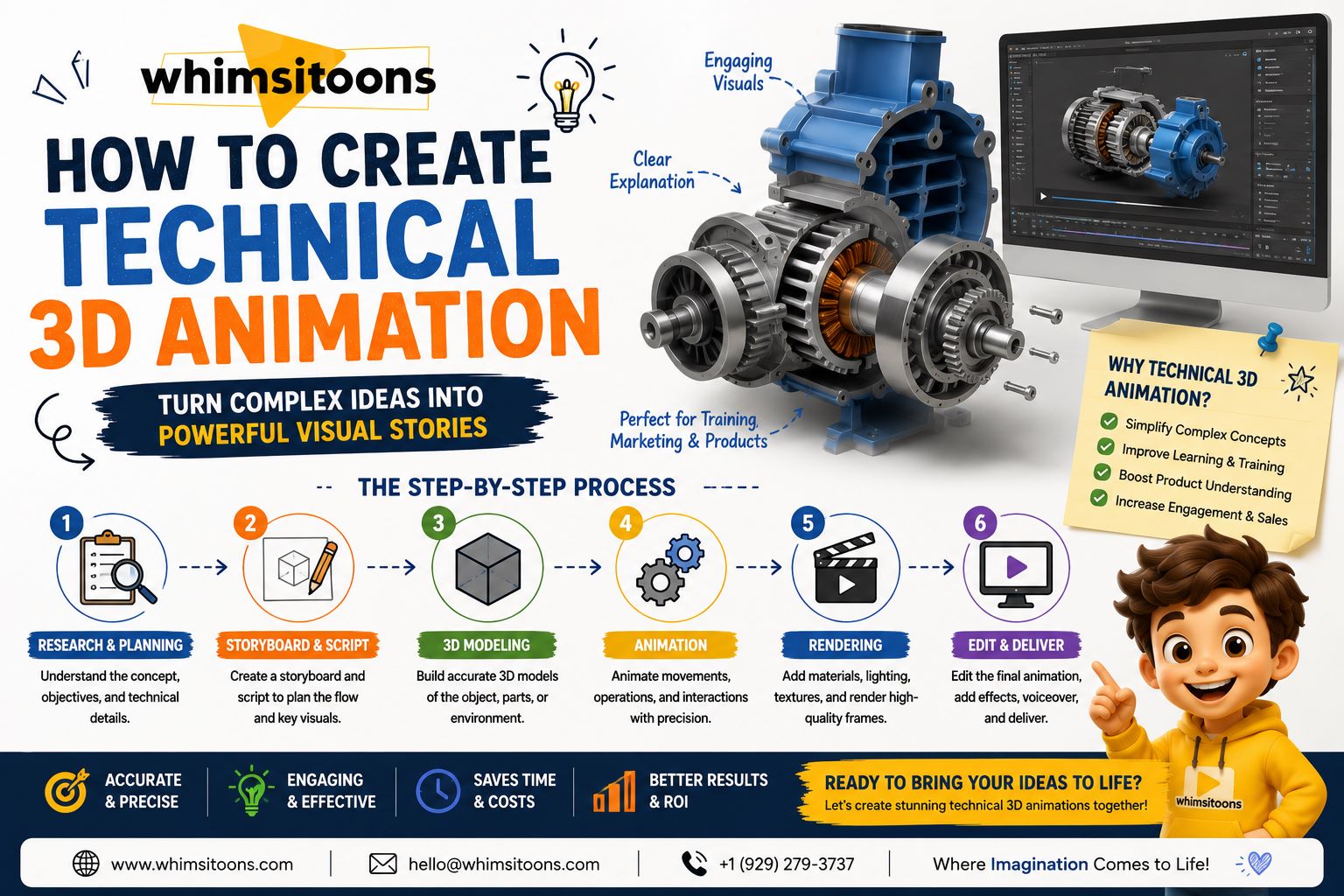
Engineers, manufacturers, and technology companies often need to explain things that are difficult to film or impossible to see with the human eye. An internal mechanism may sit behind a metal casing, a production line may contain dozens of interacting stages, or a prototype may not physically exist yet. What is technical 3d animation? It is the use of three-dimensional modeling and motion to communicate how a product, machine, system, or technical process looks, moves, assembles, or operates.
Unlike entertainment-focused animation, technical animation prioritizes accuracy and understanding. The goal is not simply to create attractive visuals. It is to turn complex information into a sequence that customers, investors, technicians, trainees, or decision-makers can follow.
How Technical 3D Animation Differs From Regular 3D Animation
A standard 3D animated video may focus on storytelling, characters, atmosphere, or visual style. Technical animation starts with a different question: what does the audience need to understand?
What is technical 3d animation? From a production perspective, it combines technical references with modeling, camera movement, materials, lighting, and carefully planned animation. CAD files, engineering drawings, product specifications, diagrams, photographs, and reference videos may all contribute to the final result.
Accuracy therefore influences creative decisions. If an animation shows the internal movement of a mechanical component, the animator should understand which parts move, which remain fixed, and how those parts interact.
That does not mean the video has to look dry or overly scientific. Strong technical animation balances visual clarity with polished presentation.
The Real Value Comes From Showing What Cameras Cannot
One of the strongest advantages of technical 3D animation is its ability to reveal hidden information.
Consider an industrial pump. A normal product video can show its exterior, but it cannot easily show liquid moving through internal chambers while seals, valves, and mechanical parts operate.
A 3D animation can make the housing transparent, separate components, change the camera angle, and show the internal sequence in a controlled way.
Similarly, an electronics manufacturer can visualize airflow through a device, while an automotive company can demonstrate how multiple components connect beneath the body of a vehicle.
Whimsitoons can approach this kind of project by treating the technical explanation as the foundation of the visual concept rather than adding engineering information after the animation style has already been decided.
Where Technical Animation Is Most Useful
Technical animation is not limited to one industry. Its usefulness depends mainly on whether the subject contains information that is difficult to communicate through traditional video.
Manufacturing and Industrial Equipment
Manufacturers can use animation to explain assembly, maintenance, installation, safety procedures, and internal mechanical functions.
An exploded-view sequence, for example, can separate a machine into individual components before bringing them back together. This allows viewers to understand relationships between parts without physically disassembling the product.
Engineering and Product Development
Products can be visualized before manufacturing begins. A company may use CAD data to produce an animated demonstration for internal reviews, presentations, sales discussions, or investor communication.
This can be especially useful when a physical prototype would be expensive, large, dangerous, or unavailable.
Medical and Scientific Communication
Technical visualization can also demonstrate processes that cannot easily be recorded, such as the movement of a medical device inside the body or the interaction between microscopic components.
The level of realism should depend on the audience. A training video for specialists may need significantly more technical detail than a marketing video intended for general viewers.
Technology and Electronics
Electronic devices contain systems that customers rarely see. Animation can illustrate sensor behavior, signal movement, cooling systems, component placement, or product assembly.
Businesses evaluating 3d technical animation services should therefore consider whether the animation team can understand technical documentation as well as create polished visuals.
What is technical 3d animation? Understanding the Production Workflow
The process usually begins long before animation itself.
Reference Collection
The production team first needs accurate source material. Depending on the project, this may include CAD files, STEP files, engineering drawings, dimensions, product photography, operating instructions, diagrams, or existing 3D models.
Incomplete references can create unnecessary revisions later.
Technical Review and Simplification
Not every engineering detail belongs in the final video. The production team and client should identify what the audience actually needs to understand.
A sales animation may emphasize major features and operating principles. A maintenance animation may need exact component placement and removal order.
This stage is where technical accuracy meets visual storytelling.
Modeling and Materials
If usable 3D assets do not already exist, the product or system must be modeled. Materials are then created to represent metal, glass, plastic, rubber, liquids, or other surfaces.
The desired presentation style also matters. Photorealistic rendering may suit product marketing, while a clean schematic style may work better for technical training.
Storyboarding and Animatics
Before producing final renders, the sequence should be planned.
The storyboard determines what appears on screen, while an animatic can test camera movement, timing, assembly sequences, and transitions.
At Whimsitoons, this planning stage can also provide a practical checkpoint for confirming that the visual explanation matches the intended communication goal before more detailed rendering begins.
Animation, Rendering, and Post-Production
Once approved, components are animated according to the required sequence. Lighting and cameras are refined, frames are rendered, and post-production may add labels, motion graphics, voiceover, sound design, or visual callouts.
What Businesses Should Prepare Before Starting
A strong technical animation brief should contain more than a request to “show how the product works.”
Define the target audience first. Engineers, buyers, investors, installers, and consumers need different levels of explanation.
Next, identify the single most important takeaway. If viewers should understand the installation process, avoid filling the same video with every product specification and marketing benefit.
Provide accurate references early. Updated CAD files, diagrams, measurements, product documentation, brand guidelines, and example videos can reduce ambiguity.
Businesses seeking 3d technical animation services should also clarify whether they need modeling from scratch, photorealistic rendering, labels, narration, multiple aspect ratios, source files, or alternate versions for presentations and social channels.
These requirements influence production scope and timeline.
Common Problems That Weaken Technical Animation
One mistake is prioritizing realism over communication. A technically beautiful render can still fail if viewers cannot identify which component they are supposed to watch.
Another problem is using overly fast camera movements. Mechanical systems often need time to be understood, particularly when components rotate, separate, or interact.
Technical teams can also overwhelm the production with unnecessary detail. What is technical 3d animation? It is not a digital copy of every engineering document. It is a communication tool that selectively reveals the details required for a specific audience.
Labels and callouts should also be used carefully. Too many annotations can turn a clean animation into a moving technical manual.
How to Evaluate a Technical Animation Partner
Review portfolios for more than visual quality. Look at whether internal components remain understandable when they move and whether camera positions help explain the subject.
Ask how the animation studio handles CAD assets, technical corrections, storyboards, revision stages, rendering, and final delivery.
It is also useful to establish who will approve technical accuracy. Creative teams can interpret references, but the client should usually provide a knowledgeable technical reviewer who can confirm that mechanisms, dimensions, sequences, and terminology are represented correctly.
Whimsitoons can be evaluated using these same criteria when businesses are considering a production partner for technical visual communication.
Conclusion
Technical 3D animation creates a bridge between engineering information and visual understanding. It can reveal hidden mechanisms, demonstrate assembly, visualize unfinished products, and simplify processes that would otherwise require lengthy explanations.
What is technical 3d animation? At its core, it is the structured use of 3D visualization to make technical information easier to see, follow, and communicate. The strongest projects combine accurate references, thoughtful simplification, controlled camera work, and clear storytelling rather than relying on realistic rendering alone.




