Physical Address
304 North Cardinal St.
Dorchester Center, MA 02124
Physical Address
304 North Cardinal St.
Dorchester Center, MA 02124

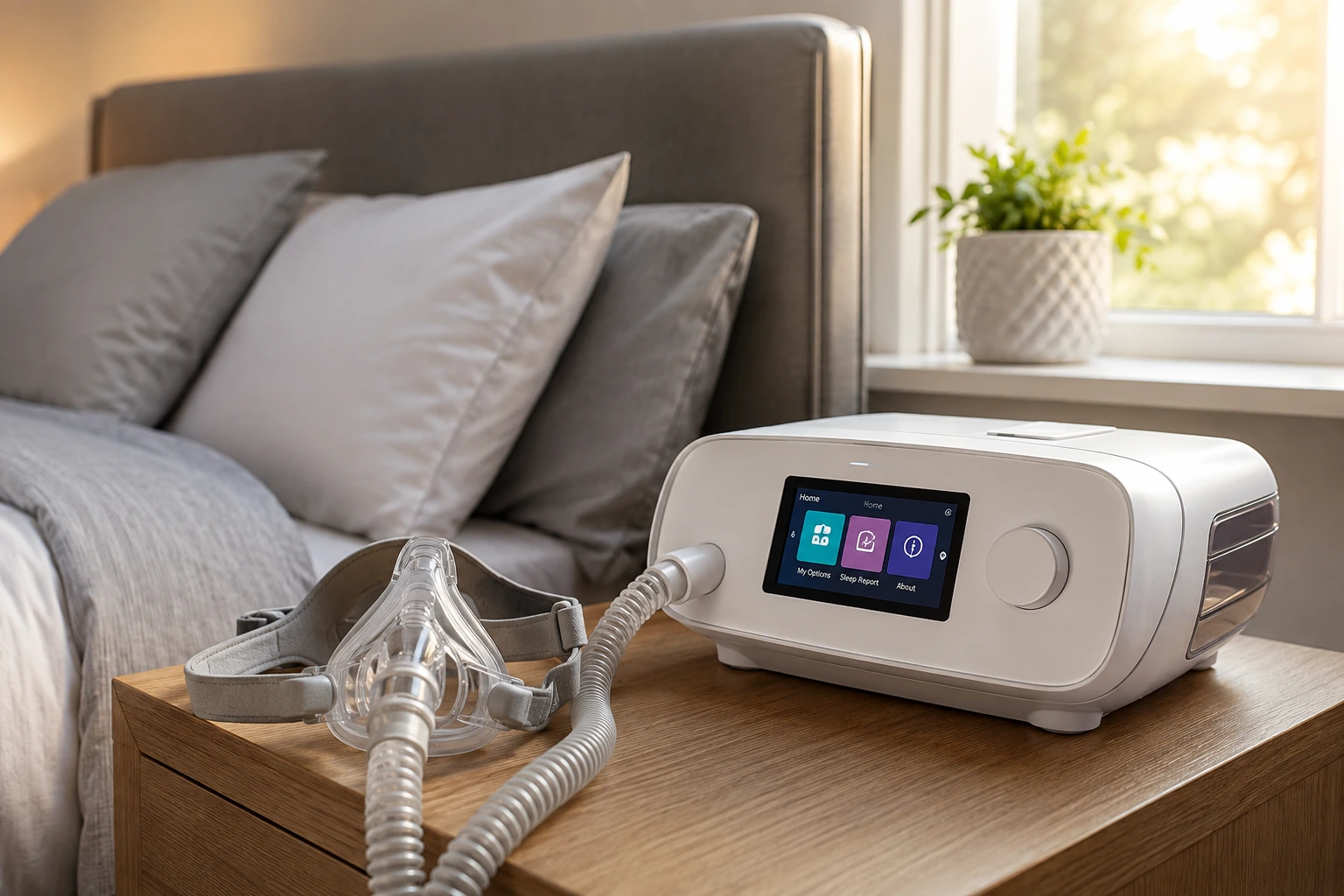
Most people who get handed a CPAP machine for the first time have the same question: what does this thing actually do to my body while I sleep? The answer is simpler than it looks. The device pulls in ordinary room air, filters it, pressurizes it with a small motor, and pushes it through a hose and mask to keep your airway open — nothing more mysterious than that.
Why Sleep Apnea Happens
While you’re awake, your throat muscles hold the airway open without any effort. Once you fall asleep, those muscles relax. In people with obstructive sleep apnea, that relaxation lets soft tissue at the back of the throat sag inward, narrowing or completely blocking airflow. Breathing pauses (apneas) or turns shallow (hypopneas), and the brain triggers a brief, often unnoticed arousal to reopen the airway — sometimes dozens of times a night.
Step-by-Step: How the Air Moves
That continuous, steady airflow is exactly where the name comes from — continuous positive airway pressure.
Not All PAP Devices Work the Same Way
A standard CPAP holds one fixed pressure all night. An APAP adjusts automatically within a range set by your clinician, responding to airflow resistance rather than “deciding” anything about your condition. A BiPAP goes a step further, using separate pressures for inhaling and exhaling. Which one you’re prescribed depends on your sleep study results, not personal preference.
The Adjustment Period Is Normal
Early on, airflow can feel stronger than expected, and small issues like mask leaks or dry mouth are common. Almost all of these have quick fixes — a different mask size, a humidifier tweak, or a short conversation with your provider. Skipping nights doesn’t help long-term outcomes; consistency is what makes the therapy work.
The Takeaway
A CPAP machine’s job comes down to four steps: draw in air, filter it, pressurize it, deliver it through a mask. No medication involved, no forced breathing — just steady pressure supporting your airway so your body can rest properly.
For a full walkthrough of pressure settings, machine parts, and common troubleshooting fixes, check out this guide on CPAP therapy explained simply.