Physical Address
304 North Cardinal St.
Dorchester Center, MA 02124
Physical Address
304 North Cardinal St.
Dorchester Center, MA 02124

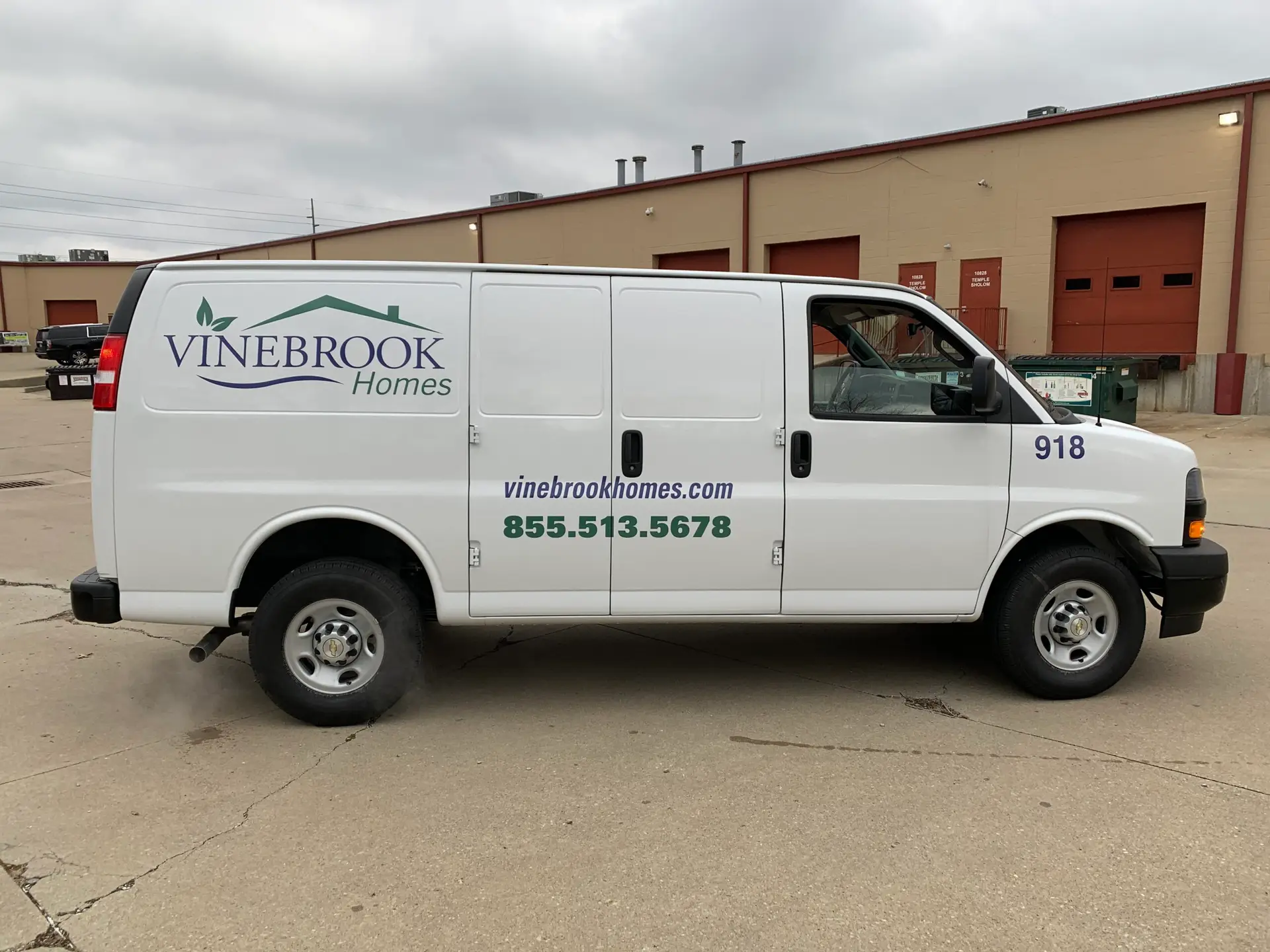
Not all vehicle wrap adhesives are built the same, and neither are the surfaces they're applied to. This guide breaks down how painted metal, plastic cladding, and riveted panels each demand different adhesive properties — and why matching the two correctly is what actually determines whether fleet graphics hold up for years or start lifting within months.
Ask most people what determines whether a vehicle wrap lasts and they’ll guess it’s the vinyl. It’s actually the adhesive underneath that vinyl doing most of the work, and it’s the part almost nobody thinks about until it fails. Two identical-looking rolls of wrap film can behave completely differently depending on the adhesive formulation, and matching that formulation to the actual surface it’s going on is one of the more overlooked decisions in a fleet graphics project.
Vehicle graphics adhesive needs to accomplish two things that pull in slightly opposite directions: bond strongly enough to survive years of weather, washing, and vibration, while still being removable without damaging the paint underneath when the wrap eventually comes off. Getting that balance right depends heavily on what surface the adhesive is bonding to in the first place, since paint, plastic, and bare metal all interact with adhesive differently.
Most vehicle wraps go over factory painted panels, and this is the surface adhesives are typically formulated and tested for as a baseline. A properly cured factory paint job provides a stable, predictable surface for adhesive to bond to, though the paint’s age and condition still matter. Older paint that’s beginning to oxidize or a panel that’s been repainted with a lower-quality aftermarket job can bond less predictably than a newer factory finish, which is one reason installers inspect paint condition before quoting rather than assuming every painted panel behaves the same.
Modern commercial vehicles increasingly use textured plastic cladding on bumpers, lower body panels, and trim pieces — surfaces that behave differently from painted metal. Plastic substrates often have lower surface energy, which is a technical way of saying adhesive doesn’t grip them as readily as it does painted metal. Adhesives designed for these surfaces are formulated differently, and applying a standard adhesive to heavily textured plastic without accounting for this is a common source of early lifting specifically at cladding edges.
Box trucks and trailers introduce a different challenge: rivets, corrugation, and panel seams create constant small disruptions across an otherwise flat surface. Adhesive needs to maintain contact around these features without bridging gaps or trapping air, which is part of why cast vinyl’s flexibility matters here as much as the adhesive formulation itself — the two work together, and a strong adhesive on a film that can’t conform to the surface still won’t produce a clean, long-lasting result.
Not every application calls for a permanent bond. Fleets that rotate branding seasonally, run leased vehicles that need to return to original condition, or use graphics for shorter promotional periods often benefit from a removable or repositionable adhesive rated for a shorter, cleaner removal process. The tradeoff is durability — removable adhesives generally aren’t intended for multi-year outdoor use the way permanent formulations are, so the right choice depends on how long the graphics actually need to stay in place, not just on wanting easier removal as a default.
Mismatches between adhesive and surface tend to show up as one of a few predictable problems: edges lifting sooner than expected, especially around textured or plastic areas; adhesive residue left behind on removal that requires extra cleanup; or, less commonly, adhesive that bonds so aggressively to certain surfaces that removal risks damaging the paint underneath. Most of these problems trace back to the same root cause — a general-purpose adhesive applied to a surface it wasn’t really formulated for, rather than a surface-specific match.
For a fleet manager sourcing graphics, adhesive formulation isn’t usually something a design proof reveals, which makes it easy to overlook during the sales conversation. It’s a reasonable question to ask directly: does the adhesive get selected based on the specific vehicle surfaces involved, or is the same standard film used across every job regardless of substrate? Providers working across a range of vehicle types, as covered in this overview of commercial vehicle graphics, typically account for surface variation as part of the planning process rather than treating adhesive as an afterthought once the design is finalized.
Vehicle graphics adhesive is one of the least visible parts of a wrap project and one of the more consequential ones. A wrap that looks identical to another on install day can age very differently a year later if the adhesive wasn’t matched to the actual surfaces involved — painted metal, plastic cladding, or a riveted trailer panel each call for slightly different considerations. Asking about this upfront, rather than assuming every vinyl-and-adhesive combination performs the same, is a small step that meaningfully affects how long a fleet’s graphics actually last.




