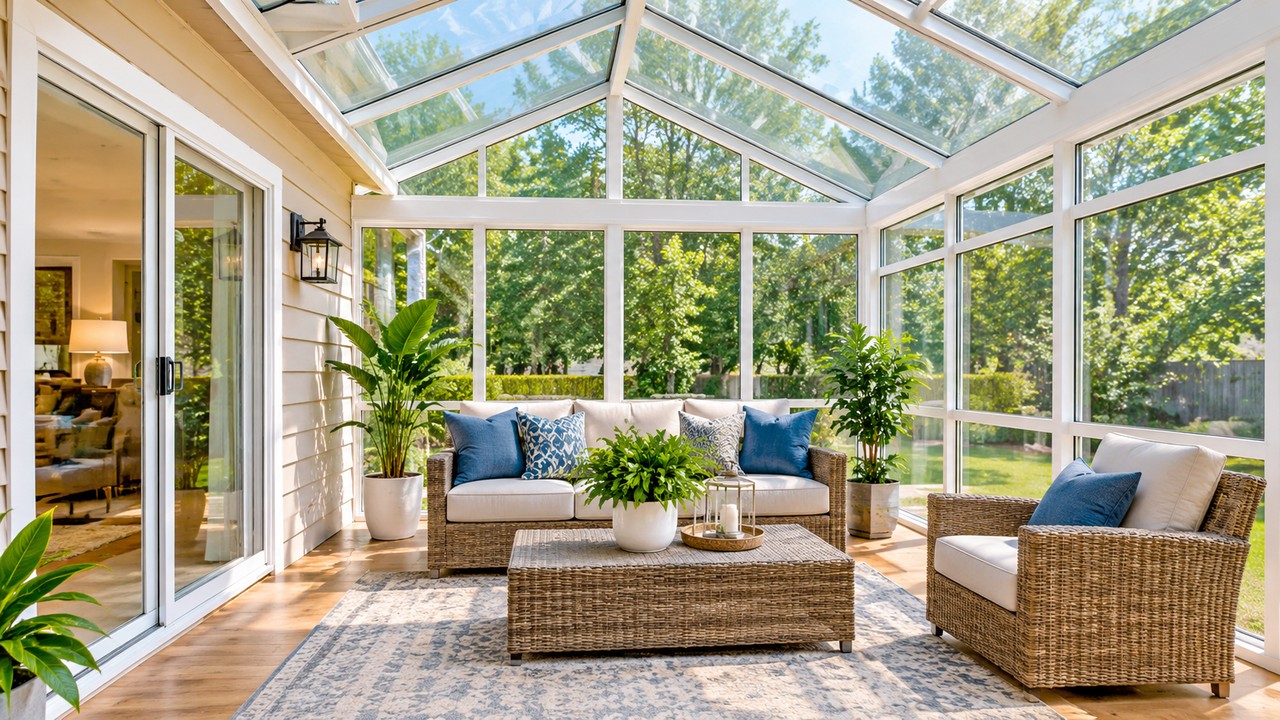

A house should not be merely a resting place or a place for relaxation. It should be comfortable, functional and should offer spaces that make everyday life enjoyable. Adding a sunroom to the home is currently a very popular home improvement project of homeowners looking to add to their home. With a great design, a sunroom can provide a bright, inviting space to experience natural light, enjoy views of the outdoors, and have quality time together year-round.
Sunroom Additions are a great choice for adding more living area to an existing home while still maintaining the original architecture. A sunroom can be used to create a quiet reading room, a family area or a tranquil indoor garden, depending on what you want to use it for.
What Is a Sunroom Addition?
A sunroom is an enclosed area that is designed to allow natural light to enter and enter the home, typically with large windows, glass doors, and possibly a glass roof. It’s not a normal room, it’s a room that’s designed to bring outside beauty inside and inside comfort outside.
This area can be tailored to suit the preferences, the available size of property and the architectural style of the homeowner. Some sunrooms are built to be used during certain seasons; others have insulating, heating and cooling equipment so they can be used year round.
With a well-designed plan, a sunroom can easily fit into the house’s design and let you create extra space for everyday use.
Popular Types of Sunroom Designs
It’s essential to know the various types of sunroom designs one can have before building one. Both choices have their own characteristics and advantages.
- Three-Season Sunroom
A three-season sunroom is a sunroom that is typically installed in the spring, summer and fall. Usually has large windows and screened openings to pass fresh air and natural light. This is a good choice for homeowners who want an extra relaxing room, but don’t want to install a completely insulated room.
- Four-Season Sunroom
Sunrooms are designed for year-round comfort in a four season sunroom. Typically features insulated windows, suitable flooring, durable materials and heating or cooling systems. The initial investment may be a bit more, but it gives the flexibility to change weather.
- Glass Sunroom
An open and light atmosphere is achieved with a glass sunroom. It provides pleasing views to the outdoors and lets light into various parts of the room. Use of energy efficient glass can contribute to more comfortable interior.
- Screened Sunroom
For those who love the outdoors, but want protection from insects, a screened sunroom is an excellent choice. It helps in relaxing, reading and enjoying pleasant weather conditions especially.
- Attached Sunroom
A sun room is attached to the original house. It can be designed close to the living room, kitchen or backyard entrance to make it easy to get between the indoor and outdoor spaces.
Key Benefits of Adding a Sunroom
- A sunroom has a number of benefits other than just adding floor area.
- Large Windows: Sunlight enthusiasts will love this aspect of the home as it will make it brighter and more inviting. Natural light can also make smaller spaces appear more spacious.
- Sunroom is a versatile space that can be used for various purposes. It can be a breakfast area, a home office, a relaxation corner, an entertainment space or an indoor garden depending upon the layout.
- Homeowners can have a view of the garden, enjoy the changing seasons and outdoor view while being shielded from the rain, wind and insects.
- Whether it’s contemporary minimalist furnishings or classic decorative accents, a sunroom offers numerous options for interior design.
- A well-designed and well-built sunroom can enhance a home’s marketability to potential home buyers. But location, construction quality, buyer tastes and local market conditions make a difference in the resale value.
How Much Does a Sunroom Addition Cost?
The cost of constructing a sunroom is based on the size of the room, materials, foundation needs, glazing, insulation and labor costs.
The cost of a basic screened or three-season sunroom is typically less than the cost of a fully insulated four-season sunroom. Also, high-quality windows, better flooring and roofing materials can add to the total cost of the project.
When planning a home construction project, it is important for homeowners to take the following costs into account:
Design and architectural planning – drawings, measurements, development of layouts, design consultation.
- – Foundation and structural work: Site preparation, construction of foundation and connections with the existing house.
- – Window frames, energy-efficient glazing, glass doors and installations.
- Roofing and insulation – Roofing materials, weatherproofing, insulation and ventilation.
- – Electrical installations: light, ceiling fan, electrical outlets and others.
- Interior finishes: floors, wall finishes, painting, furniture and decorative elements.
Before finalizing monies with the contractor, detailed estimates are always a good idea. A clear budget enables homeowners to avoid the unplanned expenses and guide them in decision making for materials and design elements.
Important Factors to Consider Before Construction
It’s not just the window and furniture that makes a sunroom beautiful. To keep the space comfortable, safe and functional, it’s important that it is planned properly.
- Choose the Right Location
The location of your sunroom can influence sunlight exposure, privacy, and accessibility. A sunroom that looks out onto the garden is a great choice, but a sunroom that is oriented to the side may be better if you don’t have a lot of space outside.
- Consider Sunlight and Orientation
Sunlight can influence the warmth and light in a building. If a room is getting lots of sun in the afternoon, shade, or window treatments and suitable glass may be needed to keep the room comfortable.
- Select Energy-Efficient Windows
Windows are one of the most crucial parts of a sunroom. Energy efficient or double glazing windows can minimize the transfer of unwanted heat and help to maintain the temperature inside the home.
- Plan Ventilation and Climate Control
Good ventilation aids the maintenance of fresh air in the interior. If you intend to make full use of the room all year round, think about appropriate heating, cooling and insulating at the design phase.
- Match the Existing Architecture
The sunroom should blend with the rest of the home’s exterior. Coordinating rooflines, colours, window frames and exterior materials can produce a more harmonious effect.
- Check Local Building Regulations
Make sure to inspect the building codes and zoning regulations, as well as permits and property restrictions before construction begins. Depending on the project, structural inspections and professional approvals could be needed.
Creative Sunroom Interior Design Ideas
After the structure has been planned, an interior designer can make the sun room a comfortable and attractive place to live.
Neutral colors, simple furniture, clean lines and minimal decorations are a great way to achieve a modern look. The use of space and light-colored flooring can make the room appear spacious and open.
To create a more intimate feel, consider using cozy sofas, cushions with different textures, warm lighting fixtures and natural wood furnishings. All of these make for a pleasant area to read, relax, or enjoy family time.
Another great idea is to have an indoor garden. Arrange ornamental plants around windows for a fresh ambiance. Select plants based on the amount of light, temperature, and moisture inside the room.
A sunroom can also be a productive home office for anyone with a work at home situation. You can have a comfortable workspace with a compact desk, an ergonomic chair, storage shelves and suitable window blinds.
Common Sunroom Addition Mistakes to Avoi
- Even a great looking sunroom can be an uncomfortable space if the key construction elements are ignored.
- A frequent error is picking out windows that look good rather than are energy-efficient. Low quality glazing can be a source of unwanted heat gain and/or heat loss.
- The other error is to not consider insulation and ventilation enough. These features are especially crucial when designing a 4-season sunroom.
- Drainage and waterproofing are other elements that homeowners can’t afford to ignore. It is advisable to run the rain water away from the building to avoid water damage.
- Lastly, don’t start a project without a realistic budget and project planning. Changes during construction can lead to additional costs and delays.
- With the help of experienced design and construction professionals, these concerns can be taken care of prior to they develop into expensive concerns.
Final Thoughts
When sited according to homeowner lifestyle, home site and budget, a sunroom can be a valuable addition to any home. There are many options for making any space functional and comfortable, even while incorporating natural light.
The main point is to consider carefully: plan, materials, energy efficiency, design that matches the existing property. People looking around for professional planning design and solutions for home improvement can also find inspiration and guidance from Wallinsiders.
A sunroom can be a wonderful room in your house if you approach it in the right way, and can provide a great spot where you can sit and relax, entertain guests and enjoy the outdoors all year long.