Physical Address
304 North Cardinal St.
Dorchester Center, MA 02124
Physical Address
304 North Cardinal St.
Dorchester Center, MA 02124

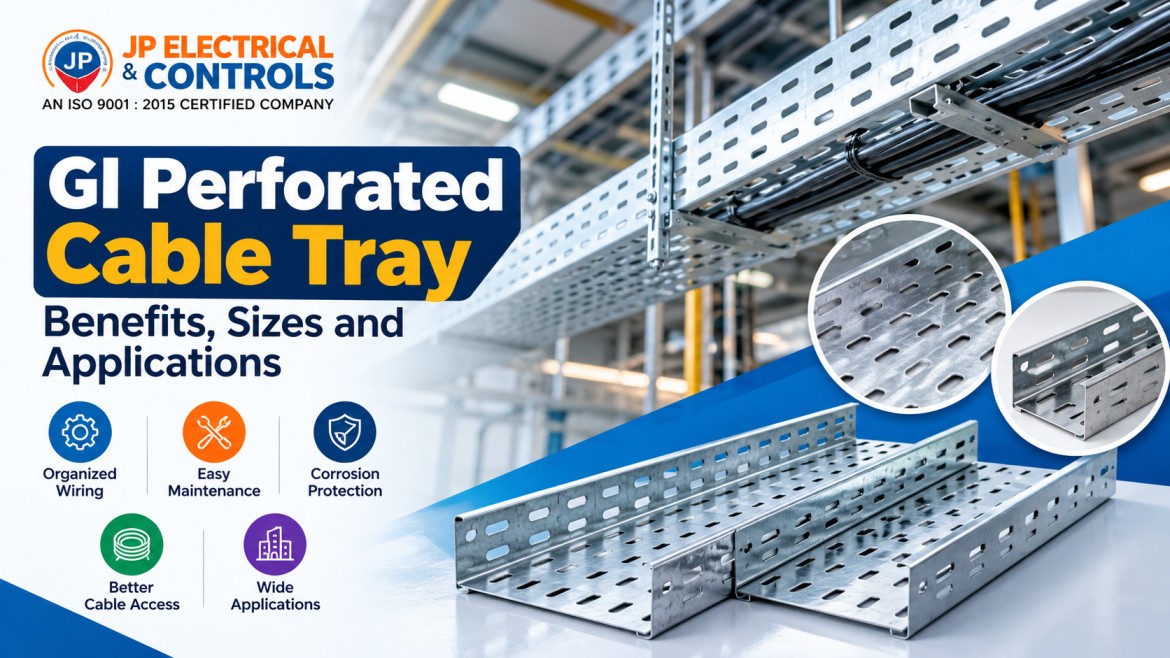
Factories and commercial buildings often have many electrical cables connected to machines, lighting systems, control panels, and other equipment. Managing these cables properly helps keep the installation organized and makes inspection easier.
GI perforated cable trays are commonly used to support cables in planned routes. Their perforated structure allows technicians to secure and inspect cables conveniently.
JP Electrical & Controls provides cable management solutions for a range of industrial and commercial projects.
A GI perforated cable tray is generally made from steel protected by a zinc coating. The term GI commonly refers to galvanized iron, although galvanized steel is widely used in cable tray manufacturing.
The tray has small openings along its base and sides. These openings help with cable fixing and allow air to circulate around the cables.
GI perforated cable trays are suitable for various installations when their material, dimensions, finish, and load capacity meet the project requirements.
The tray provides a clear route for cables and helps prevent loose or tangled wiring.
Technicians can inspect the cables and identify problems more easily because of the open design.
The zinc coating helps protect the steel surface against corrosion. The actual level of protection depends on coating quality and the surrounding environment.
The perforated structure allows convenient access for inspection, repairs, and approved cable changes.
Different dimensions and configurations are available to suit the layout and requirements of commercial and industrial buildings.
A hot dip perforated cable tray receives a zinc coating through a hot-dip galvanizing process. This coating can provide durable corrosion protection when the product is manufactured to the required specifications.
It may be suitable for outdoor installations and industrial environments where additional corrosion resistance is required.
However, the right product depends on site conditions. Exposure to moisture, chemicals, and other corrosive substances should be considered before making a final selection.
Always check the coating specification and whether the tray was galvanized before or after fabrication.
A suitable cable tray design should match the cable route, installation space, and expected load.
For example, a factory with several large power cables may require a different design from an office with smaller electrical and communication cables.
Important factors include:
Correct planning helps reduce installation difficulties and supports future maintenance.
Cable tray sizes should be selected according to the number of cables, their dimensions, and the required space for installation.
The cable tray price can vary based on the steel thickness, tray width, coating process, order quantity, and accessories.
When comparing GI perforated cable tray and hot dip perforated cable tray options, compare the actual coating process and specifications rather than relying only on the product name.
A suitable electrical cable tray should meet the project’s mechanical, electrical, and environmental requirements.
When choosing a cable tray manufacturer, ask for information about material quality, coating specifications, dimensions, and load capacity.
It is also useful to confirm the availability of standard sizes, customized options, and installation accessories.
JP Electrical & Controls provides cable management solutions for commercial and industrial installations. Customers should select products according to their project specifications and site conditions.
GI perforated cable trays help keep electrical cables organized and accessible. Hot dip perforated options can provide suitable corrosion protection for demanding environments when their specifications match the installation conditions.
Before buying, check the cable tray design, cable tray sizes, coating quality, and cable tray price. Choosing the right product can make cable installation and maintenance more convenient.
Q1. What is a GI perforated cable tray?
It is a perforated metal tray generally made from galvanized steel for supporting and organizing electrical cables.
Q2. What is a hot dip perforated cable tray?
It is a perforated cable tray protected by a hot-dip galvanized coating.
Q3. Are GI perforated cable trays suitable for factories?
Yes, they can be used in factories when their dimensions, load capacity, and coating meet the project requirements.
Q4. How do I compare cable tray prices?
Compare material thickness, dimensions, coating specifications, quantity, and included accessories.
Q5. What makes a good electrical cable tray?
A suitable tray should have the correct dimensions, sufficient load capacity, appropriate material protection, and a design that meets the installation requirements.




