Physical Address
304 North Cardinal St.
Dorchester Center, MA 02124
Physical Address
304 North Cardinal St.
Dorchester Center, MA 02124

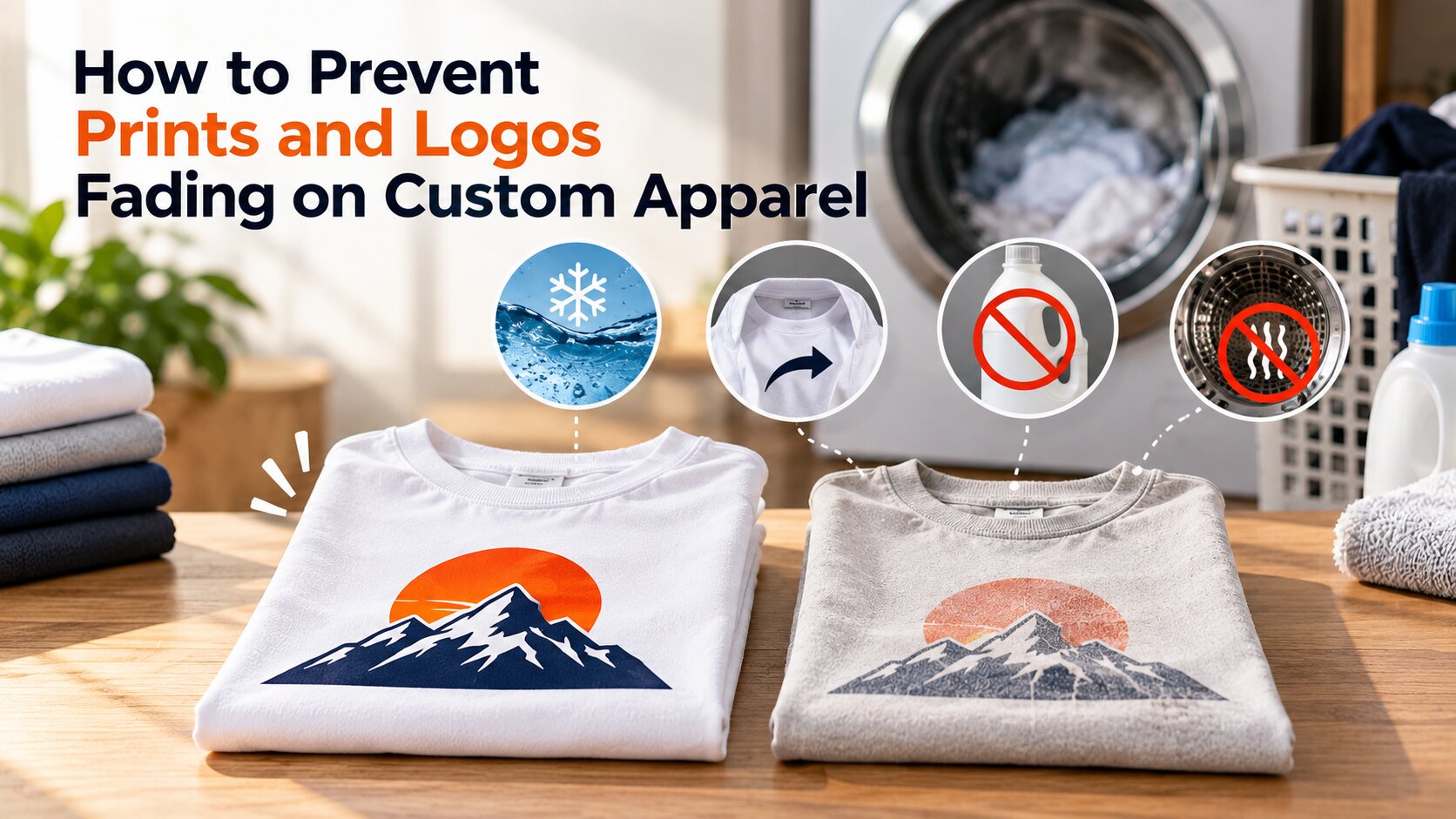
A crisp new logo on a branded t shirt looks sharp for exactly one reason. The ink is fully cured and the fabric has not yet met a washing machine. Give it a few weeks of careless laundry and that same logo will start looking like it survived a shipwreck. The good news is that fading is almost never bad luck. It is usually the predictable result of heat, friction, and a few laundry habits that quietly wreck a perfectly good print.
Printed logos, whether done through screen printing or DTF printing, are bonded to fabric using heat during curing. That bond stays strong under normal conditions, but excess heat later on, from hot water, a high dryer setting, or an iron pressed directly on the design, softens the ink or adhesive all over again.
Once that bond softens, cracking and peeling follow fast. This is why washing in cold water and avoiding high heat in the dryer are the two most repeated pieces of advice across printers and apparel manufacturers, and for good reason. It actually works.
If heat softens a print, friction is what scrapes it away. A printed t shirt tumbling against zippers, buttons, or heavy denim inside a washing machine takes a beating that has nothing to do with water temperature.
Turning garments inside out before washing is the simplest fix here. It shifts the friction onto the plain back of the fabric instead of the printed surface, and it costs nothing except a few extra seconds before laundry day. Washing printed apparel separately from rougher fabrics, or using a mesh laundry bag, reduces this kind of wear even further.
Chlorine bleach and harsh stain removing detergents can chemically attack the pigment in a print, not just the fabric around it. A mild, bleach free detergent protects the ink layer far better than a heavy duty formula built for tough stains.
Hard water, which carries extra calcium and magnesium, creates another problem. Mineral deposits from hard water build up on fabric and ink over repeated washes, creating a dull, hazy look that mimics fading even when the actual pigment is still intact. In regions where hard water is common, a simple descaling rinse or a slightly higher detergent dose can make a visible difference.
Air drying remains the safest option for printed apparel. If a dryer is unavoidable, a low heat setting with early removal, followed by air drying the rest of the way, limits the damage considerably.
Storage matters too, even though it rarely gets mentioned. Folding printed apparel with the design facing outward, rather than crushed against other fabric, reduces creasing at the print’s weakest points. Keeping apparel away from direct sunlight also slows pigment breakdown, since UV exposure fades ink even without a single wash involved.
Not all printing methods age the same way. Screen printing using plastisol ink tends to last the longest, often holding up through 50 or more washes with proper care, because the ink sits on the fabric as a thick, durable layer. DTF printing, which bonds a design through a heat pressed adhesive layer, typically holds up well too, though the adhesive bond is the first thing to weaken if washing habits are careless.
Knowing which method was used on a garment helps set realistic expectations and informs how carefully it needs to be washed.
Print durability does not start in the laundry room. It starts with proper curing during production. A print that was not held at the right temperature for the right amount of time will fade and peel no matter how carefully it gets washed afterward.
This is exactly why the choice of manufacturer matters before a single wash cycle comes into play. A dependable custom apparel manufacturer in India should be able to explain their curing process clearly and share realistic wash count expectations for the print method being used, rather than leaving buyers to discover problems after delivery.
Preventing print and logo fading comes down to a short list of habits. Wash in cold water, turn garments inside out, skip the bleach, avoid high heat in the dryer, and store apparel away from direct sunlight. None of these steps take much effort, and together they can be the difference between a logo that looks sharp for years and one that fades within a season. Custom apparel built on a properly cured print, paired with sensible care, tends to hold its appearance far longer than most people expect.




